
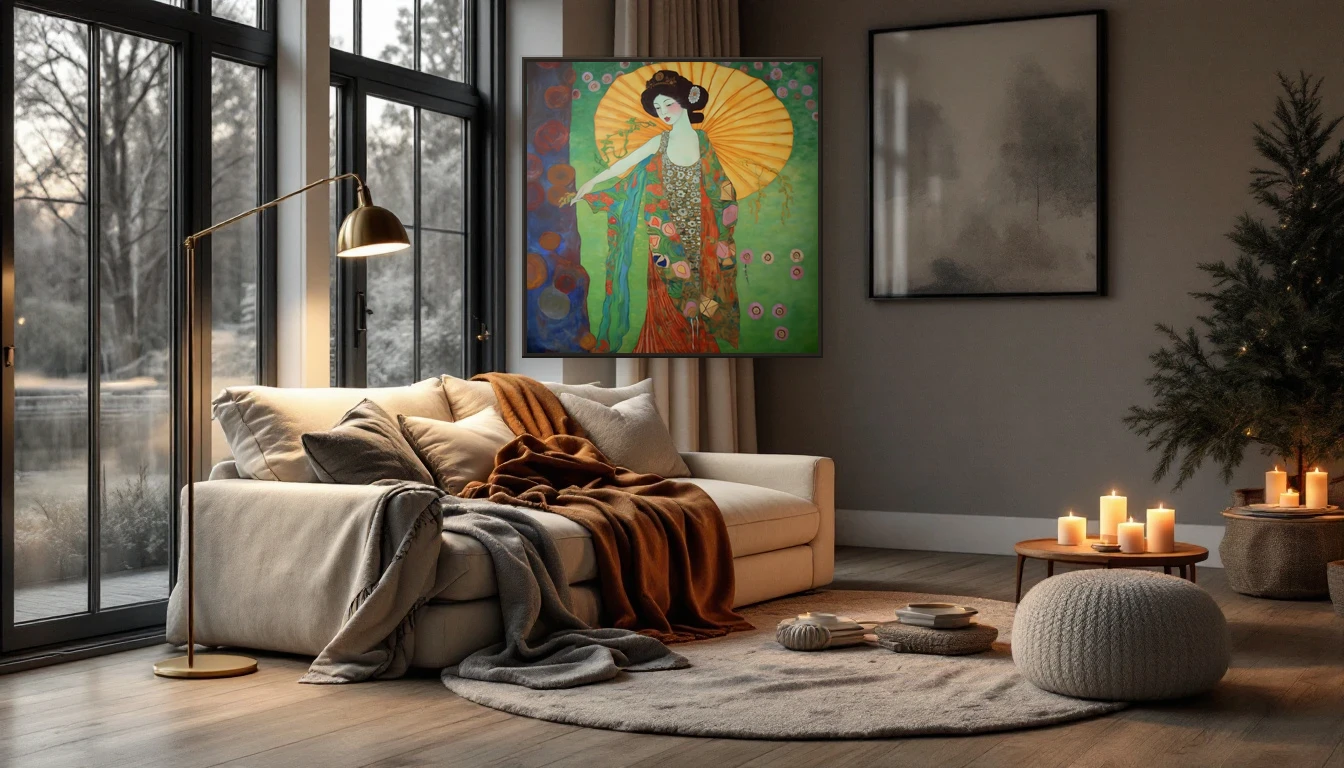
Why winter is the best season for art lovers
Here's something I've come to appreciate over the years: the darker the evenings get, the more control you have over how art looks in your home. Summer daylight is beautiful but unpredictable — it shifts, it fades, it washes out colours by afternoon. Winter hands you the reins.
When the sun sets at four o'clock, every lamp becomes a design choice. And that's where it gets interesting.
The Scandinavian approach to layered light
In Denmark and Norway, where winter darkness is simply a fact of life, people have turned lighting into an art form. The principle is straightforward: work with three layers. Ambient light sets the baseline mood — a warm overhead glow or backlit shelving. Task lighting serves a function. And accent lighting — a focused spot or directional lamp — draws attention exactly where you want it.
For artwork, that accent layer changes everything. A well-placed spot above a textured piece reveals brushwork, depth, and material quality that flat overhead lighting simply misses. Gold leaf catches the light. Mixed media casts subtle shadows. The piece becomes three-dimensional.
Colour temperature: the detail that matters most
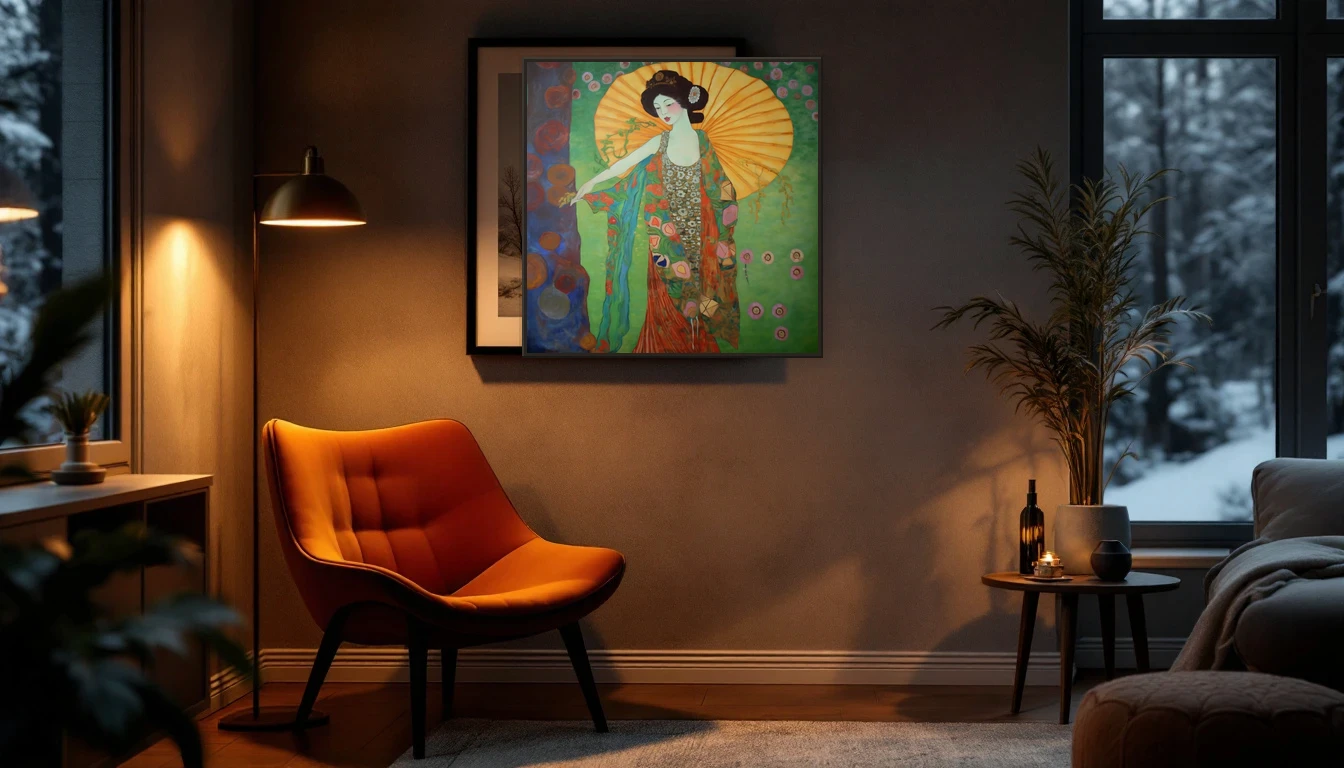
One crucial variable most people overlook: the warmth of their light bulbs. Colour temperature, measured in Kelvin, determines whether your art looks like it belongs in a cosy living room or a hospital corridor.
Warm white (2700K) enriches ochres, ambers, and deep reds — ideal for figurative and warm-toned abstract work. Cooler white (4000K and above) serves blue palettes and monochrome photography more faithfully, but can feel stark during winter months.
My approach: use warm ambient lighting throughout the room and a slightly neutral accent light (around 3000K) on the art itself. You preserve colour accuracy without sacrificing atmosphere.
Start with one wall
You don't need a renovation. Pick one piece you'd like to see differently. A clip-on picture light or a dimmable floor lamp angled toward the wall can transform the experience overnight.
Aim for a 30-degree angle from the artwork to avoid glare on glass and create even illumination. And always install a dimmer — in the evening, you want light that adapts to your mood, not the other way around.
Winter darkness isn't a limitation. It's an invitation to see your art with fresh eyes.