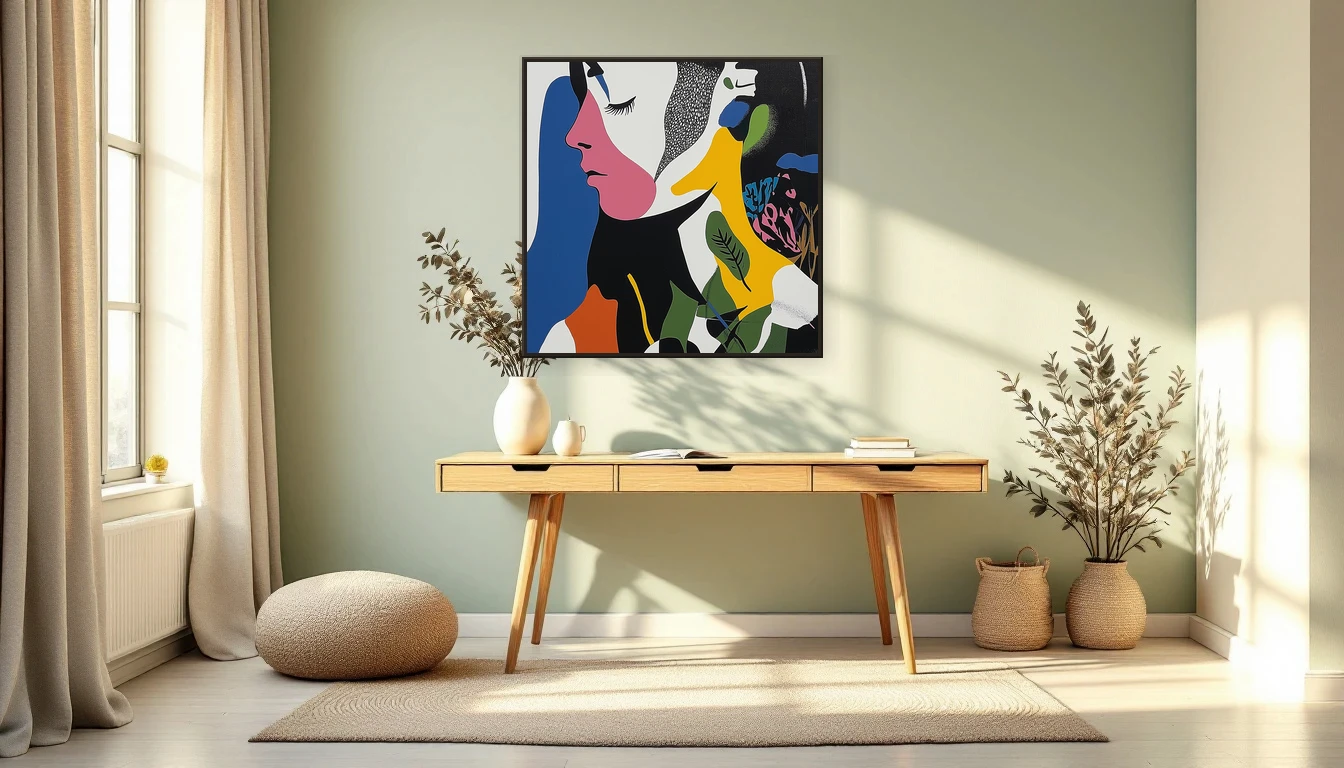
September hits and suddenly your home office feels exactly like what it is: a desk, a chair, and a blank wall staring back at you. That wall? It's doing more damage than you think.
The Blank Wall Problem
I notice it in my own studio — when the space around me is bare, everything slows down. Turns out that's not just a feeling. Researchers at the University of Exeter found that people working in spaces with art and plants are up to 32% more productive than those in lean environments. A study in the Journal of Environmental Psychology confirmed that enriched workspaces deliver 15% higher productivity and wellbeing scores. Your blank wall isn't neutral. It's actively working against you.
Why Abstract Art Wins at the Desk
Not every painting belongs in a workspace. A busy cityscape or photorealistic portrait demands attention — the opposite of what you need when focusing. Abstract art occupies the sweet spot: enough visual stimulation to prevent mental fatigue, without the cognitive load of recognisable imagery. Your brain can rest and recharge at the same time.
Colour Does the Heavy Lifting
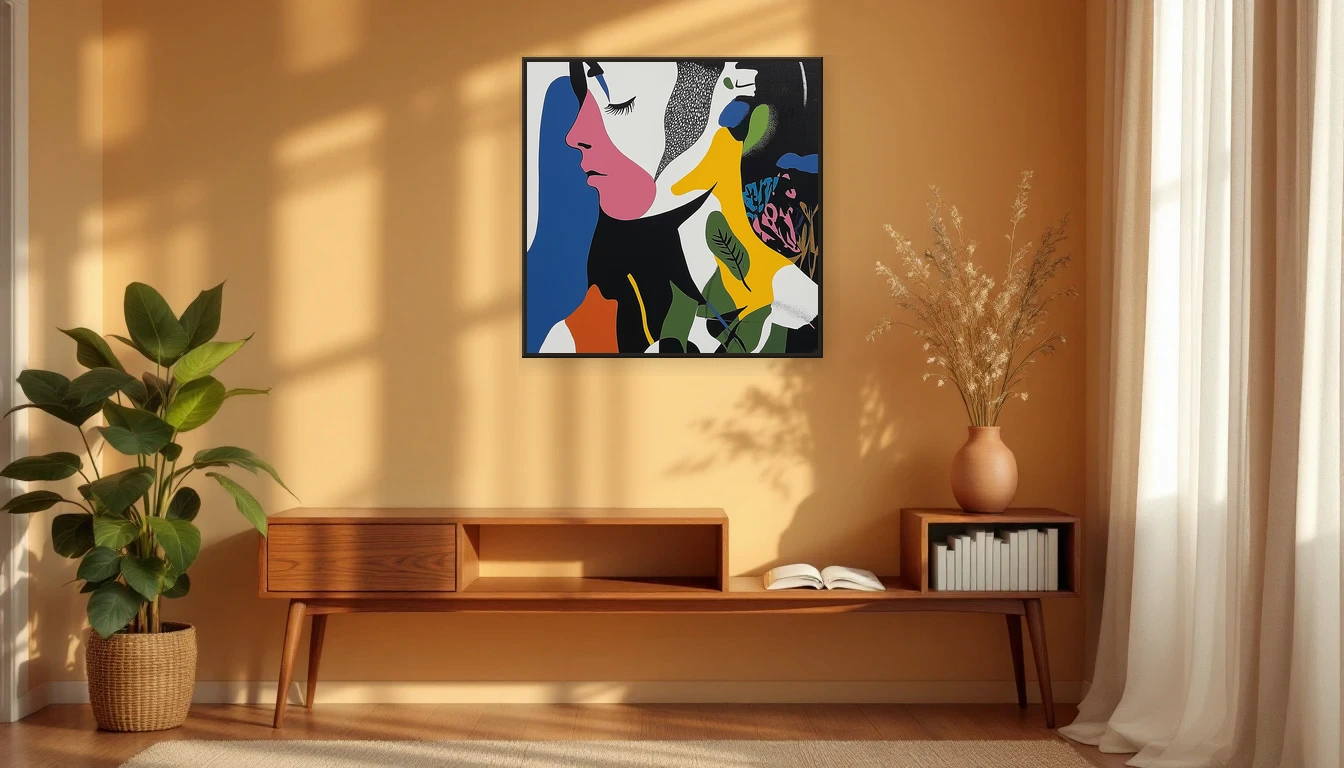
Colour psychology isn't wishful thinking — it's neurology. Blue tones lower heart rate and support concentration. Greens calm and reduce eye strain. Warm hues like ochre and terracotta — perfectly aligned with this autumn's warm minimalism trend — bring comfort without drowsiness. Match the palette to your work: cool tones for analytical tasks, warmer shades for creative sessions.
One Large Piece Beats Ten Small Ones
The 2026 consensus is clear: fewer pieces, more impact. A single canvas filling 60 to 75 percent of the wall space above your desk creates more calm than a gallery wall of small prints. It works as a visual anchor — a fixed point where your eyes can briefly rest between emails and spreadsheets.
How to Hang It Right
Hang art at eye level when seated, not standing. It sounds obvious, but nearly everyone hangs too high. Let natural light fall at an angle across the surface — direct light creates glare, no light makes the piece invisible. And position it where you see it when you glance away from your screen, not behind you (that's for your video call backdrop, not for you).
Start With What You Feel
Your workspace isn't a showroom. It's not about trends or what looks good on someone else's wall. It's about what pulls you into your flow. Browse the DNH collection and let your eyes land where they want — that's usually the right piece.
Explore the DNH collection and give your workspace the inspiration it deserves.