
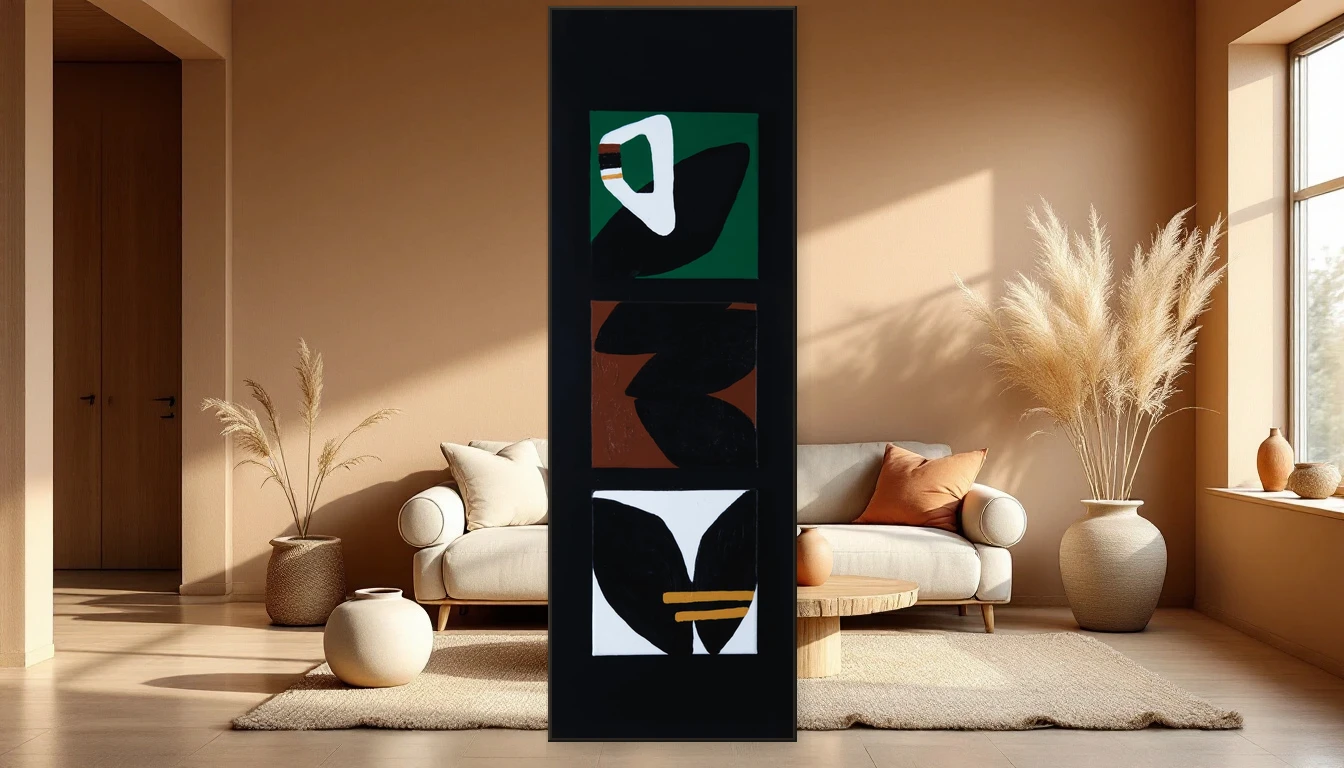
The moment perfect stopped working
Something shifted in my studio recently. I was working on a canvas — layers of earthy pigment, carefully built up over days — when a drop of paint landed where it shouldn't have. My instinct said fix it. But when I stepped back, that accidental drop did exactly what the painting needed. It broke the composition open. That's wabi-sabi in a single moment.
For years, we chased flawless interiors: symmetrical gallery walls, matching cushions, surfaces so polished they could double as mirrors. But in 2026, something interesting is happening. People are walking away from perfection — not toward chaos, but toward spaces that feel honest.
What wabi-sabi actually means for your home
Wabi-sabi is a Japanese philosophy that finds beauty in three things: imperfection, impermanence, and incompleteness. In interior design, this translates to rooms that breathe. Designers across the industry are calling it the shift from sterile minimalism to soul-filled minimalism.
It's not about having less — it's about choosing more deliberately. A hand-thrown ceramic with an uneven rim. Linen curtains that crease. A painting where you can see the artist's hand at work. These aren't flaws. They're proof that something real was made by someone real.
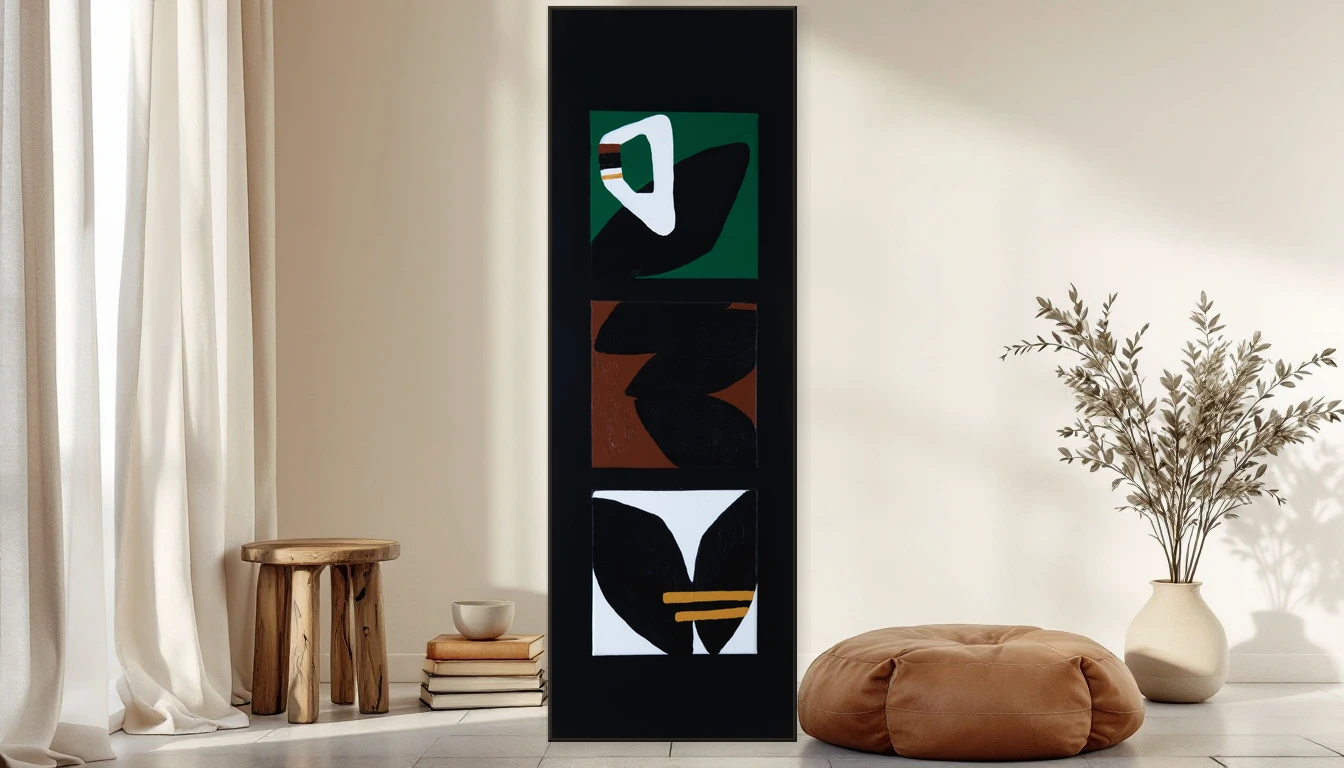
Why abstract art is the natural fit
Abstract art is, at its core, the ultimate wabi-sabi art form. There's no perfect likeness to chase, no error to correct. Every brushstroke, every colour layer, every texture is a captured moment — unique and unrepeatable.
When you hang an abstract work in your home, you bring that energy into your daily life. It reminds you that beauty isn't found in control but in release. In my own practice, the pieces I love most are the ones where I stopped planning and started feeling.
Three ways to bring wabi-sabi home
Start with the wall. Choose artwork with visible texture, depth, traces of the creative process. A painting with palette-knife marks or built-up layers invites you to look longer — and that's entirely the point.
Mix timelines. Pair a contemporary abstract piece with a vintage side table or a family heirloom. The contrast tells a story of different moments meeting in one space.
Leave room to breathe. Wabi-sabi is equally about what you leave out. One powerful work on an otherwise bare wall has more presence than ten small prints competing for attention. Give your art air.
Permission to be imperfect
Perhaps the most liberating thing about wabi-sabi is this: it gives you permission to stop. To accept that your home doesn't need to be finished, that a crack in ceramics is called character, that a painting doesn't need to match your sofa — it needs to match you.
That paint drop is still on my canvas. Every time I look at it, it reminds me: the most beautiful things happen when you stop trying to control the outcome.
Curious which piece belongs in your imperfectly perfect home? Explore the DNH collection or get in touch — I'd love to help you find your match.