
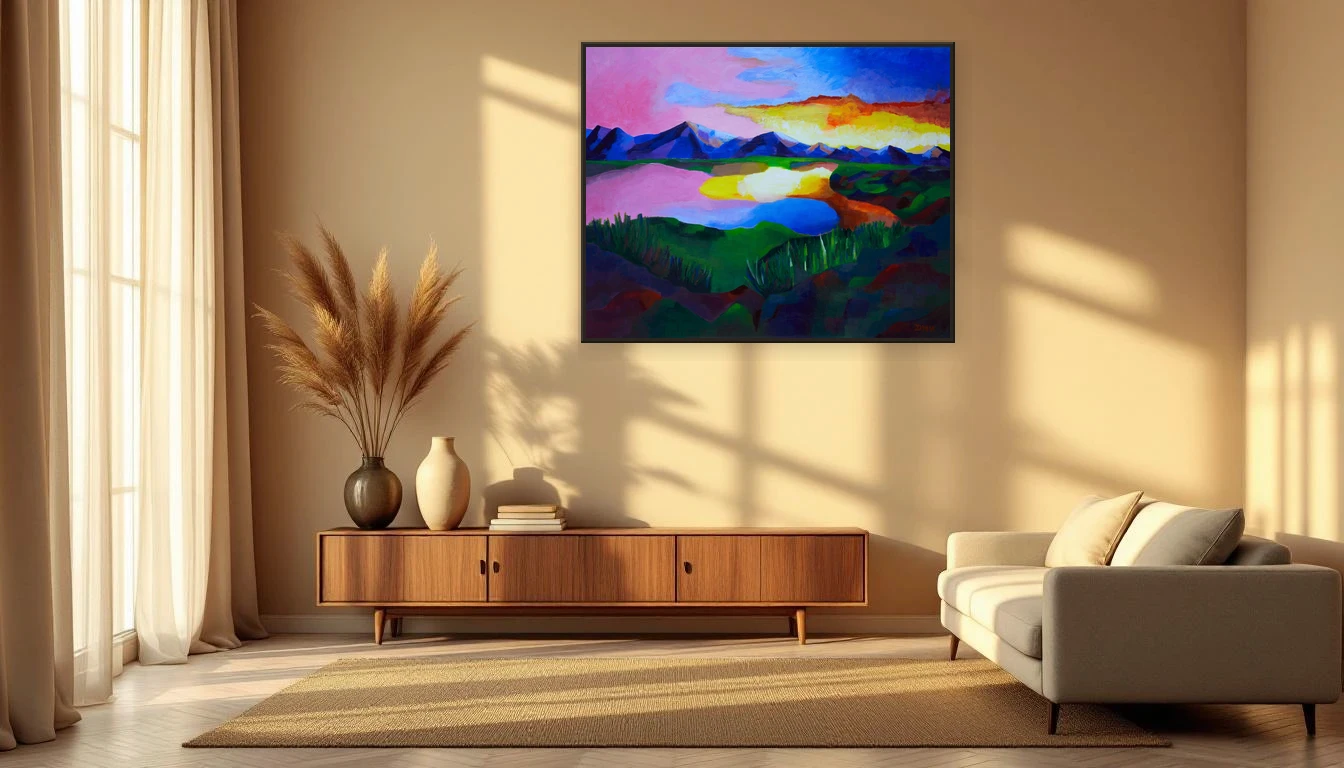
There's a moment in my studio, around five in the afternoon, when everything shifts. The light slants in through the windows, catches the surface of a painting, and suddenly I see things that weren't visible that morning. Shadows pooling in the paint layers. A shimmer where the impasto is thickest. It's as if the painting wakes up.
Texture that breathes
The defining interior trend of 2026 isn't a colour or a style — it's texture. It's everywhere: furniture with tactile surfaces, walls finished in raw plaster, and above all, art. Paintings with relief, with thick layers of paint, with mixed media that invites you to reach out and touch. And this is exactly where the magical interplay with light begins.
A flat printed canvas looks the same at any hour. But a painting with real texture? It changes with the day. In the morning, the raised ridges of paint catch the first cool light. At midday, the shadows nearly vanish. And in the evening, when the sun hangs low, a depth emerges that you never expected.
The science behind light and paint
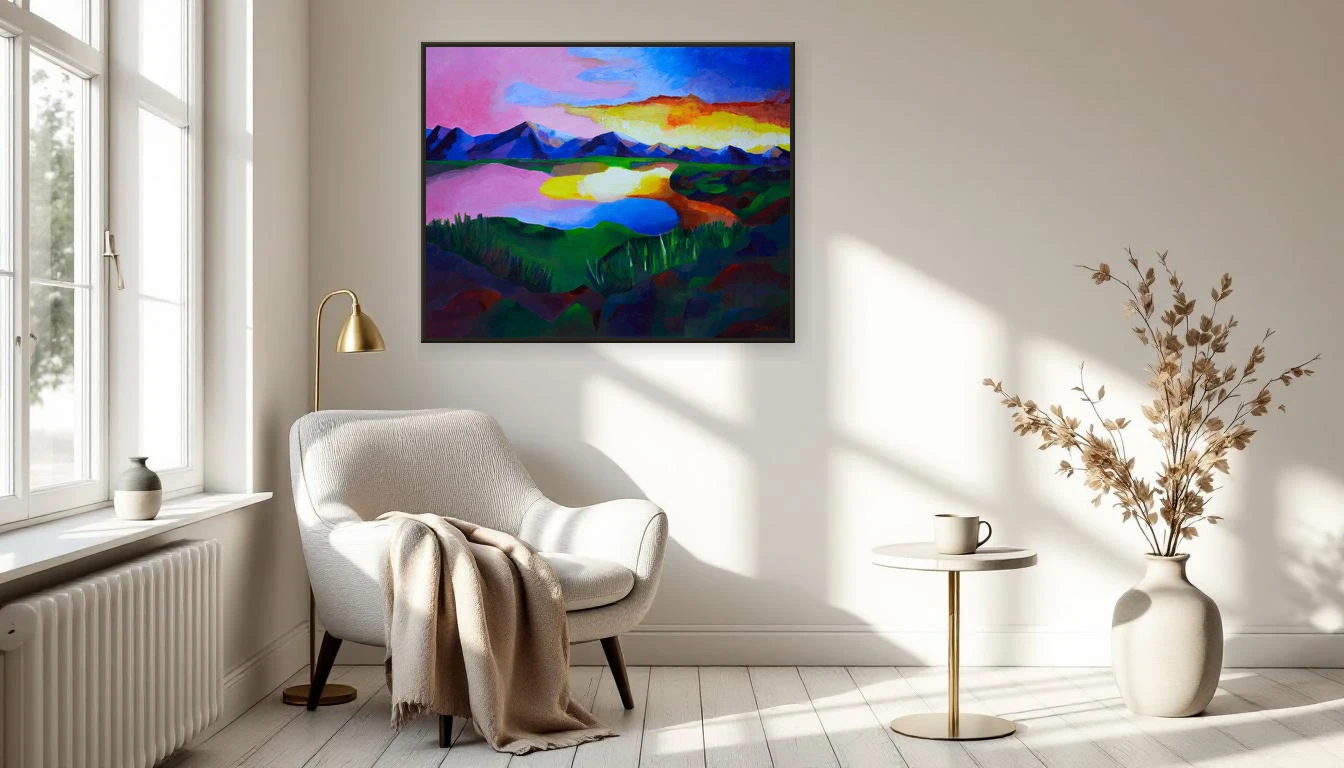
It sounds almost too poetic to be real, but there's genuine science at work. When light hits a textured surface, it creates micro-shadows. Those shadows give your brain depth information — you perceive not just colour, but form. Neuroscience research shows that this kind of visual complexity stimulates the brain without overwhelming it. Think of it like walking through a forest: there's enough to hold your attention, but it doesn't exhaust you.
In my own work, I use this intentionally. I build up layers — sometimes five or six on top of each other — so the light has something to travel through. Underlying colours shimmer through the top layer depending on the angle of light. Every hour of the day offers a different painting.
Where to hang art for the most beautiful light
Where you place a painting determines how you experience it. Here are the guidelines I always share:
North-facing light is even and cool — perfect for works with subtle colour shifts. Colours stay true to themselves throughout the day.
East-facing light gives a soft, warm glow in the morning. Ideal for a bedroom or breakfast nook. You start your day with art that glows.
West-facing light brings the golden hour in the evening. This is where texture truly comes alive — long shadows, warm tones, dramatic depth. My personal favourite for a living room.
Avoid direct sunlight hitting the canvas itself. It fades pigments over time, and heat can damage the paint film. Indirect daylight is both the most beautiful and the safest choice.
Living with the light
What I love most about textural work is that it's never static. It moves with the seasons, with the weather, with the hour. In summer, when the days are long and light lingers until late, a painting becomes almost a clock. You can see the evening approach in the deepening shadows.
This is what I mean when I say art lives. It's not decoration you hang and forget. It's something that deserves — and rewards — your attention every single day. A moment of pausing to truly see.
Want to experience how light can transform your space? Browse my collection and imagine how the evening light might fall across the canvas. Or book a workshop and discover for yourself how texture is born under your own hands.