
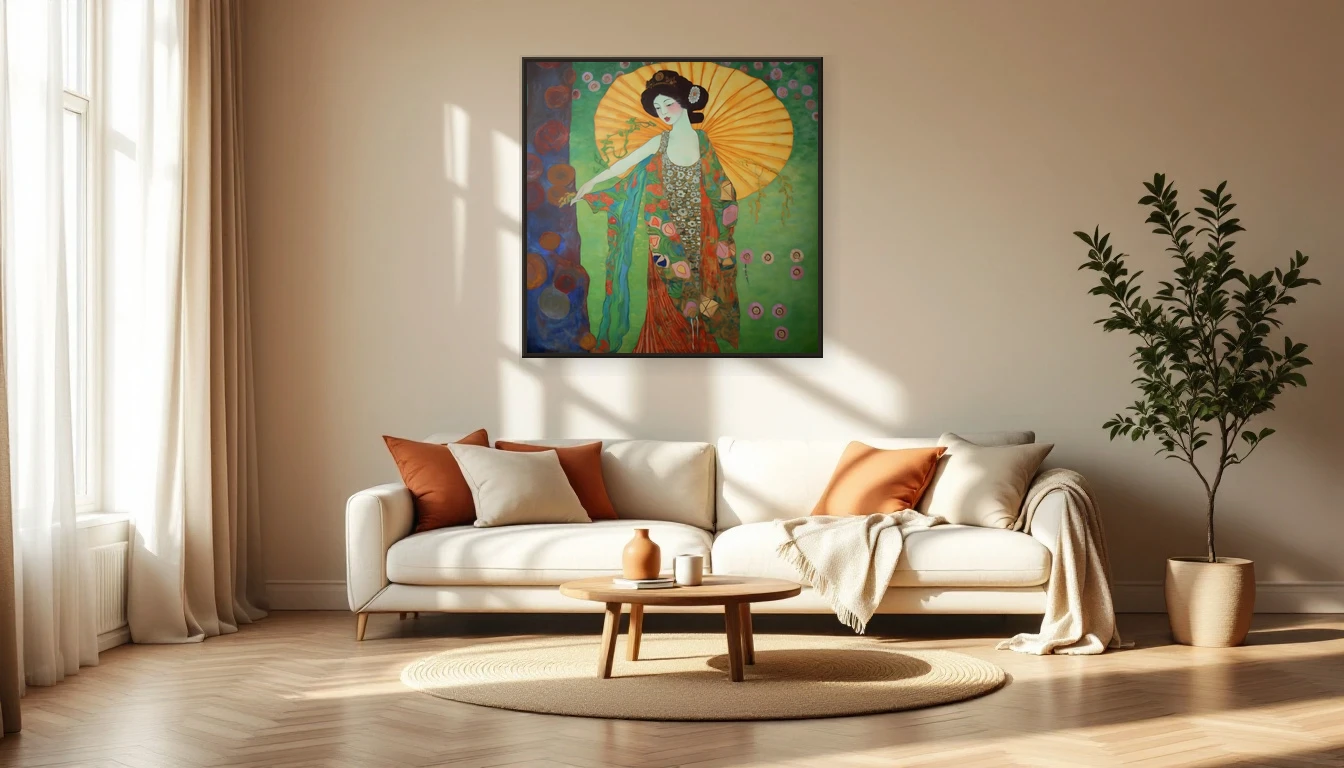
I was standing in my studio the other day, staring at a new piece — all warm ochre and deep olive green — when I noticed my shoulders dropping. Not from tiredness, but because the colours were doing something physical. As if the painting whispered: breathe out.
Colour Is a Language, Not a Label
We tend to choose art the way we choose a sofa: does it match? But in 2026, that thinking is shifting. More and more designers and collectors are picking work based on how it feels, not how it fits a colour scheme. And neuroscience backs them up.
The Science Behind the Feeling
Research in colour psychology shows that colours trigger measurable physiological responses. Warm yellow activates the same brain regions as sunlight — it lifts serotonin. Deep blue slows your heart rate. Earth tones like terracotta and olive green tap into a primal sense of safety, as though your body recognises: I belong here.
It’s no coincidence that healthcare facilities and therapeutic spaces now curate abstract art based on colour psychology rather than aesthetics alone.
Wellness-Driven Art: A Growing Movement
The numbers tell the story. Between 2024 and 2026, demand for original hand-painted abstract art rose by over 27%, driven by what the industry calls wellness-centred design. People no longer buy paintings to fill empty walls — they buy emotional anchors.
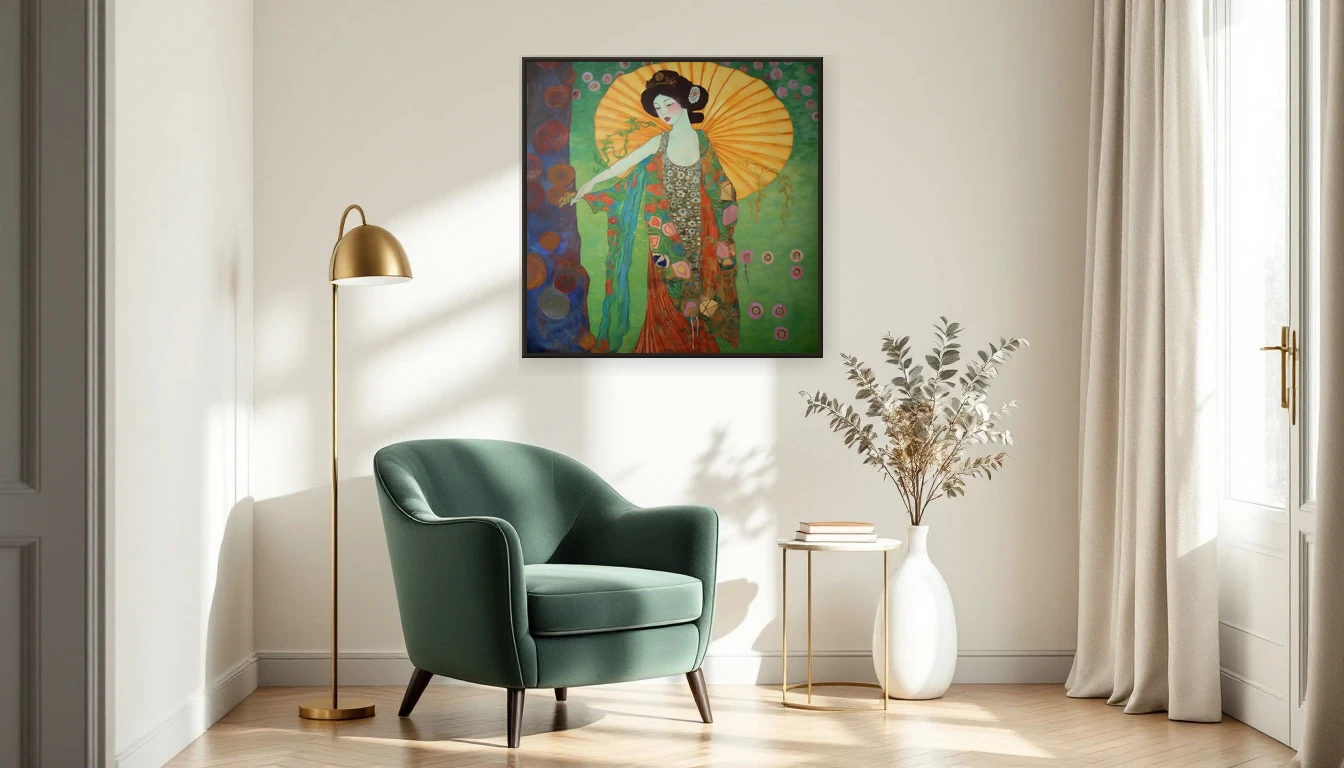
In practice, that means a warm-toned abstract above the sofa to wind down in the evening. An energetic piece in coral and saffron in the hallway to start the day. Art becomes part of your daily rhythm, as essential as good coffee or a morning walk.
From Matching to Feeling
In my own practice, I see this shift every week. Clients ask less about “does this match my sofa?” and more about “how does this piece make me feel?” They hold their hand near the canvas, close their eyes, and simply feel. That isn’t esoteric — it’s exactly how your body responds to colour.
Take Klimt Abstraction from my Mixed Media collection: its warm yellows and olive greens evoke a late summer afternoon. It brings calm without dullness, warmth without noise. Collectors tell me the room feels like it breathes differently.
How to Choose Art by Feeling
My advice: don’t start with the wall measurements or paint swatches. Start with the work. What happens to your breathing? Do your shoulders tense or soften? Do you feel energy or stillness? That first physical response doesn’t lie.
Look for a piece that matches the emotion you want to feel in that space. Your living room craves different energy than your office; your bedroom asks for something different from your hallway. Let the art start the conversation — your walls are already whispering.
Your Wall, Your Emotion
Curious which piece resonates with you? Explore the DNH collection and listen to what draws you in. Or reach out — I love helping people find the perfect colour story for their space.