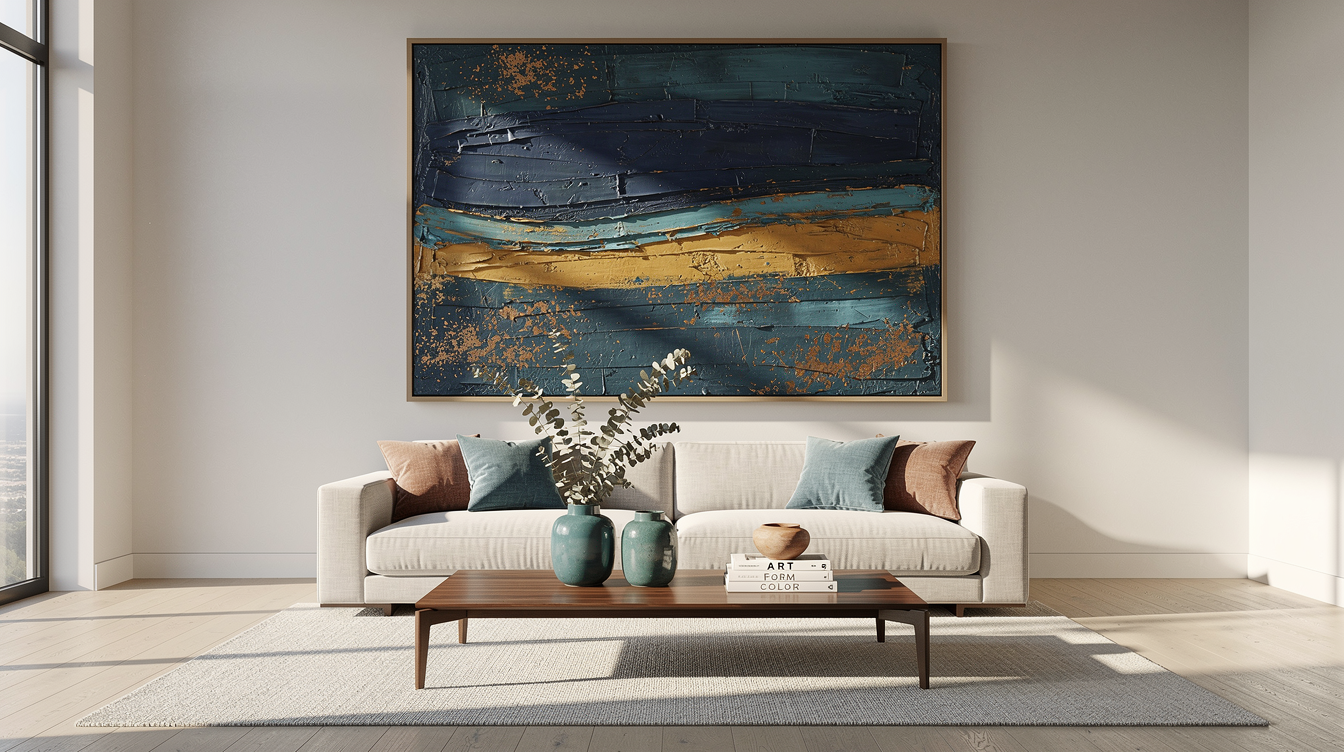
I finished a painting last week — layers of deep ocean blue meeting warm ochre, flecks of copper catching the afternoon light. Standing back, I noticed my breathing had slowed. Not from exhaustion, but from something the work was doing to me. It sounds mystical, but the research backs it up.
Art isn't decoration — it's an experience
We hang a painting and think: lovely, matches the sofa. But what actually happens is far more interesting. Studies show that looking at visual art measurably lowers cortisol, your primary stress hormone. Just 45 minutes of art engagement can produce a significant drop. Your prefrontal cortex — the brain region responsible for emotional regulation, planning, and clear thinking — becomes more active.
In 2026, there's a powerful shift toward art you can physically feel. Not digital renders, not pixel-perfect prints, but work with real presence. Visible brushstrokes, textural layers of paint and medium, organic forms that flow rather than conform. That materiality is exactly what our overstimulated brains are craving.
Colour speaks its own language
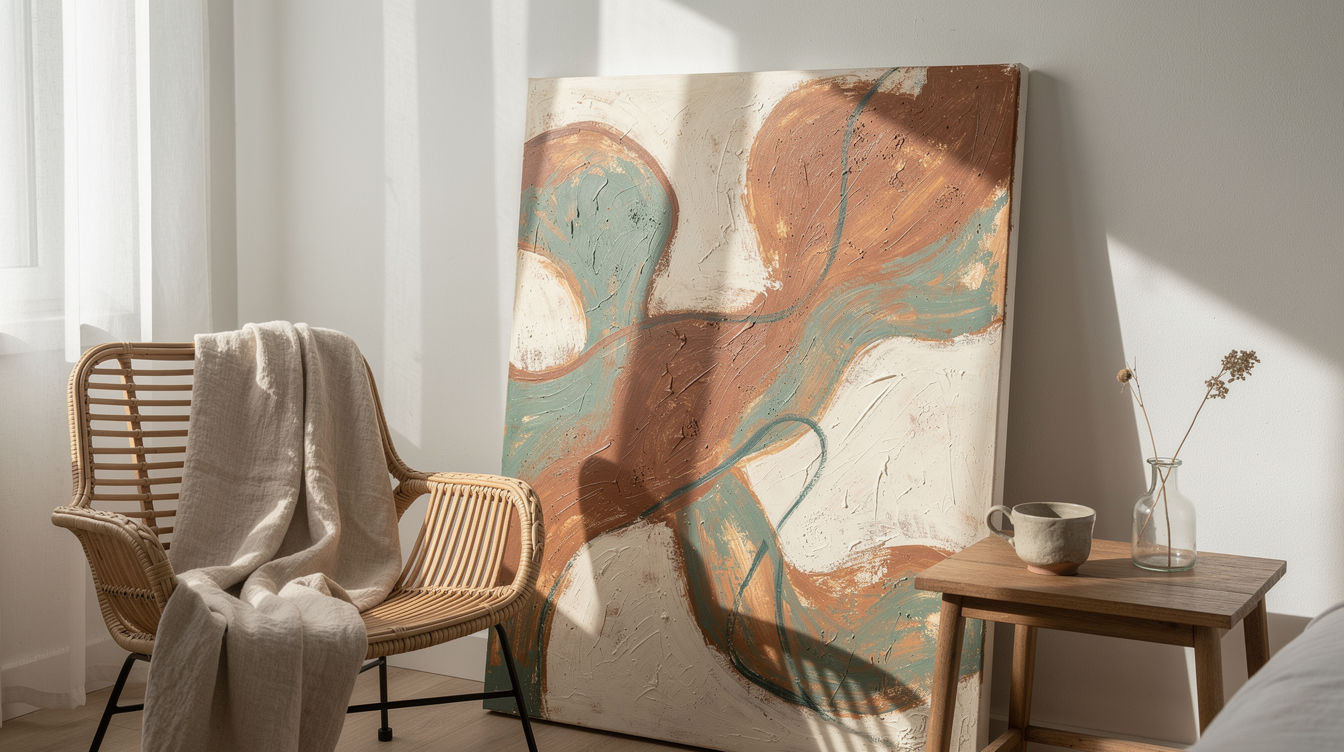
You know it instinctively: a room in warm earth tones feels different from a space drenched in cool grey. But the impact goes beyond atmosphere. Colour psychology research shows that warm hues — terracotta, ochre, soft coral — trigger feelings of safety and connection. The teal and ocean tones surging this year (teal has been named the defining colour of 2026) bring a sense of depth and calm.
When I paint, colour choices are never purely aesthetic. I think about what colours do. A piece dominated by deep blues with soft golden accents works differently in your bedroom than above your dining table. The first invites stillness, the second sparks conversation.
Why abstract art works so well
This is where it gets fascinating. Figurative art — a landscape, a portrait — tells you what to see. Abstract art asks a question. Your brain actively searches for patterns, emotions, meaning. That process engages your creative thinking and emotional intelligence simultaneously.
The 2026 art world confirms this appetite: there's a growing preference for work that is imperfect, that shows the maker's hand. Visible brushstrokes, unexpected colour transitions, layers suggesting hidden depth — it's precisely that human unpredictability that resonates. In a world where AI can generate flawless images, we're seeking the opposite: proof of a human touch.
Organic forms and the calm of flow
One of the strongest visual trends this year is the move away from rigid geometry toward organic, flowing shapes. That's no coincidence. Organic lines — think the way water moves or clouds form — activate our parasympathetic nervous system. They signal safety.
I see this in my own practice. The paintings people linger on longest aren't the busiest or the boldest. They're the ones with movement, with breathing room. A wave of colour pulling across the canvas. A layer showing through beneath another.
Art as a daily ritual
You don't need an hour in a gallery to feel these effects. It starts with intentional looking. Take ten seconds each morning to truly look at the piece on your wall. Not in passing, not as background, but as a moment for yourself. What do you notice today? Which colour stands out? How does it make you feel?
It sounds simple because it is. But that small pause gives your brain the chance to reset. Art at home isn't a luxury — it's a daily invitation to be present.
Choose what you feel, not what matches
My advice? Don't choose art to match your sofa. Choose art that does something to you. That one colour pulling your attention, that texture your hand reaches toward — that's your body telling you what it needs.
Curious which piece speaks to you? Browse the collection or get in touch for personal guidance. Because the right art on your wall? It changes more than your interior.