
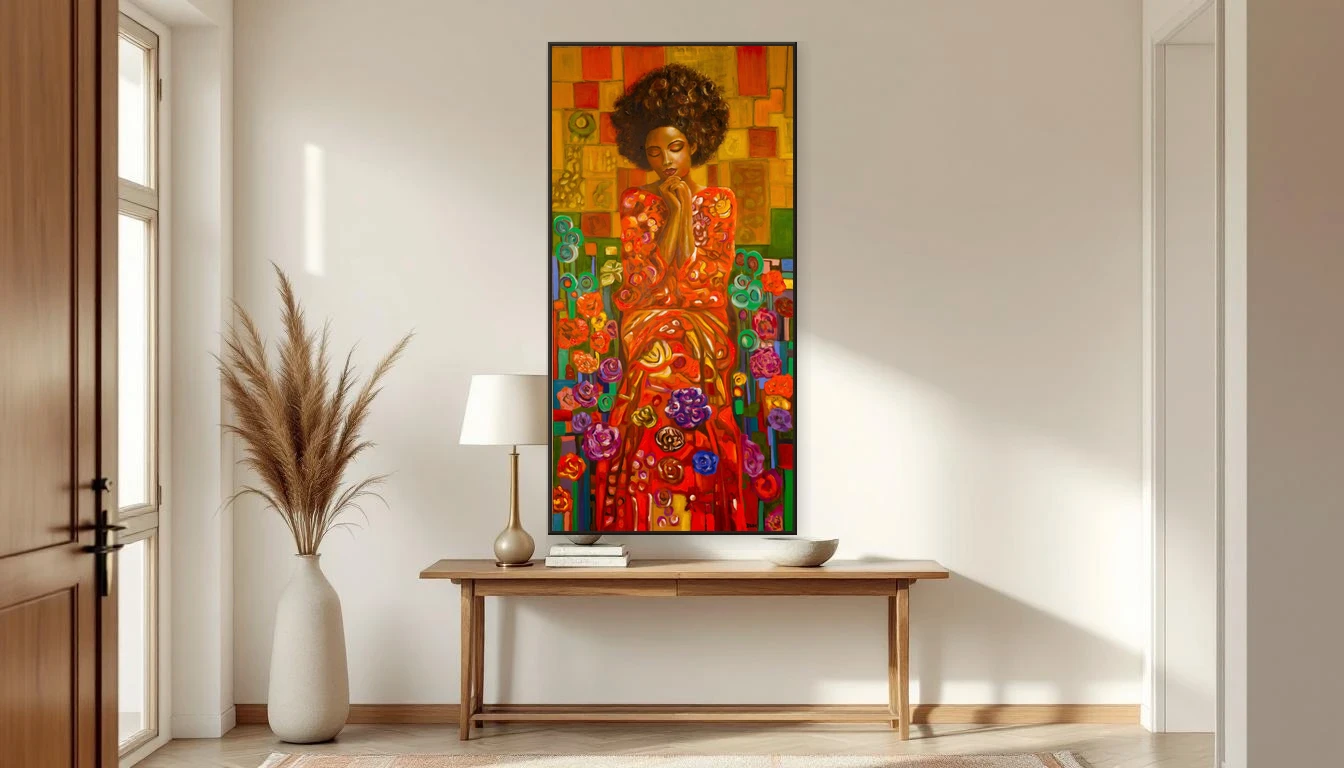
Most of us treat the hallway like a waiting room — a place for coats, keys and the occasional misplaced parcel. But in my studio I keep hearing the same question from collectors just starting out: where do I begin with art in my home? The answer, more often than not, is at the front door.
Seven Seconds Set The Tone
Interior designers often cite the statistic that visitors form a lasting impression of your home within seven seconds of walking in. That's a good argument for intention in the entryway. But the real reason to invest here isn't about guests — it's about you. You cross this threshold every single day. What you see in that first second colours the rest of your evening. A blank wall quietly tells you the space isn't ready yet. A thoughtful artwork says something else entirely: this is my home, and it starts here.
One Piece Beats A Gallery Wall
The 2026 entryway trend reports are unanimous on one point: hallways are being reclaimed as intentional rooms, but without clutter. A single large, quiet work above a slim console, flanked by two matching lamps, creates a focal point that a dozen small frames never will. The reason is architectural. Hallways are almost always narrow and elongated, and the eye needs somewhere to land. One piece gives it that landing point. Ten pieces add visual noise to a space already busy with arrivals and departures.
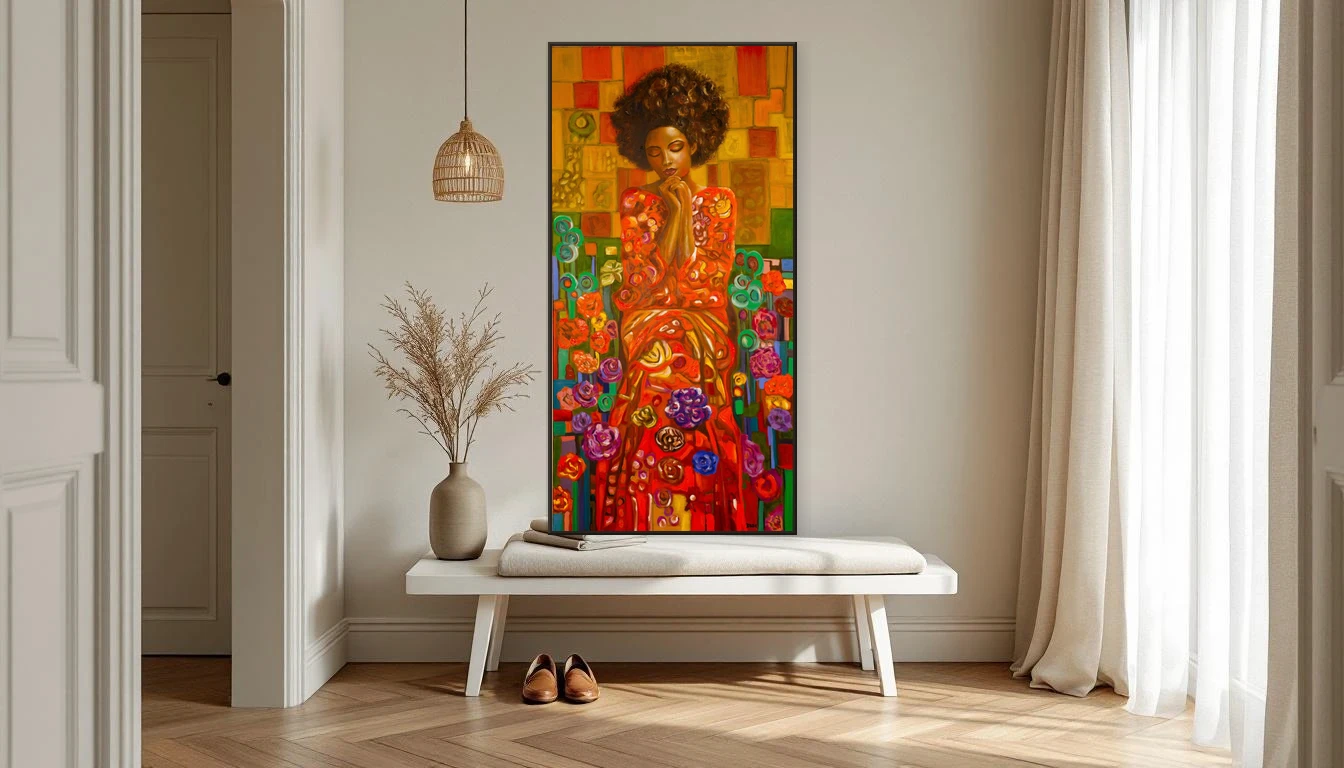
Choose By Feeling, Not By Matching
The hallway is rarely a room where you have a sofa to coordinate with — and that's a gift. Here you get to choose on feeling alone. Want calm? Something with soft, earthy tones and plenty of breathing room. Want energy? An abstract with a decisive line or a deep pigment colour — the rich greens 2026 designers are bringing back to entryways, or the muted blues that make classic panelling feel alive again. Choose something that greets you, not something designed to impress your guests.
Light Does Half The Work
Hallways rarely have strong natural light — not a problem, but something to work with. A small spotlight aimed directly at the piece, or a warm floor lamp beside it, is the difference between "art on the wall" and "art that's alive in the room". Textured abstract works — like the pieces I build up with natural pigments in my studio — respond particularly well to directional light. The shadows that settle into the surface become part of the work itself.
Start Where You Come Home
If you're wondering where to begin with art in your home, skip the living room for now. Begin at the front door. It's the one room you arrive in and leave from every day — which means it's the one room where a real piece will quietly do its work most often. A pause after a long day. A soft welcome back to yourself.
Looking for a piece that turns your hallway into a real room? Explore the DNH collection — I'd love to help you think about what fits your home.