
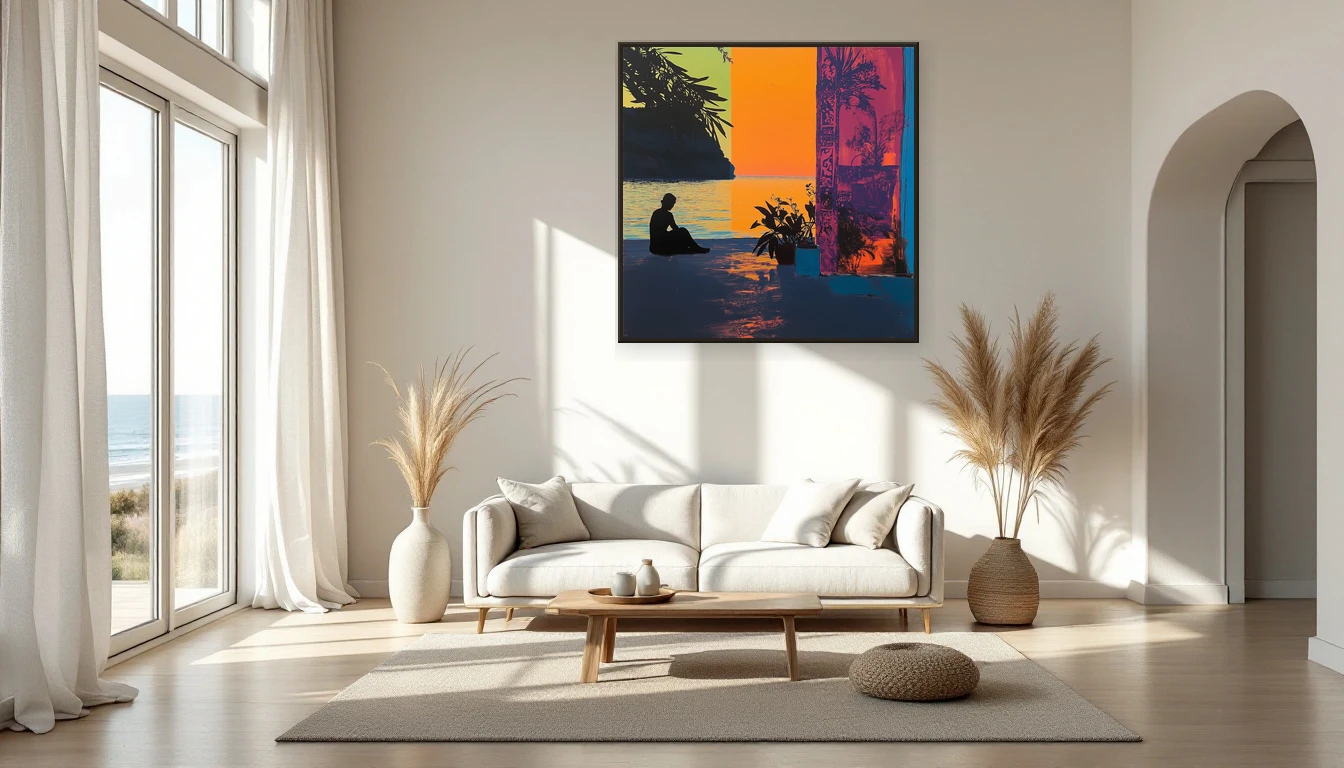
There's a stretch of Dutch coastline near my studio where I go when I need to reset. Not to swim, not to sunbathe, just to watch. The water does the same thing every time, and yet it never looks the same. That contradiction fascinates me, and it's the same energy I try to capture on canvas.
Why Water Quiets the Mind
Neuroscientists call it 'blue mind': the measurable drop in cortisol and heart rate that happens when we look at water. Even a photograph of the ocean activates the part of the brain responsible for calm, focused thought. Now imagine what a large abstract painting with that same fluidity can do in your living room. Not a literal seascape, but something that carries the rhythm and movement of water, a visual exhale.
The Language of Flow
Abstract art doesn't need to depict waves to feel like water. It's about gesture: pigment pooling into unexpected shapes, layers bleeding through each other, a colour gradient that shifts like the tide. Your eyes follow these organic movements instinctively, and your nervous system responds. Shoulders drop. Breathing slows. The painting does the work.
A Palette Beyond Blue
Water is not just blue. It's the deep petrol of the North Sea before a storm, the chalky turquoise of shallow Mediterranean bays, the silvery grey of a lake at dawn. Interior experts have named 'Transformative Teal' as 2026's colour of the year, a blue-green that symbolises balance and renewal. These are the exact tones that give abstract paintings their depth and pull, and they work in virtually any interior scheme.
Where to Hang Water
Anywhere you want to exhale. Above the bed, where a horizontal piece with soft gradients helps you let go at the end of the day. In the bathroom, as a spa-like focal point. In your living room, opposite the sofa, so your eyes have somewhere to rest between the noise. Even in the entryway, the first breath when you come home.
Biophilic Design and the Water Element
The design conversation of 2026 centres on biophilic living: not just imitating nature, but feeling it. After years of greenery and natural wood, the focus is shifting to water as an element. Not necessarily as a literal fountain, but as atmosphere. An abstract painting with fluid pigments and oceanic tones brings that presence into your home without a single drop.
How I Paint Water
In my studio, I work with thinned acrylics and aquarelle pigments, tilting the canvas, letting gravity pull the paint into its own patterns. The process itself is meditative, and you can see that in the result. No hard edges, just soft transitions that breathe. That texture, that sense of movement without restlessness, is what makes a space feel alive and calm at the same time.
Less Literal, More Felt
The beauty of abstract water art is its subtlety. No shells, no anchors, no lighthouse on the horizon. It's the essence without the cliche. A visitor feels the calm, the space, the movement, without being able to pinpoint exactly why. That's the power of abstraction: it speaks to your senses, not your intellect.
The Right Wall
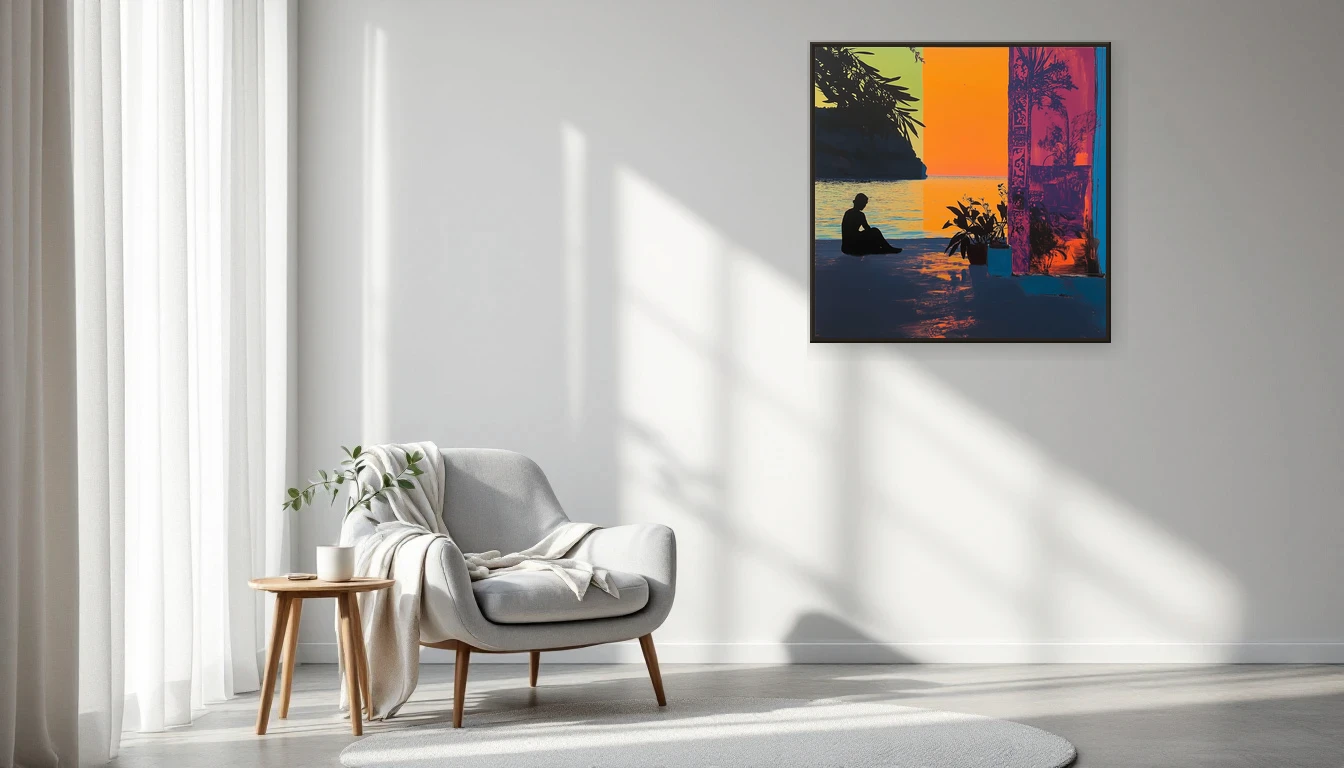
A light, neutral wall lets watery tones sing. Think warm white, soft linen, or pale grey. But contrast can be equally powerful: a deep blue or teal painting on a warm clay-toned wall creates striking depth. Give the work breathing room, water needs space, in art as in nature.
Your Ocean at Home
You don't need to live by the coast to feel that calm daily. The right abstract work brings the rhythm of water to wherever you are. Explore the collection and see which piece gives your space the quiet it deserves. Or visit my studio in Zoetermeer, I'd love to tell you about the process behind each painting.