
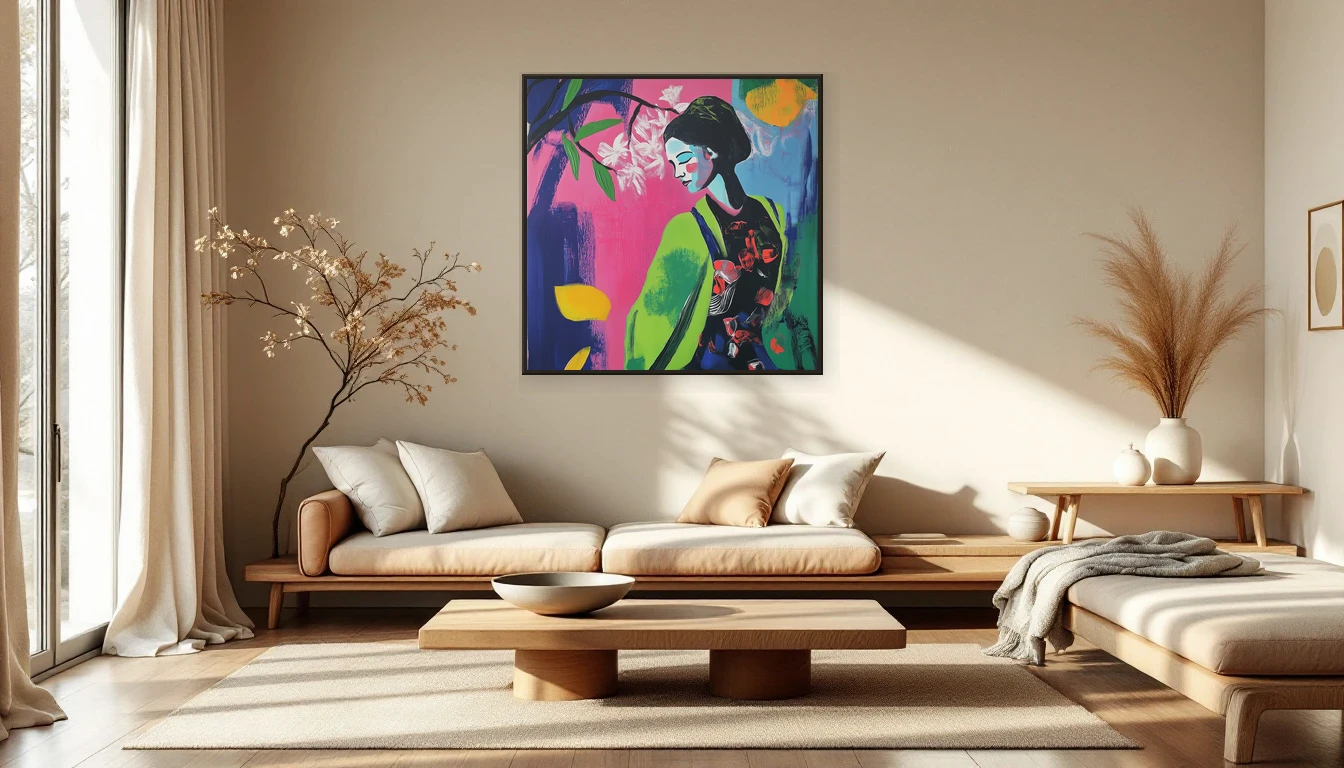
There’s a painting in my studio that nearly ended up in the bin. A brushstroke that slipped, pigment that pooled where I hadn’t intended. And yet — that accident is what makes the piece. It reminded me why I keep coming back to wabi-sabi: the idea that beauty lives in what isn’t planned.
What Wabi-Sabi Actually Means
Wabi-sabi is an ancient Japanese philosophy that finds beauty in imperfection, transience and incompleteness. Not polished surfaces but the crack in a ceramic bowl, the patina on a wooden table, the soft wear of a linen cushion used for years. It’s the opposite of the curated, flawless interiors we scroll past daily — and that’s exactly why it feels like fresh air.
Why It Resonates Right Now
In 2026, searches for wabi-sabi art and organic textures have grown by over 240%. We’re exhausted by the pressure to make our homes look ‘finished’. Wabi-sabi says: your home is allowed to breathe. In fact, it must. The trend sits at the intersection of warm minimalism and biophilic design — two movements that are reshaping how we think about living spaces worldwide.
Imperfection as a Design Principle
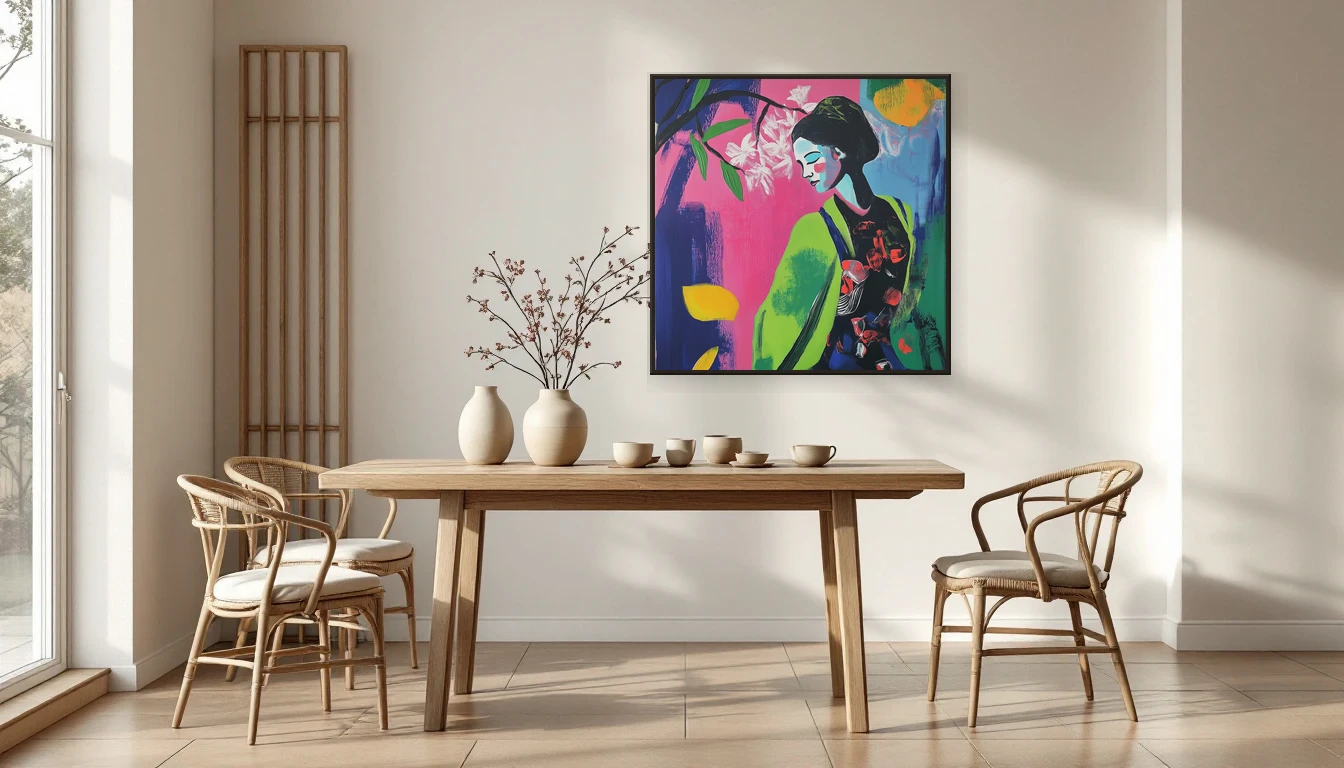
Think of a handmade ceramic piece with a slight irregularity. A lime-washed wall that isn’t uniformly smooth. In 2026’s interiors, natural materials like wood, rattan, linen and stone are taking centre stage — materials that become more beautiful with age rather than less. It’s about choosing things that tell a story, rather than things that just look good on day one.
Abstract Art and the Uncontrolled
As an abstract artist, I work with the unexpected every day. Paint that flows, colours that blend in unforeseen ways, textures that emerge through layering. This is exactly where wabi-sabi and abstract art meet: in embracing the process, not just the outcome. Every brushstroke carries a moment of surrender.
Materials That Age With Grace
Choose materials that change and mature. Solid oak over veneer. Linen over polyester. Hand-blown glass over factory-made. Terracotta, raw stone, unglazed earthenware. Each carries the traces of time and use — and that’s the whole point. Your home should feel like it has a history, even if that history started yesterday.
A Colour Palette That Breathes
The wabi-sabi palette aligns perfectly with this year’s dominant colours: taupe, sand, terracotta, olive, warm cream. No harsh contrasts but gentle transitions that let a room exhale. Pair these tones with an abstract painting in the same register, and you create a space that feels like a deep, slow breath.
Sustainability by Design
Wabi-sabi is inherently sustainable. When you find beauty in what ages, you buy less and keep longer. You choose locally made materials, craft over mass production. In a moment when sustainability is no longer optional, wabi-sabi offers an approach to interiors that actually makes sense — for your wellbeing and for the planet.
Start Small, Live Fully
You don’t need to overhaul your entire home. Start with one handmade object on a shelf, a cushion with natural texture, a painting that isn’t ‘perfect’ but moves you. Browse the DNH Artful Living collection for abstract works that celebrate imperfection — or book a workshop and experience the creative process for yourself.