
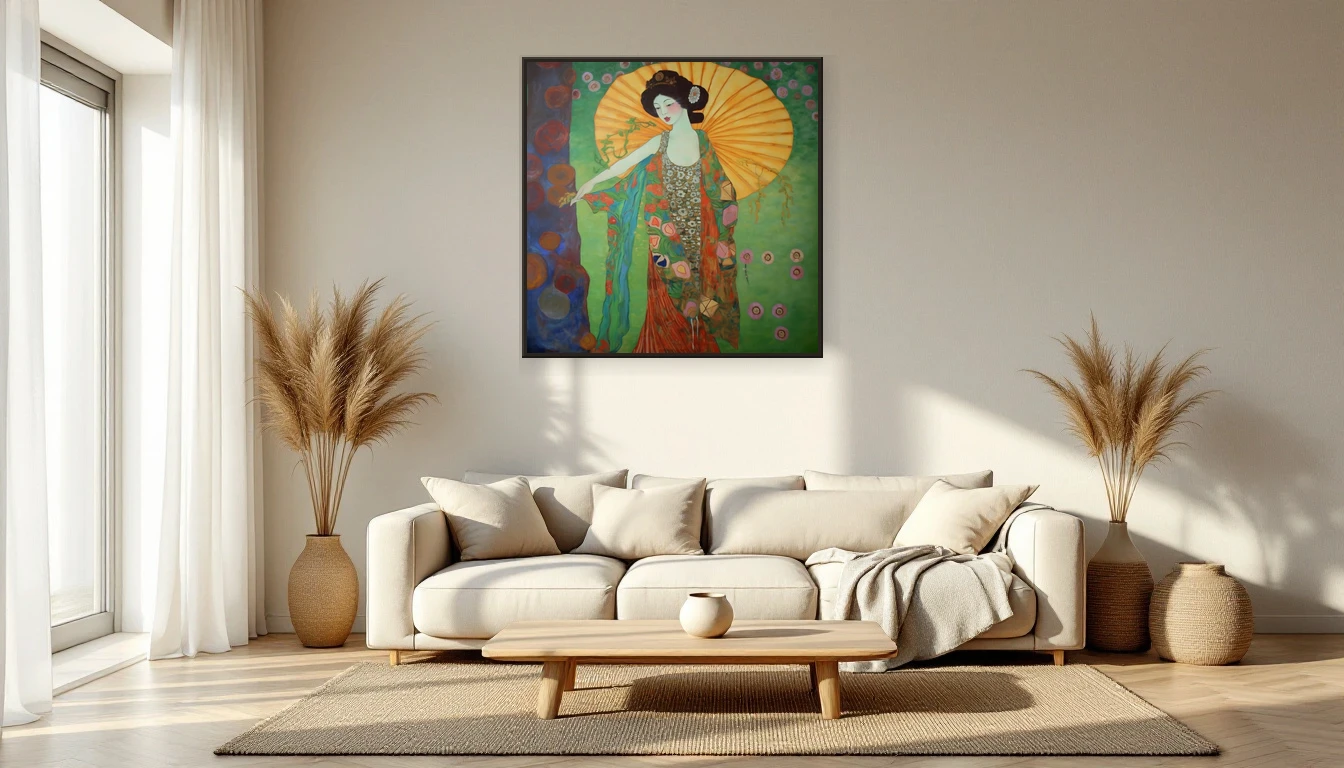
There’s a painting in my studio that I almost discarded. A drip of paint landed where it shouldn’t have, a line veered off course. But every time I walked past it, something pulled me back. That “mistake” gave the piece its pulse. It made it real.
What Wabi-Sabi Actually Means
Wabi-sabi is a Japanese aesthetic rooted in three ideas: imperfection, impermanence, and incompleteness. It’s the crack in a ceramic bowl, the grain in weathered wood, the uneven brushstroke on canvas. In a culture obsessed with polish and perfection, wabi-sabi asks us to slow down and see beauty in what simply is — rather than what should be.
This philosophy is reshaping interiors worldwide. Searches for wabi-sabi wall art have surged more than 240% year-on-year, driven by a collective hunger for homes that feel authentic rather than curated. It’s less about a style and more about a mindset.
Why Abstract Art Is Natural Wabi-Sabi
Abstract painting lives in the space between intention and accident — and that’s exactly where wabi-sabi resides. There’s no “correct” version of an abstract work. Every unexpected colour shift, every texture variation, every ridge of thick paint carries the memory of its making.
When I paint, I deliberately leave room for surprise. A splash that bleeds beyond its boundary, a scratch through a wet layer, pigment that settles in unpredictable ways — these are the moments that give a painting its soul. The materials I work with — layered acrylics, mixed media, natural pigments — age alongside your interior. They catch light differently as the day unfolds. They’re alive.
Bringing Wabi-Sabi Into Your Home
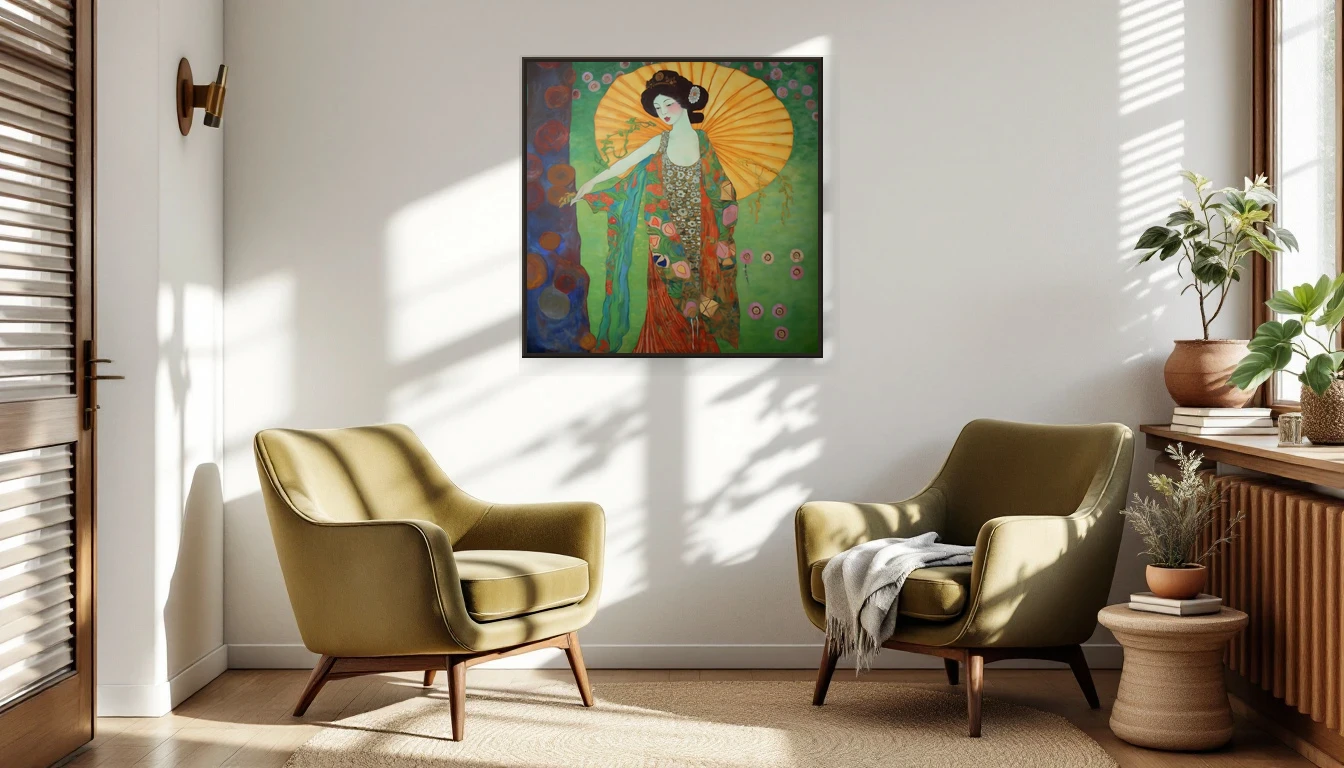
You don’t need a minimalist interior to embrace this philosophy. It’s a sensibility, not a rulebook. Here’s what I’ve found works:
Choose materials with a story. Linen cushions that crease, a wooden side table with visible knots, ceramics with an uneven glaze. These elements speak the same language as the art on your wall.
Leave space to breathe. Wabi-sabi thrives on restraint. A single abstract canvas on a quiet wall can hold more power than a crowded gallery arrangement. Let your favourite piece command the room.
Lean into earthy tones. Muted browns, moss greens, soft greys, warm sand — the wabi-sabi palette aligns perfectly with this year’s interior direction. A painting in these hues instantly grounds a space.
Pair old with new. A contemporary abstract work beside a vintage side table or a family heirloom — the contrast tells your story. In wabi-sabi, nothing is too old or too new; everything coexists.
The Courage to Choose Imperfect
Perhaps the most beautiful thing about wabi-sabi is that it asks for a small act of courage: choosing the piece that moves you rather than the one that looks most polished. The painting with the stray drip that “shouldn’t” be there — but makes it unmistakably human.
My collection is built on exactly this principle: art that lives, breathes, and shifts with your home and your mood. Curious which piece speaks to you? Browse the collection or reach out for personal guidance.