
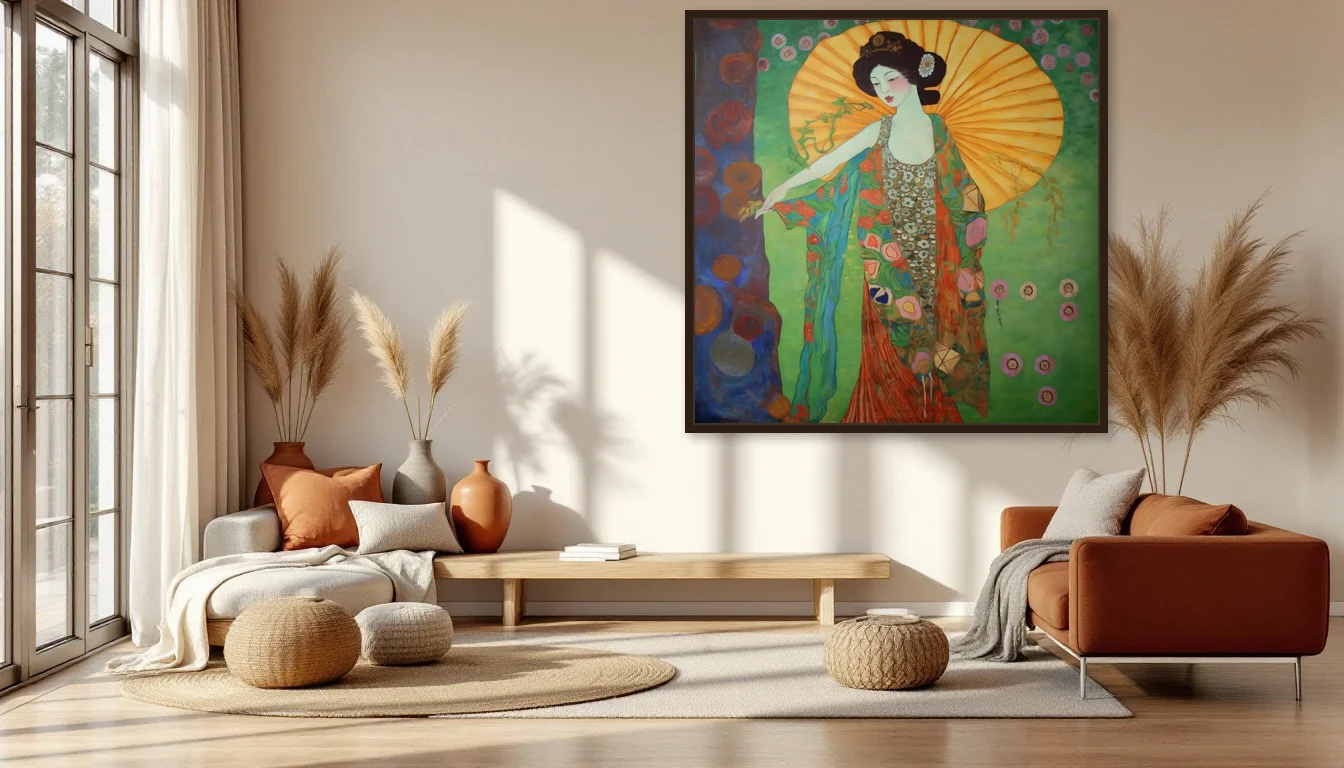
Yesterday afternoon I stood in my studio with paint on my hands — literally. I was building up thick layers of acrylic mixed with structure paste and fragments of gold leaf. And as I pressed material into the canvas, it struck me: this is why people stop in front of a painting. It is not just colour. It is the layer, the depth, the feeling that you could almost reach out and touch it.
The Rise of the Tactile Interior
If you have been following this autumn's design fairs and interior magazines, you will have noticed one word surfacing everywhere: texture. Bouclé sofas, hand-woven cushions, raw ceramics, hammered copper. The sleek minimalism of recent years is making way for something warmer, something more human. According to Vogue Living and Architectural Digest, 2026 is the year of tactile richness — materials that invite you to feel, not just look.
And that shift extends straight to the art on your walls.
Why Our Brains Love Texture
There is science behind it. Researchers at University College London found that our brains respond more strongly to images with visible texture than to flat ones. We 'feel' with our eyes — a phenomenon called visual haptics. A painting with relief, with visible brushstrokes or mixed materials, literally activates the part of your brain that processes touch.
That is why mixed-media art carries such power. A work like my Klimt Abstractie layers pigment, structure and gold tones that shift as the light moves across them. It is not a flat image — it is an experience.
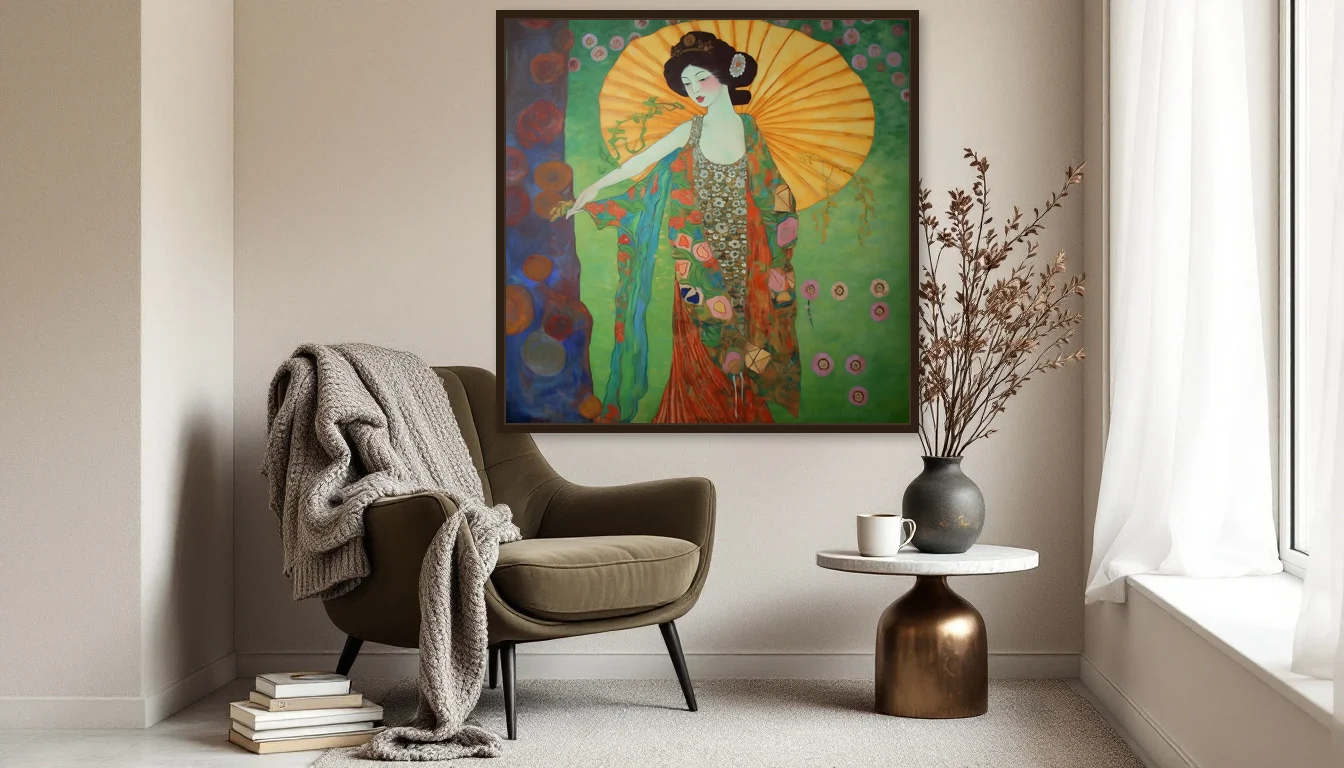
How to Bring Texture Into Your Home
You do not need a full renovation. Start with your wall as the anchor point.
Choose art with depth. Look for works where you can see the brushstrokes, where materials are blended, where the surface has a life of its own. Mixed media, impasto techniques, or pieces on raw linen grounds — they add a dimension that a flat print simply cannot match.
Create a dialogue. Hang textured art next to tactile objects: an earthenware vase, a wooden console, a dried bunch of pampas grass. Let materials speak to each other. Rough beside smooth, matte beside glossy — the contrast brings the whole room alive.
Play with light. Texture truly reveals itself under the right lighting. Sidelight — from a window or a directed spot — casts shadows across the relief and exposes details you would miss under flat, frontal light.
The Winter Wall
November is the perfect time to start. The days are getting shorter, we are retreating indoors, and our walls become the backdrop of daily life. A tactile artwork adds warmth that no radiator can provide. It turns a blank wall into a place to pause and reflect.
In my collection you will find this philosophy woven through every piece. From the layered abstractions in The Abstracts to the rich mixed-media works — each one is made to be not only seen, but felt.
Texture as a Personal Statement
What I love most about this trend is that it is anti-perfection. Texture is messy, organic, human. It shows the hand of the maker. In an age of AI-generated imagery and endless digital surfaces, that is a deliberate choice. You are choosing something real.
And that is exactly what turns a house into a home.
Discover It Yourself
Curious how textured art could transform your space? Browse the collection or get in touch for personal advice. And if you would like to see the creative process up close — my studio door is always open for a cup of coffee and a good conversation about art.