
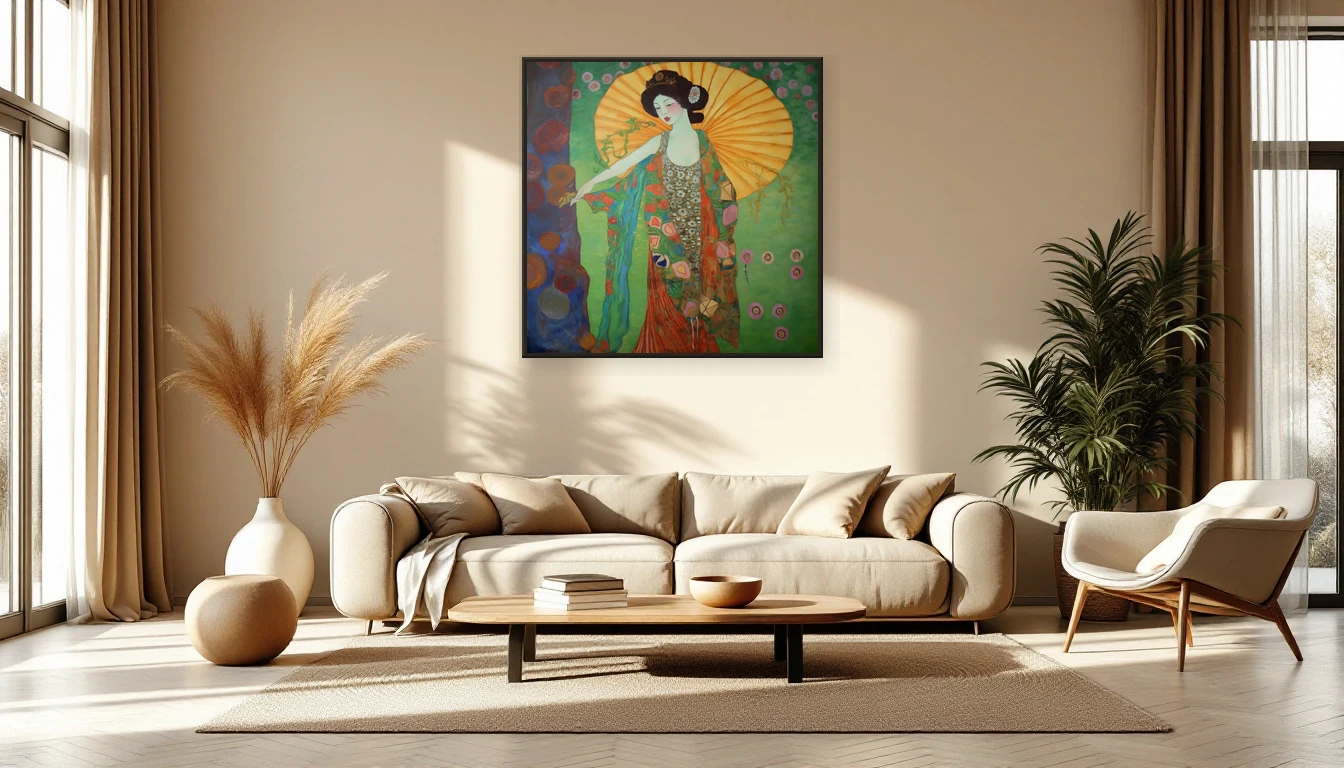
There is a kind of room that holds you the moment you walk in. Nothing jumps out. No statement piece demands your attention. Yet everything feels right — warm, considered, alive. That room is almost certainly tonal.
What Tonal Living Actually Means
Tonal living is the art of building a space within one colour family. Instead of mixing contrasting hues, you layer shades of the same tone — from light to dark, matte to glossy, smooth to textured. Picture a room in sand, honey and cognac. Or a space that breathes in sage, olive and moss.
It is not minimalism. A tonal room is rich — but its richness comes from nuance rather than variety.
The Trend Behind the Feeling
The design world calls it 'quiet luxury': elegance you feel rather than see. After years of cool greys and stark whites, the pendulum has swung firmly toward warmth. Pinterest reports searches for 'moody living room' and 'warm neutral interior' more than doubling in 2026. Industry experts describe the shift as 'warm minimalism' — comfort, softness and natural beauty over clinical precision.
Colour-of-the-year picks across major brands emphasise tonal depth and spatial calm. It is not about picking one perfect shade. It is about learning to vary within a single palette — and trusting that the depth will come.
Art as a Tonal Anchor
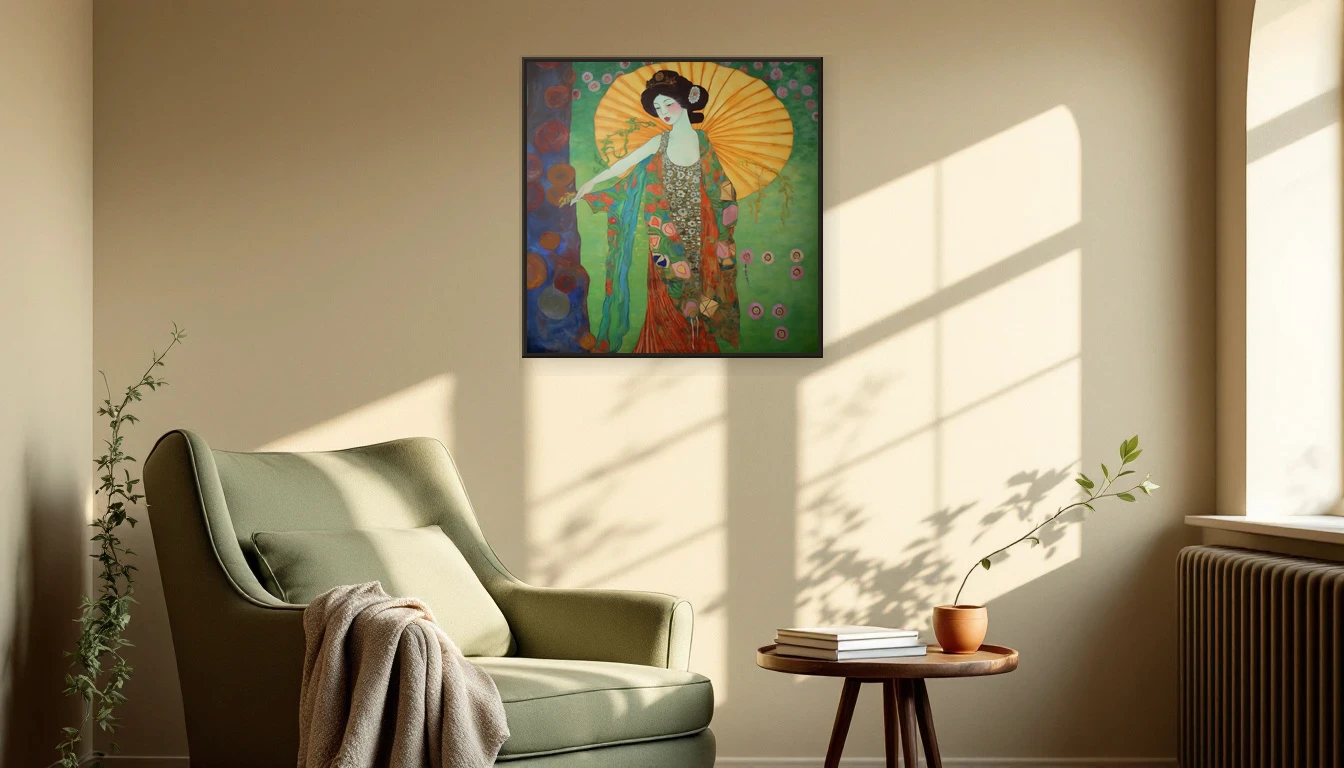
In a tonal interior, art plays a pivotal role — not as a bright focal point that contrasts with everything around it, but as an anchor that holds the room together. An abstract work that lives in the same colour family as your sofa, your floor and your curtains creates a sense of coherence your body registers before your mind names it.
Look for paintings with what collectors call 'tonal depth': gradations within one hue, layers of paint that pull you inward. The subtle transitions — from ochre to gold, from sage to forest green — are what make a piece feel timeless rather than trendy.
How to Start
Choose one wall, one corner, one colour family. Take your warmest neutral as a base — sand, taupe or warm cream — and build with materials: a linen sofa, a timber side table, ceramics in matching tones. Then add art that lives within that same palette.
A few practical notes: choose a painting at least two-thirds the width of the furniture beneath it. Echo the artwork’s colours in cushions or a throw. And perhaps most importantly, leave space. Tonal living works best when there is room to breathe.
The Feeling That Stays
What strikes me most about tonal living is the feeling it creates. You walk into a room and everything clicks, though you cannot explain why. There is no visual noise, no competition for attention. Just warmth, depth and quiet.
That is exactly what I pursue in my work: art that does not shout but makes you still. That invites you to look, to feel, to breathe. If you want to bring that experience into your own home, start with the colours that speak to you most — and stay there. The depth lies in the nuance.
Curious which work suits your tones? Explore the DNH collection and discover art that whispers instead of shouts.