
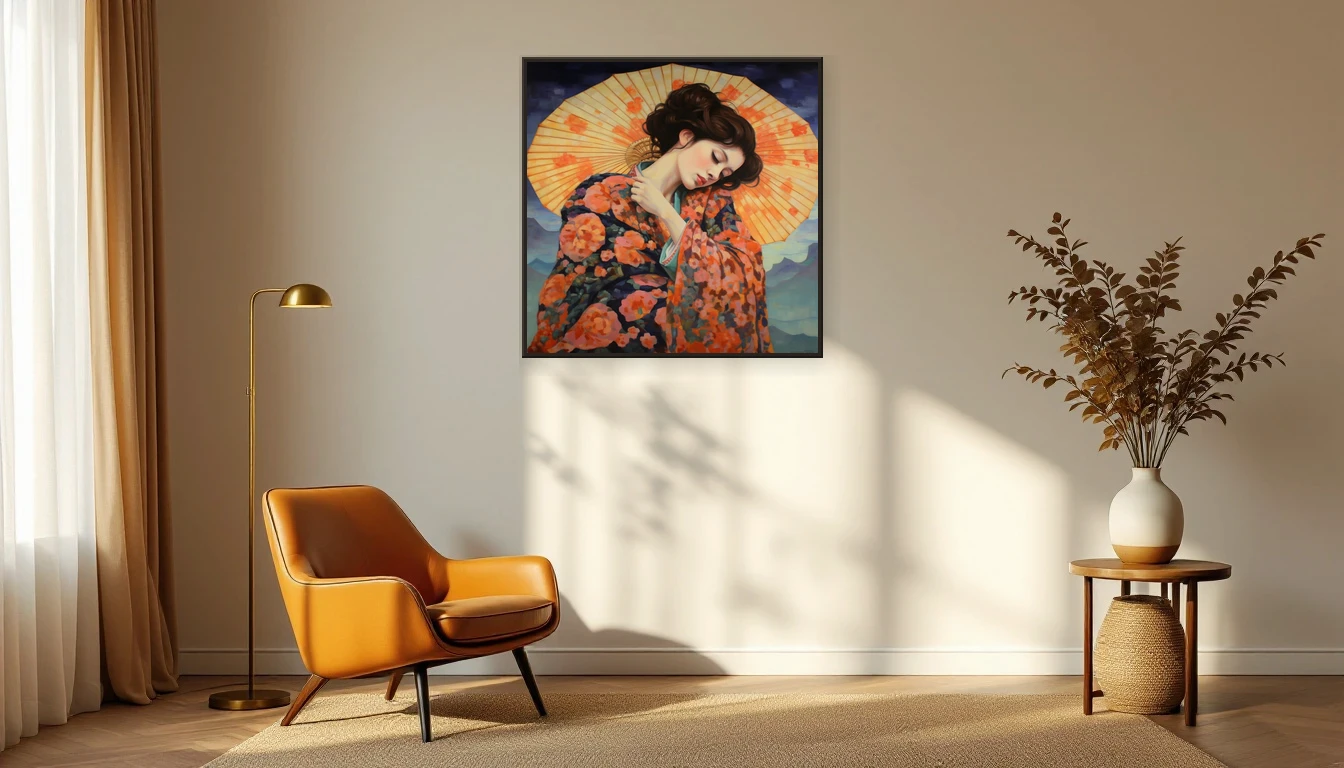
Something I keep noticing in my studio: the same painting can feel completely different at noon versus nightfall. In morning light, it's calm and restrained. Under a warm lamp in the evening, the gold catches fire and the whole piece starts to breathe. That shift isn't magic — it's physics. And once you understand it, you'll never look at your walls the same way.
Why Light Changes Everything
Museums spend serious money on lighting design, and for good reason. Light doesn't just illuminate art — it interprets it. Warm light deepens earthy tones and brings out gold. Cool light sharpens contrast and lifts blues. The same painting can look muddy or magnificent depending on the lamp above it.
What makes this fascinating is that it works mostly on an unconscious level. You credit the room, the art, the furniture — while the light is quietly doing the heavy lifting.
Colour Temperature: The One Number That Matters
Every light source has a colour temperature, measured in Kelvin. For art, the sweet spot is usually between 2700K and 3000K — a warm, golden glow similar to candlelight. This range flatters oil paintings, acrylics, and mixed-media pieces with warm palettes. If your work leans cooler — ocean blues, silver, monochrome photography — try 4000K to 5000K for a more neutral, daylight-like quality.
One number to keep in mind: CRI, or Colour Rendering Index. Museums aim for 95 and above. Most home bulbs sit around 80, which is why art often looks slightly off at home. Look for LEDs with CRI 90 or higher — the difference is immediately visible.
Picture Lights: The Simplest Upgrade
A picture light is one of the most effective ways to elevate your art at home. These elegant fixtures — mounted above the frame or on the wall — cast a focused pool of warm light that naturally draws your eye.
The rule of thumb: the light should span about 65 to 75 percent of your frame's width. Any narrower and you'll get hotspots. Any wider and you're lighting the wall more than the art.
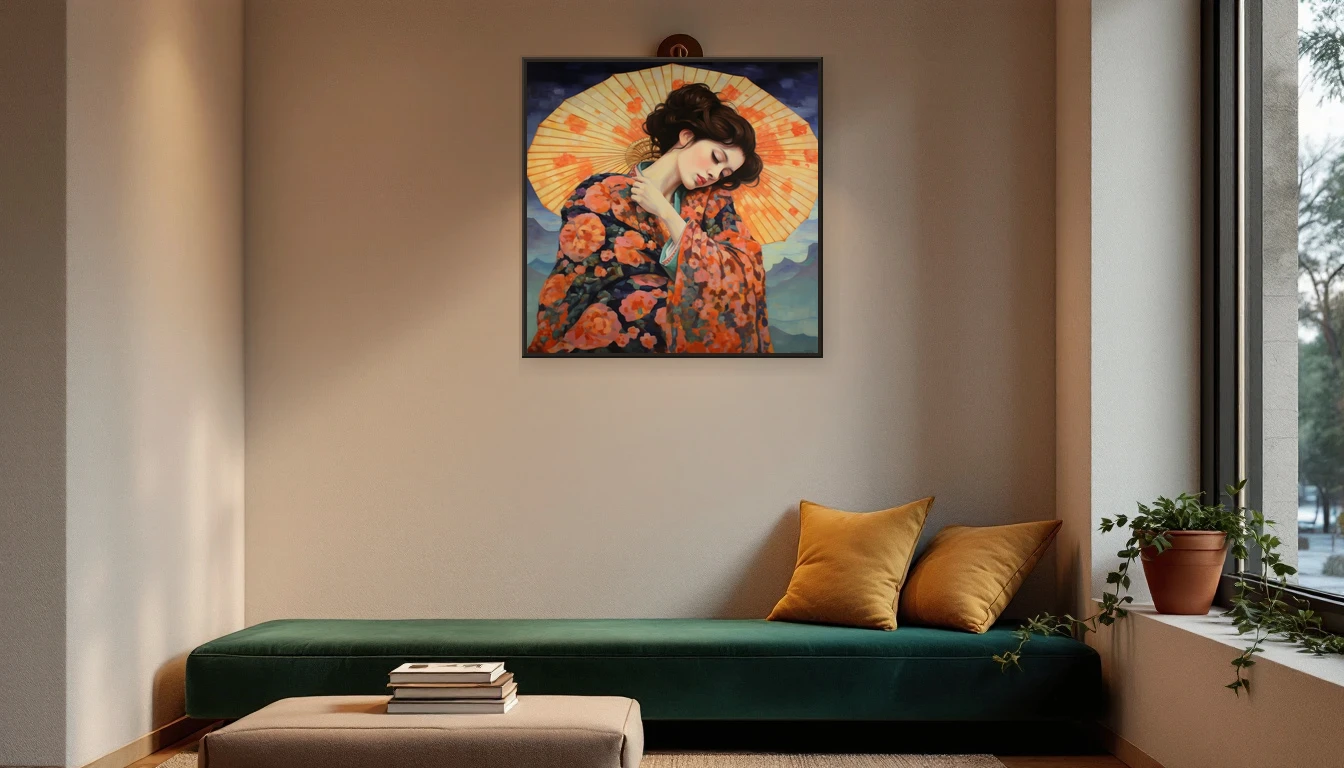
Angles: What the Galleries Know
Professional galleries angle their spotlights at roughly 30 degrees from the wall. That's the balance point — enough light for even coverage, not so direct that it creates glare on the surface. For textured work — thick impasto, mixed media, or relief — a sharper angle creates raking light that reveals every brushstroke and gives the piece a sculptural, three-dimensional quality.
Why Autumn Is the Perfect Time
As the days shorten across the Northern Hemisphere, natural light retreats from our interiors. Your art spends more hours in shadow. This is exactly the right moment to invest in intentional art lighting. A single, warmly lit painting on a dark October evening becomes the emotional anchor of the room — that quiet glow that says this is home.
Start with One Piece
You don't need to rewire the house. Pick the one work you love most. Add a dimmable LED picture light with warm white colour temperature and a CRI of 90 or above. Then watch what happens when the light comes on at dusk.
You'll see your art for the first time.
Curious which piece would come alive on your wall? Explore the DNH collection and discover what the right light can do.