I was standing in my studio the other day, looking at a piece I had just finished. All soft, rolling lines — not a sharp angle in sight. And I noticed I was breathing more slowly. That is not a coincidence.
Why Curves Move Us
There is real science behind that feeling of ease. Research in neuroaesthetics — the study of how our brains respond to beauty — shows that rounded shapes activate our threat centre far less than sharp angles do. In simpler terms: jagged edges put us on alert, while curves tell our brain it is safe. Given how much sharpness the modern world already throws at us, it makes sense that more people are gravitating toward flowing, organic art.
This is exactly why biomorphic forms are one of the defining interior trends of 2026. From Architectural Digest to Elle Decoration, the message is the same: we want softness around us. Not just in furniture — curved sofas and sculptural tables are everywhere — but especially on the wall.
The Visual Language of Organic Shapes
In abstract art, organic shapes carry their own vocabulary. A circle feels whole, complete, protective. A sweeping line suggests motion, water, breath. A soft, cloud-like form can evoke memories of landscapes, of hills on the horizon, of light shifting across the sea — without depicting any of those things literally.
That is the quiet power of abstraction: it speaks to your intuition, not your intellect. You do not need to know what you are looking at. You feel it.
Biomorphic Forms at Home
The word 'biomorphic' may sound academic, but the idea is straightforward: shapes borrowed from nature. The curve of a shell, the organic sweep of a branch, the gentle rhythm of waves. In interior design, this shows up in everything from round mirrors and sculptural coffee tables to organic pendant lights.
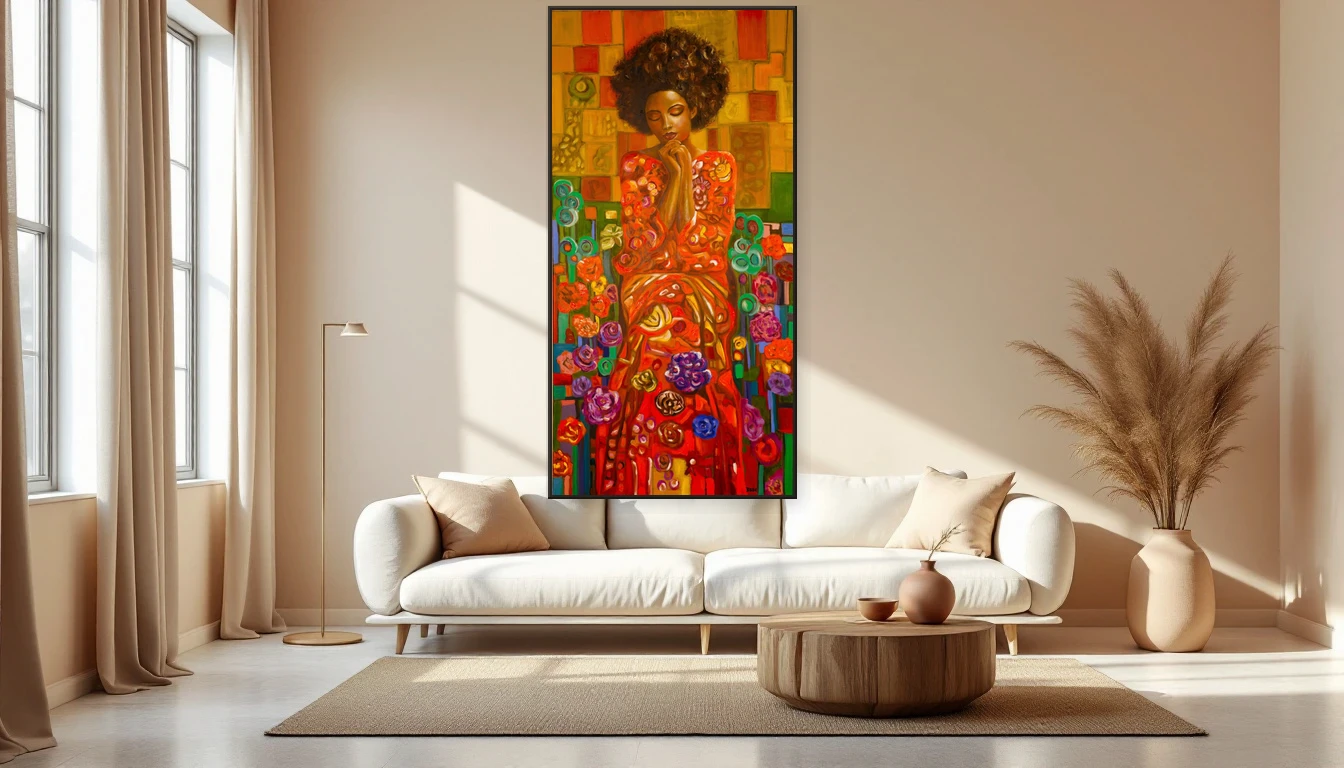
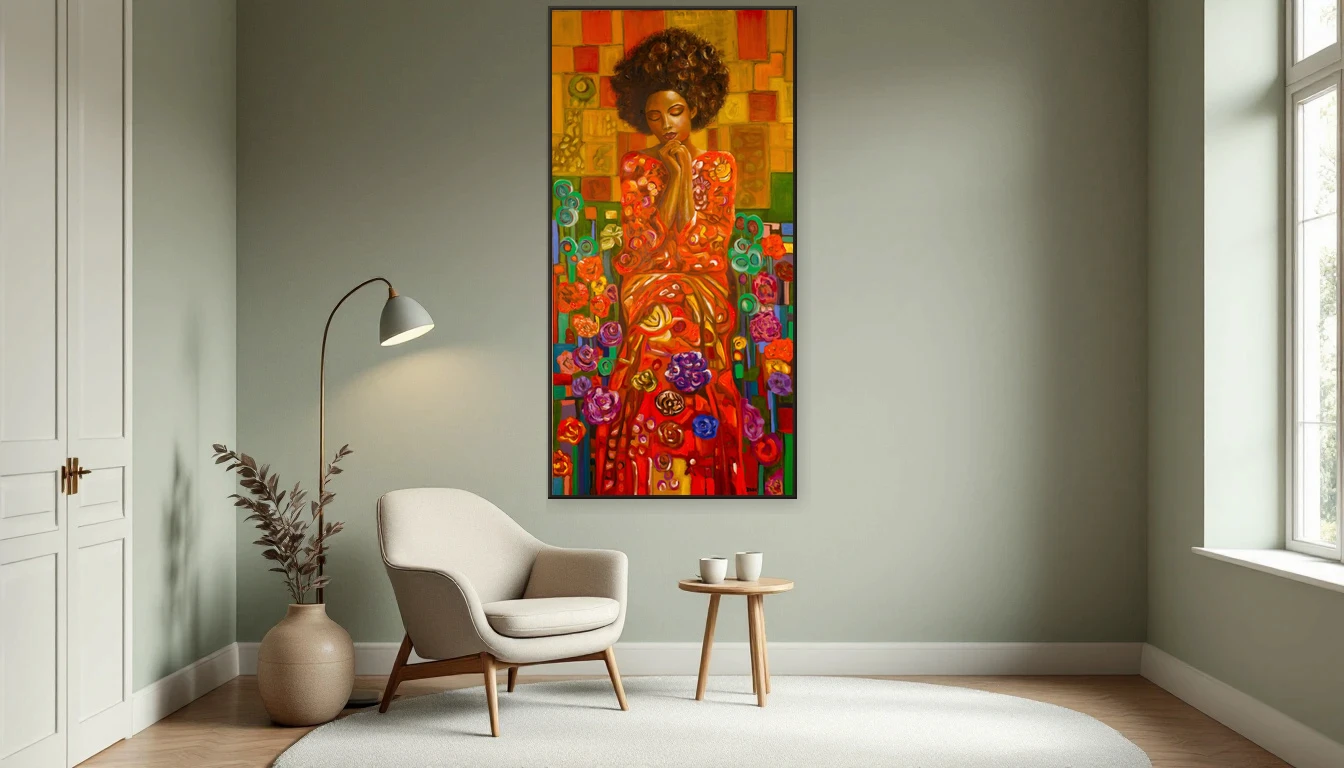
But the strongest statement happens on the wall. A large, abstract work with flowing forms can turn a rigid space from cold to inviting in an instant. It interrupts the straight lines of your architecture without competing with them.
Curves Meets Geometry: Finding Your Balance
It does not have to be one or the other. The most compelling rooms combine soft and structured forms. A warm, biomorphic painting above a sleek minimalist sofa. An organic triptych beside a geometric bookcase. That contrast creates exactly the right tension — a visual conversation between order and nature.
Look around your room. If straight lines dominate, a work with round, flowing shapes might be the breathing room your space has been missing.
The Soft Revolution
We are living in a time of conscious choices — in what we eat, how we move, who we spend our energy on. Why should our walls be any different? The art you surround yourself with shapes how you feel. And sometimes, a single soft curve is exactly what you need.
From Trend to Timeless
The beautiful thing about organic shapes is that they are not tied to any single season. Where geometric patterns can feel dated after a few years, flowing lines remain timeless — because they come from nature itself. A biomorphic work will look as fresh in five years as it does today.
Choosing With Your Body
Pay attention to your physical response. Stand in front of a painting and pause. Do your shoulders drop a little? Does your breath slow? Then you have found it. Choosing art does not have to be a rational exercise — your body often knows before your mind catches up.
Warmth for the Darker Months
As the days grow shorter and we spend more time indoors, the atmosphere at home matters more than ever. A work with warm, organic forms brings exactly the softness an autumn interior needs. Think of it as a visual blanket — not heavy, but embracing.
Curious how a biomorphic artwork could transform your space? Browse the collection and discover which curves belong on your wall. Or get in touch — I would love to think along with you.