
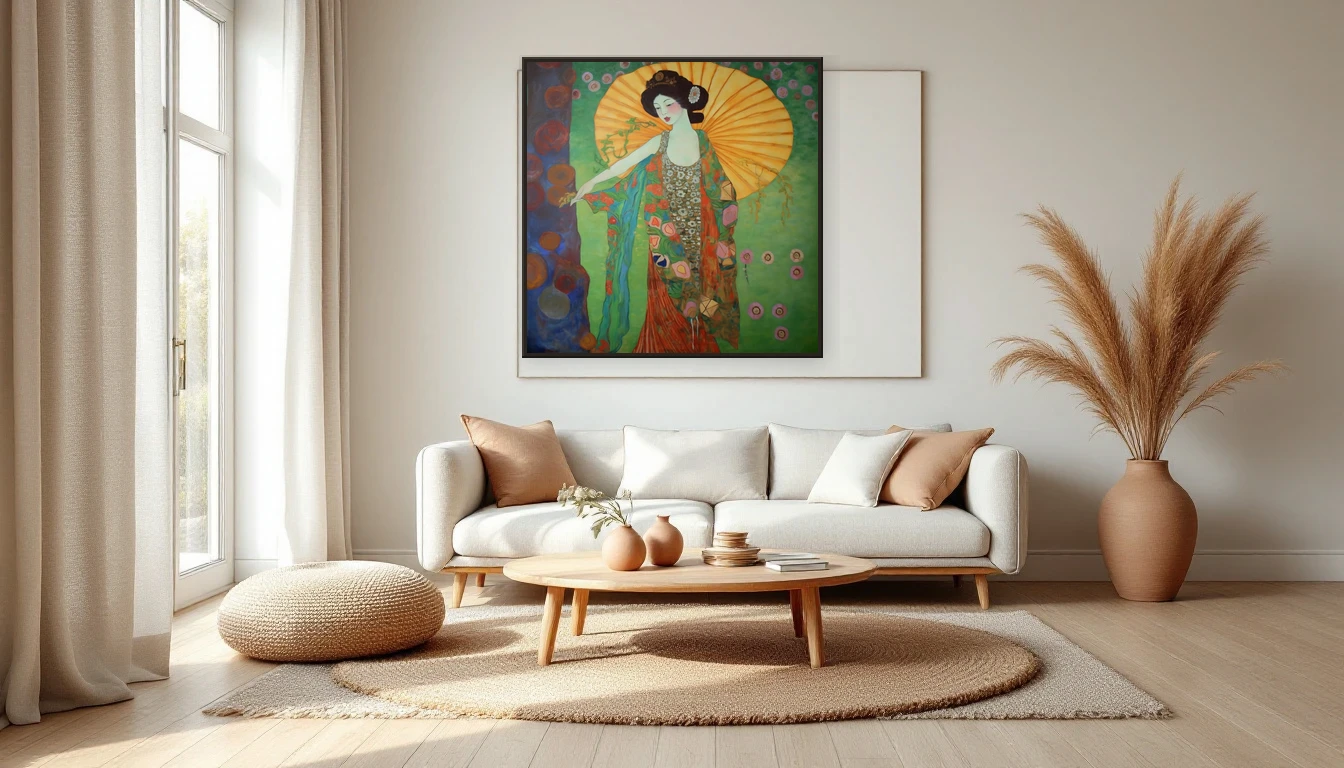
There is a moment in my studio, just after I set down the palette knife, when the paint is still wet and the light catches every ridge. I never reach for a brush to smooth it out. Those imperfections — the thick strokes, the visible layers — are where the painting comes alive.
Why We Crave Touch
Neuroscience backs up what artists have always known: touching natural textures — wood grain, raw stone, heavy paint — lowers cortisol. In a world of glass screens and polished surfaces, our brains are starved for tactile input. Touch is our oldest sense, and it is staging a quiet comeback.
The Rise of Haptic Luxury
Interior designers have a name for it: haptic luxury. The 2026 design movement replaces sleek minimalism with spaces built for the fingertips — bouclé, raw linen, unpolished ceramics, weathered wood. It is about rooms that feel as good as they look. And the walls? That is where textured art steps in.
Impasto and Beyond
Impasto — thick layers of paint applied with a palette knife — is having its biggest moment in decades. Artists are pushing dimensions further, building surfaces that extend half a centimetre from the canvas. Mixed media adds another layer: gold leaf, fabric, plaster, materials that blur the boundary between painting and sculpture.
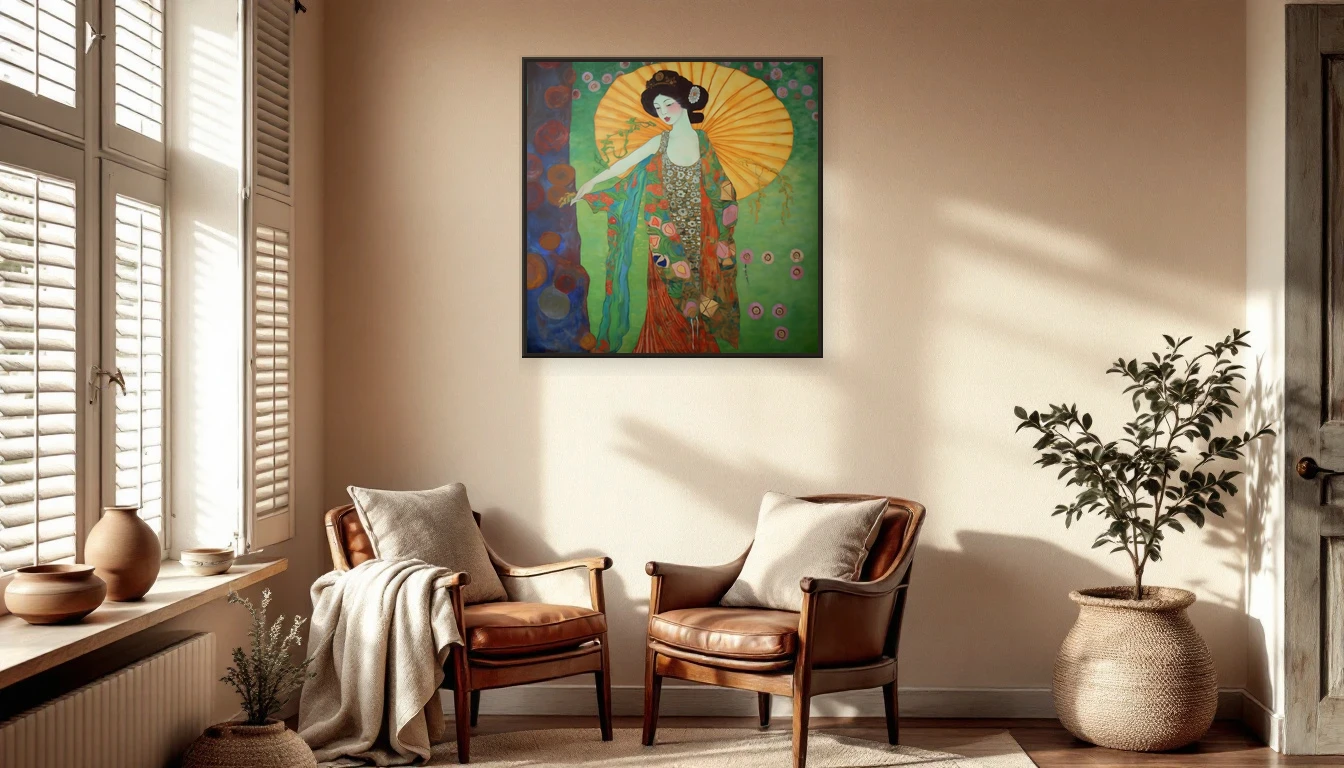
What fascinates me is how these pieces change throughout the day. Morning light casts soft shadows across the ridges. Evening spotlights turn the same strokes dramatic and deep. The canvas is never the same twice.
Texture as an Anchor
Tactile art does not demand attention — it draws you in slowly. A textured painting on a quiet wall acts as a visual anchor, giving your eye a place to rest and your mind permission to pause. In a world that moves relentlessly, that stillness matters.
Layering Textures from Wall to Floor
Stylists call it texture stacking: a linen sofa, a wool throw, a jute rug, handmade ceramics on the mantel. When tactile materials repeat throughout a room — from the art on the wall to the cushion under your hand — the space stops being decorated and starts feeling like home.
Light Makes the Difference
An adjustable spotlight at 30 to 45 degrees is the secret weapon. Raking light reveals every brushstroke and creates shadow play that transforms the piece. Without it, textured art is a story you never open — the depth is there, but you miss it entirely.
Give the Work Room to Breathe
A textured canvas needs space. Avoid competing art on adjacent walls. The rule of thumb: the piece should fill roughly two thirds of the wall width. Hang it at eye level, and step back regularly to appreciate it from different angles and in changing light.
Care and Keeping
Dust textured art gently with a soft natural-bristle brush, following the ridges. No damp cloths, no cleaning products. The paint carries a story — treat it with the respect it deserves.
An Invitation to Slow Down
In an age of smooth, digital, and disposable, tactile art offers the opposite: an invitation to slow down, to look closely, to reach out and almost touch. It is art that does not just fill your wall — it engages your senses.
Curious how textured art might work in your space? Explore the DNH collection or get in touch — I would love to think along with you.