
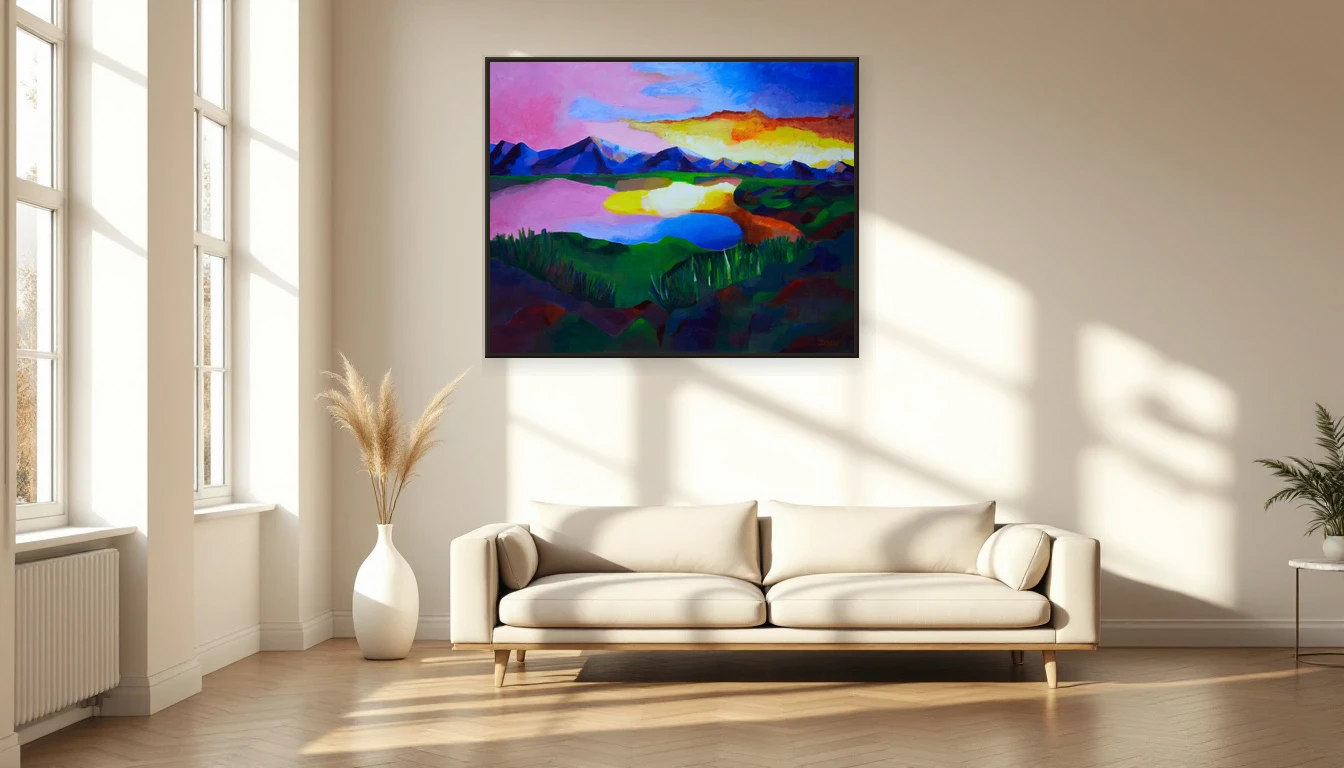
I was in my studio last night, looking at a canvas I’ve known for months — and it caught me off guard. The low evening light had turned the ochres into something that almost glowed. That’s the quiet magic of daylight: it paints right alongside you.
One Painting, Many Moods
You’ve probably noticed it yourself, even if you’ve never put words to it. In the morning, when cool blue light slips through the window, your painting looks crisp and awake. At noon, under full sun, every layer and texture stands out in sharp detail. And by late afternoon, as golden warmth takes over, the same piece shifts into something altogether softer.
This isn’t imagination — it’s colour science. Daylight contains the full visible spectrum, but its composition shifts throughout the day. Morning light leans blue-cool, evening light runs warm-orange. Your painting responds to every shift as if it has a mood of its own.
Why Autumn Gives You the Best Light
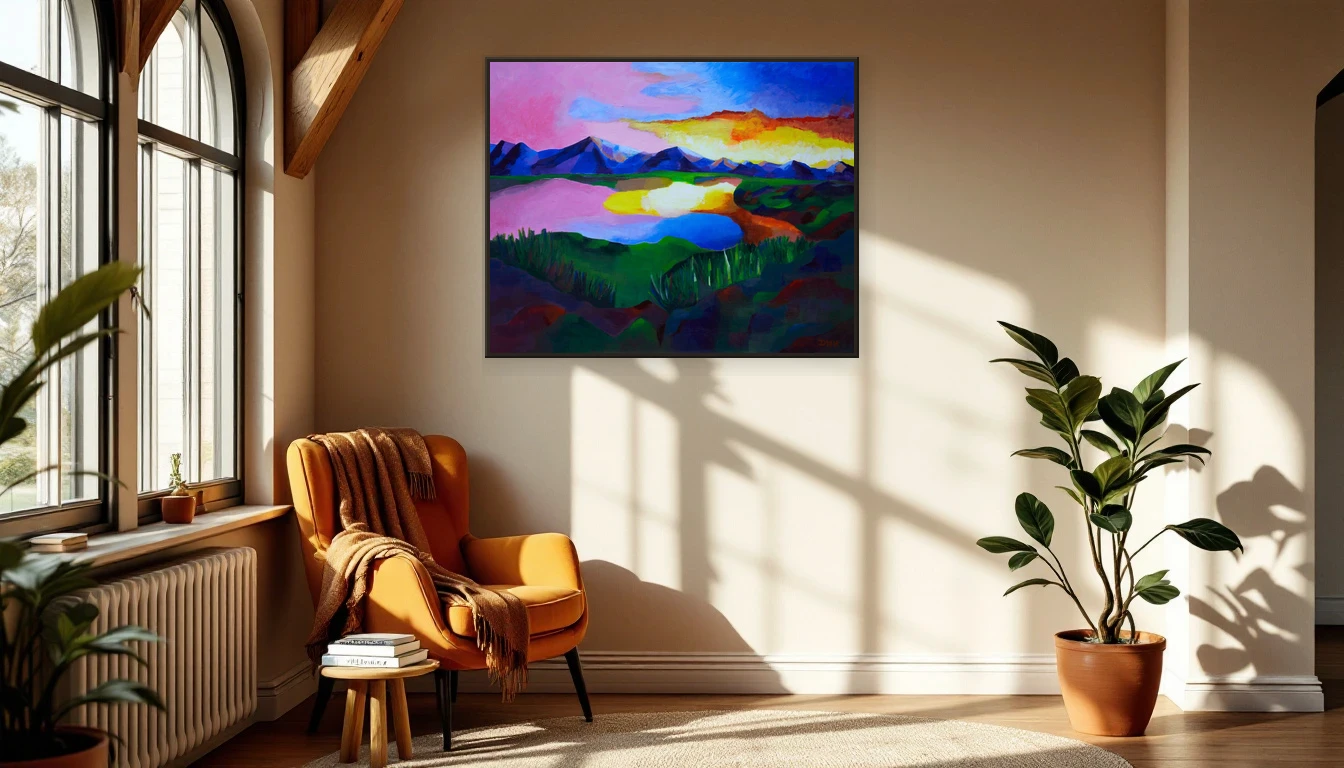
As autumn arrives, something beautiful happens to the light. The sun sits lower, daylight enters at a gentler angle, and that golden tone lingers for hours instead of minutes. Where summer light hits your wall head-on, autumn light grazes across it — and that makes all the difference.
Raking light reveals textures in a painting that full summer sun flattens. The layered paint, the palette-knife strokes, the subtle relief — all of it comes alive. Abstract art benefits the most. That tactile quality you can almost feel with your eyes gets amplified by the low autumn sun.
Where You Hang It Changes Everything
Your wall choice determines which light show you get. A wall facing a window catches the most direct daylight and shows colours at their brightest. A wall beside a window receives raking light — ideal for textured, layered work. And a wall with no direct sunlight? It bathes in soft, diffused light, perfect for tonal, subtle compositions.
Try following the light for one full day. Look in the morning, look at lunch, look at sunset. You’ll discover that your painting doesn’t tell one story — it tells several, depending on when you show up.
Artificial Light: Partner, Not Replacement
When darkness comes earlier — and it does now, fast — artificial light takes over. But there’s a trap: cool LED bulbs can drain the warmth right out of a painting. Choose bulbs with a colour temperature around 2700K (warm white) to echo the warmth of natural daylight. Aim the light from an angle rather than straight on — this avoids reflections and preserves that beautiful texture play.
Let the Light Surprise You
The best part? You don’t need to buy or change a thing. Just look, with intention. The light does the work — literally. And maybe that’s at the heart of what I try to express as an artist: that a painting is not a static object but something alive, something that shifts a little every single day.
Want to see how daylight transforms my work? Explore the DNH Artful Living collection and find out which piece comes alive in your light.