
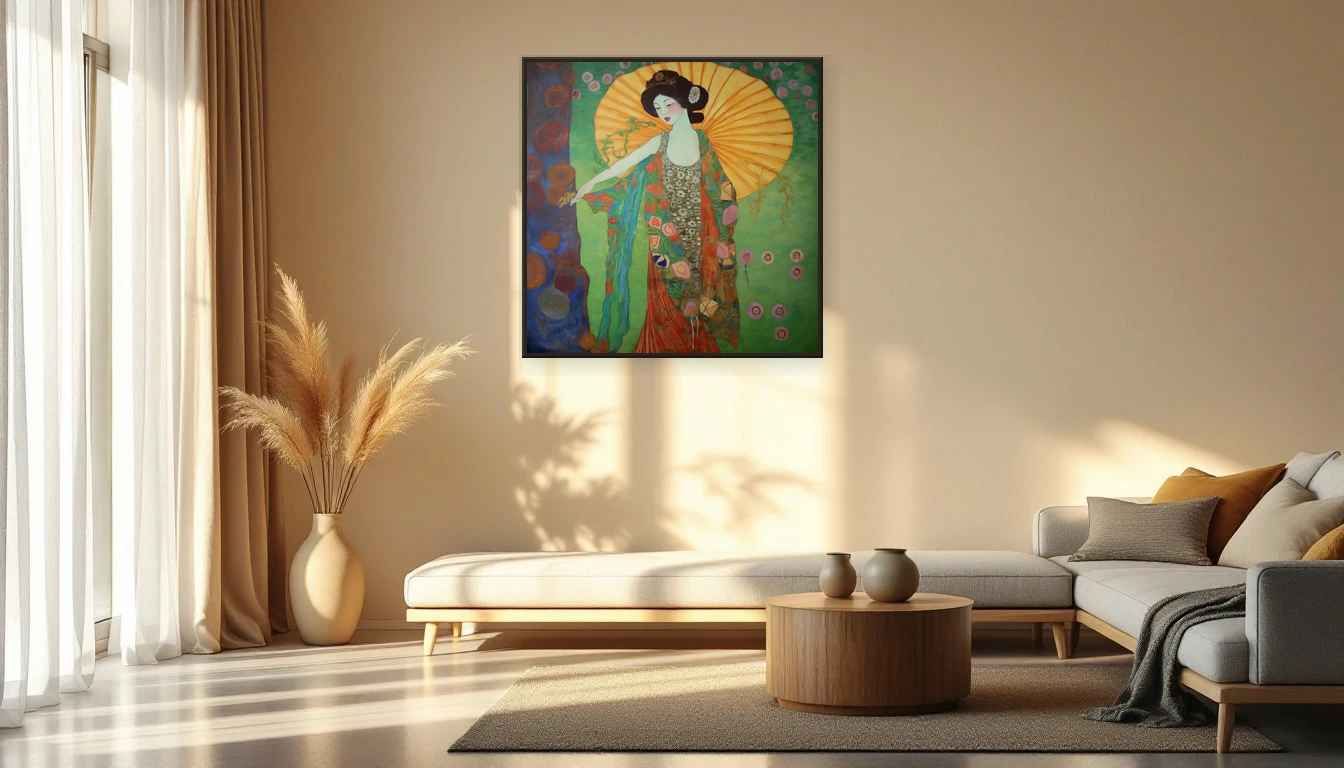
Some mornings I walk into my studio and barely recognise my own work. The same canvas, the same paint — but the early light has shifted everything. Colours that felt bold at midnight now whisper. Textures I couldn't see yesterday suddenly catch the sun. Light doesn't just reveal art. It rewrites it, hour by hour.
Why Your Painting Looks Different Every Day
An abstract work is never static. It changes with every shift in light. Early morning sun hits the surface at a low angle, casting micro-shadows across thick brushstrokes and revealing layers you'd never notice under flat lighting. Midday brightens and flattens. And then golden hour arrives — that warm, honeyed glow before sunset — and the whole piece seems to exhale. One painting, three moods, one day.
The Wall as Compass
Where you hang your art determines which light it receives. A north-facing wall offers soft, even daylight — the choice of museums and galleries worldwide. A south-facing wall delivers drama: bright patches that travel across the surface as the day moves. Neither is wrong, but the difference is striking. Walk through your home at different times and notice which wall surprises you.
Bringing Golden Hour Indoors
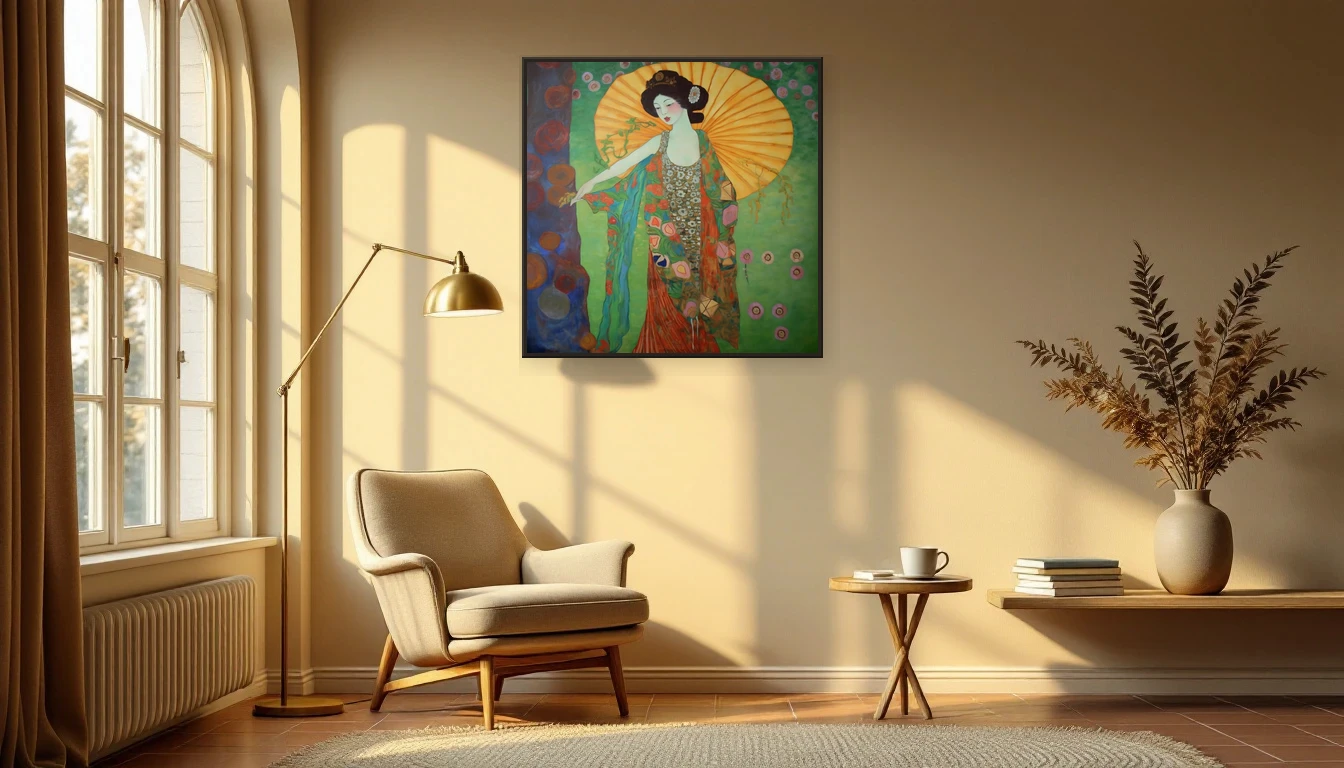
Photographers chase golden hour. You can have it every evening. The secret is colour temperature: choose bulbs around 2700 Kelvin, a warm white that makes earth tones glow and softens cool blues into something approachable. The shift from cool office-style lighting to warm residential light is one of the simplest upgrades you can make — and it transforms how you experience art on your walls.
The Picture Light: Small Move, Big Impact
A dedicated picture light above your artwork is perhaps the most underrated interior upgrade. That focused beam creates a natural focal point, drawing your eye straight to the canvas. In 2026, wireless LED picture lights with dimming capability are everywhere — no wiring, no drilling, instant gallery feel. Look for a CRI of 90 or higher to keep every subtle hue true to life.
Shadow as Storyteller
For textured abstract art — impasto layers, palette knife work, mixed media — side lighting is your best friend. Light hitting the surface at an angle reveals every ridge and valley, turning texture into narrative. The shadows aren't flaws. They're the story. Flat, frontal light flattens that story into silence.
The Three-Layer Rule
Great lighting is never a single source. Designers in 2026 work with three layers: ambient light for overall warmth, accent light to spotlight your art, and mood lighting for atmosphere. A dimmable overhead, a focused picture light, and a soft floor lamp in the corner — together, they build a room that breathes.
Dimming Changes Everything
A dimmer switch is the most transformative tool in your home. Morning: full brightness, energy, clarity. Evening: low and warm, intimate and contemplative. Your painting shifts with you — what looked crisp and vibrant at noon becomes moody and mysterious by candlelight. That dynamic quality is what makes art at home fundamentally different from art in a gallery. It lives with your rhythm.
From My Studio to Your Light
I paint under steady north light, but I know that once a piece leaves my studio, it begins a new life in your home, under your light. And that's exactly how it should be. Every painting deserves illumination that lets it breathe — not too much, not too little, just enough to let it speak.
Curious how an abstract piece would look in your light? Explore the DNH collection and find the painting that transforms your space. Or reach out — I'd love to help you find the right piece for your walls and your light.