
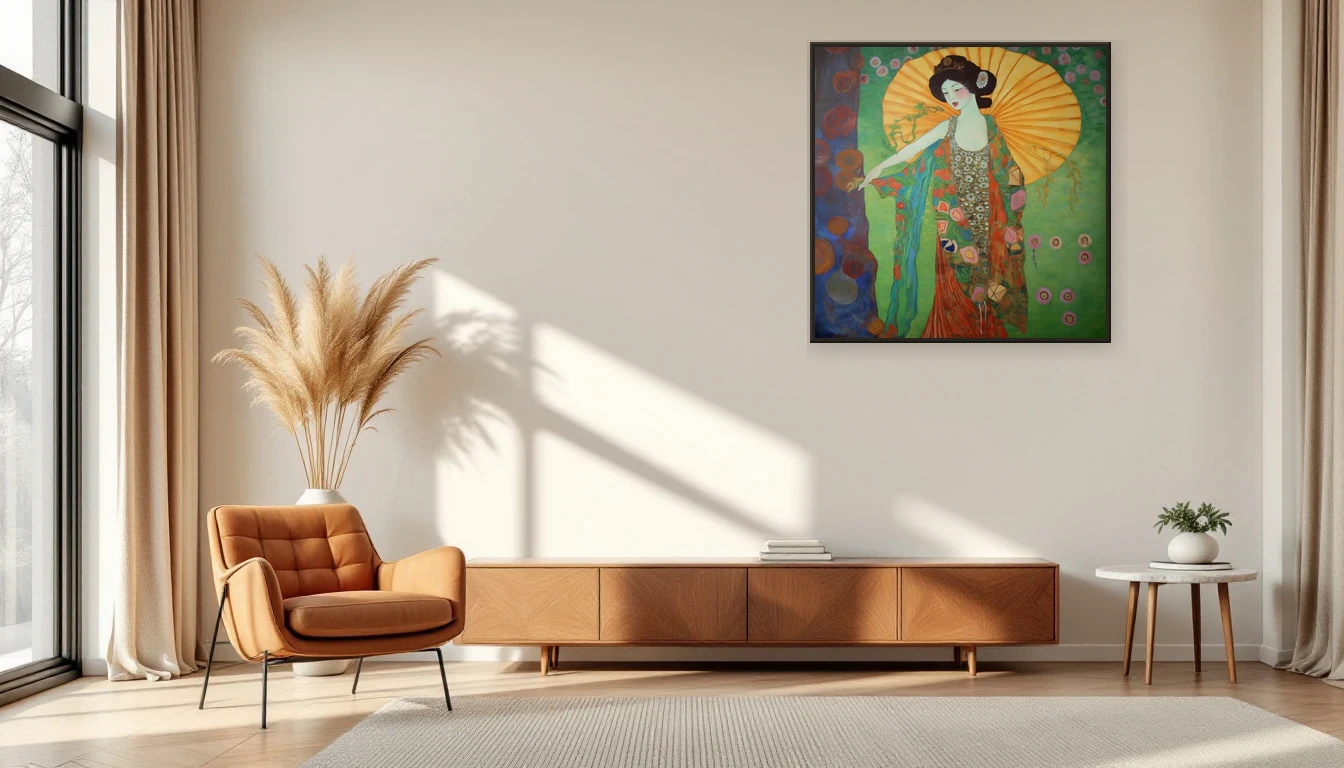
When art starts talking
Some of the best moments in my studio happen on the floor. I lay three or four paintings next to each other, shift them around, and suddenly a conversation starts. Colours echo, forms complement, and a quiet tension holds everything together. That is exactly the magic a gallery wall can bring into your home — not a random cluster of frames, but a dialogue.
The 2026 gallery wall is different
For years, the gallery wall meant covering every square centimetre with frames in a tight grid. The trend has shifted. Interior designers across Europe are embracing what they call the 'curated hang' — fewer pieces, more intention. Think salon-style with Scandinavian restraint. It is no longer about filling a wall. It is about choosing what truly deserves to be seen.
This shift matters, because it puts the art itself back at the centre. Every piece earns its place.
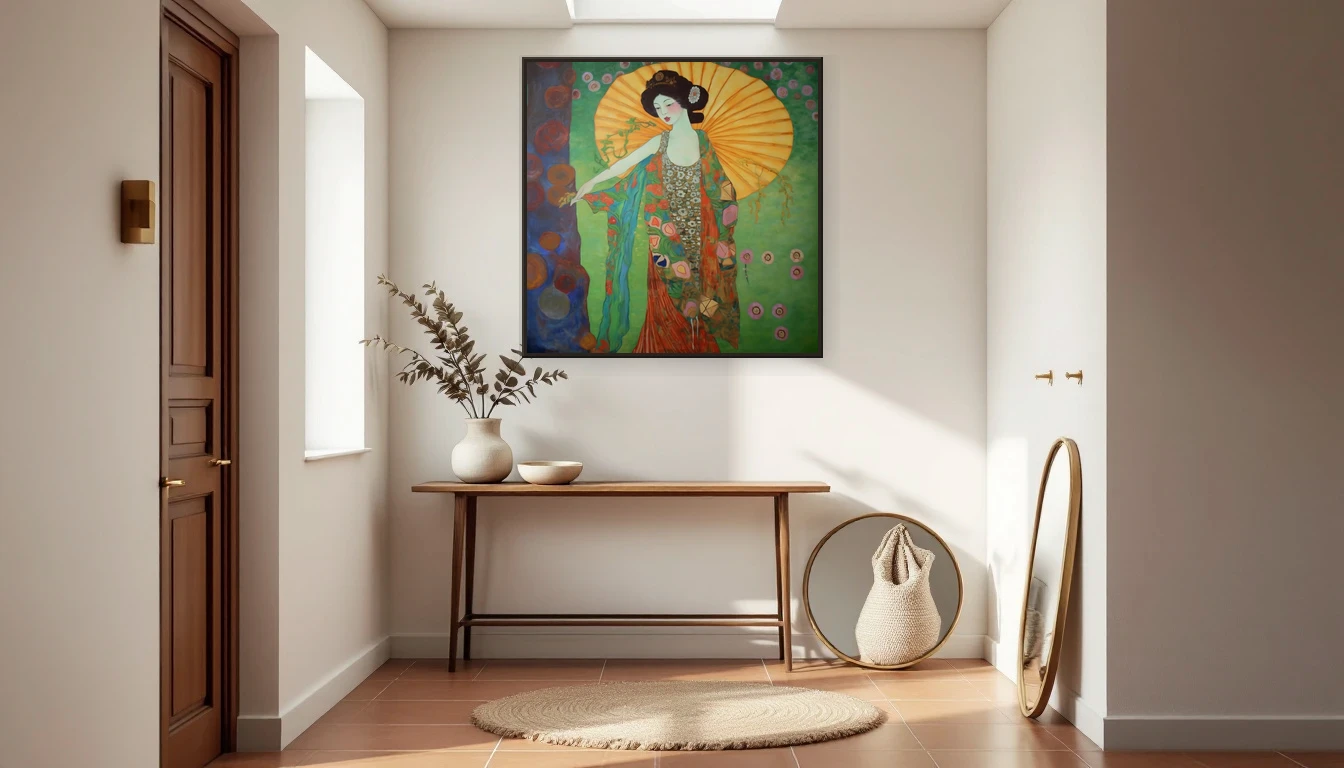
Start with an anchor
When collectors visit my studio and ask where to begin, I always start with the same question: which piece moves you most? That becomes your anchor — the largest work that sets the tone for everything around it. The rest can dance, but the anchor holds the composition together.
Choose a piece you want to see every single day. Not because it matches the sofa, but because it stirs something in you.
Mix sizes, not temperatures
A common mistake is hanging everything in the same format. The interplay between large and small is what makes a gallery wall feel alive. Pair a generous abstract canvas with a smaller work on paper, a black-and-white photograph, or a botanical illustration.
But here is the key: keep the colour temperature consistent. Warm earth tones with warm earth tones, cool blue-greys with cool blue-greys. That creates cohesion, even when the styles are worlds apart.
Let the wall breathe
This is perhaps the biggest change from the gallery walls of five years ago: give your pieces room. Ten to fifteen centimetres between frames is not wasted space — it is composition. The negative space matters just as much as the art itself.
And dare to think in three dimensions. A small shelf with ceramics, a dried branch, a vintage mirror tucked between paintings — these add depth and make the arrangement feel personal rather than showroom-perfect.
Hang at eye level, not ceiling level
Most people hang art too high. The rule is simple: the centre of your composition belongs at eye level, roughly 150 centimetres from the floor. It might feel low at first, but it means you actually experience the art instead of craning your neck.
Lay everything on the floor first. Shuffle, swap, experiment. Take a photo with your phone before you drive the first nail.
Tell your story
What I love most about a gallery wall is that it becomes a portrait of who you are. A memory from a journey next to an abstract that moves you every morning. A vintage find beside your child's drawing. It does not have to match — it has to feel right.
Start small. Two or three pieces that genuinely speak to you. And give yourself permission to change things. A gallery wall is never finished. It grows with you.
Ready to find your anchor piece?
Browse the DNH Artful Living collection — every painting is handmade and ready to become the heart of your gallery wall.