
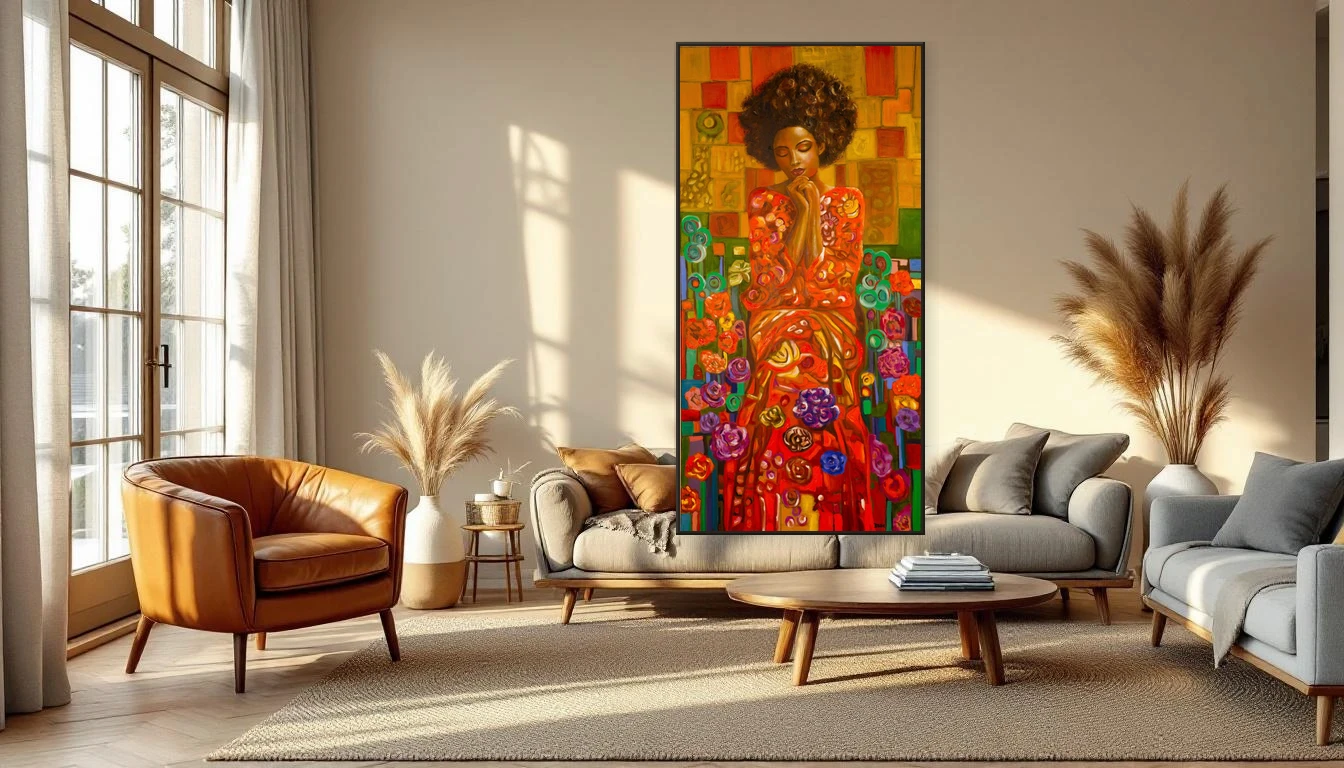
A few weeks ago, I stood in my studio staring at a canvas that had been on the easel for nearly a month. It wasn't unfinished — I just wasn't ready to let it go. That feeling, that quiet patience of waiting until something feels right, is exactly what I'm seeing more and more in the way people design their homes. And honestly? It gives me hope.
Slow living starts at the walls
You've probably heard the term in the context of minimalist kitchens and neutral linen everything. But slow living isn't really about owning less — it's about choosing with more intention. In the world of interiors, that shift has never been clearer than in 2026. The disposable gallery prints that get swapped out every season? They're losing ground to something deeper: one piece of art that genuinely moves you. A work you keep discovering new things in.
The major design houses confirm it: this year is all about warm, lived-in spaces with craftsmanship at their core. Not the perfect showroom, but a home that feels like it wraps around you.
One statement, not a wall of compromises
I see it with my own clients: more and more people are choosing one large, powerful work instead of a cluster of smaller prints. That's no coincidence. An oversized painting anchors a room. It gives your eyes a place to rest and your mind room to breathe.
Colour as breath
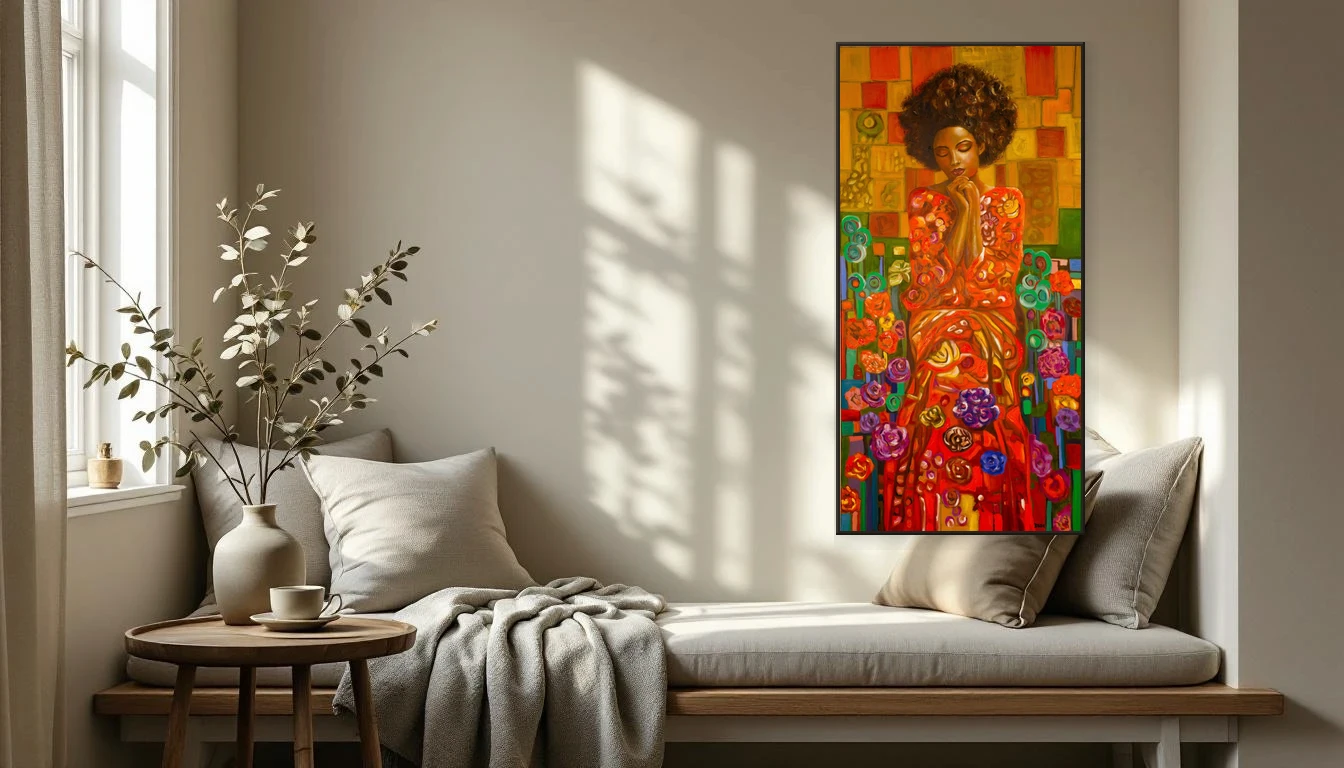
This season's colour trends tell the same story. Warm earth tones — caramel, ochre, olive green — create a calming palette that genuinely settles your nervous system. Pair those with the deep blue-greens showing up everywhere this year, and you've built a space that feels like taking a long, slow inhale by an open window.
In my own work, I've been drawn deeper into these earthy palettes. Layers of ochre over terracotta, with streaks of sea green shimmering through. These are colours that don't shout — they whisper. And that's exactly why they stay with you.
Nature as blueprint
Biophilic design is a term you hear more often now, but the idea is as old as humanity: we feel better when our surroundings echo the natural world. Abstract art is a beautiful vehicle for that. You don't need a literal landscape on your wall. An abstract piece that captures the movement of water, or the layered depth of rock formations, brings that same sense of calm.
The beautiful part? You don't even need to consciously recognise it. Your body responds to those organic shapes and colours, even when your rational mind tells you it's 'just a painting.'
Less scrolling, more looking
There's something else about slow living that resonates with me as an artist. We live in a world of endless scrolling — swiping through hundreds of images a day. But art asks for the opposite. A good painting asks for your time. For your gaze to wander, for you to notice details you missed the first time around.
That's exactly why I believe in original art on the wall. Not because it costs more than a print, but because it's a daily invitation to pause. To breathe. To look — really look.
Where to begin
My advice is simple: walk through your home and ask yourself which piece of art you pass most often without truly seeing it. Maybe that's the one that gets to leave. And maybe there's room for one piece that stops you in your tracks every single time.
Curious to find the work that fits your space? Browse my collection or send me a message. I'd love to think along with you — slowly, of course.
Sources
This article draws on the interior trends of 2026, including the shift toward slow luxury and artisanal materials, the rise of oversized statement art, and the growing embrace of biophilic design in residential interiors.