
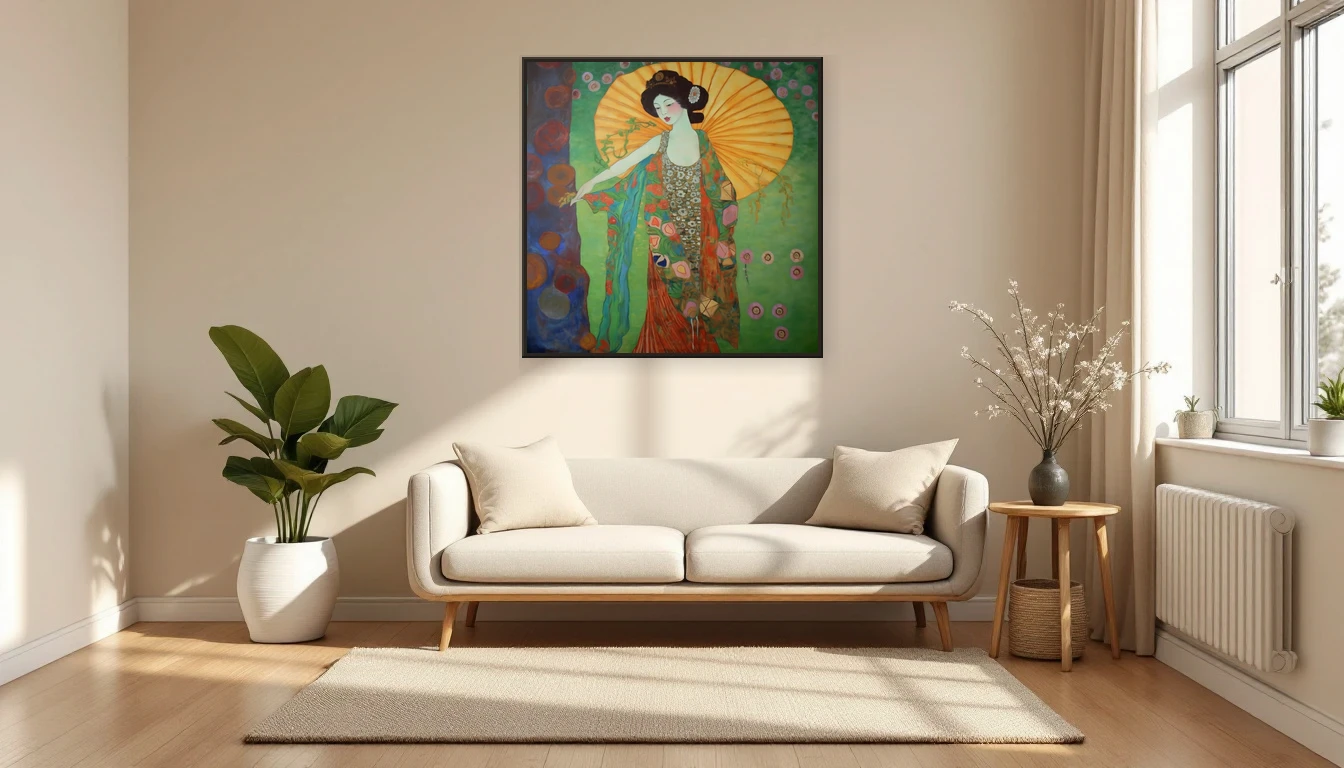
I hear it all the time: "My place is too small for art." And every time I think: no. A smaller space needs art more, not less. Not more things — but the one piece that gives the entire room direction.
Why Small Spaces Deserve Big Art
It sounds counterintuitive, but interior stylists across Europe and beyond are confirming it in 2026: one large painting outperforms a cluster of small frames in a compact room. A single bold canvas creates a focal point. It stops your eyes from wandering and gives the space calm — exactly what a small home needs.
A gallery wall with ten framed prints? Gorgeous in a spacious townhouse. But in a fifty-square-metre apartment, it creates visual noise. Your brain has to process too much. One abstract piece does the opposite: it opens the room, lets it breathe.
Colour Is Your Secret Weapon
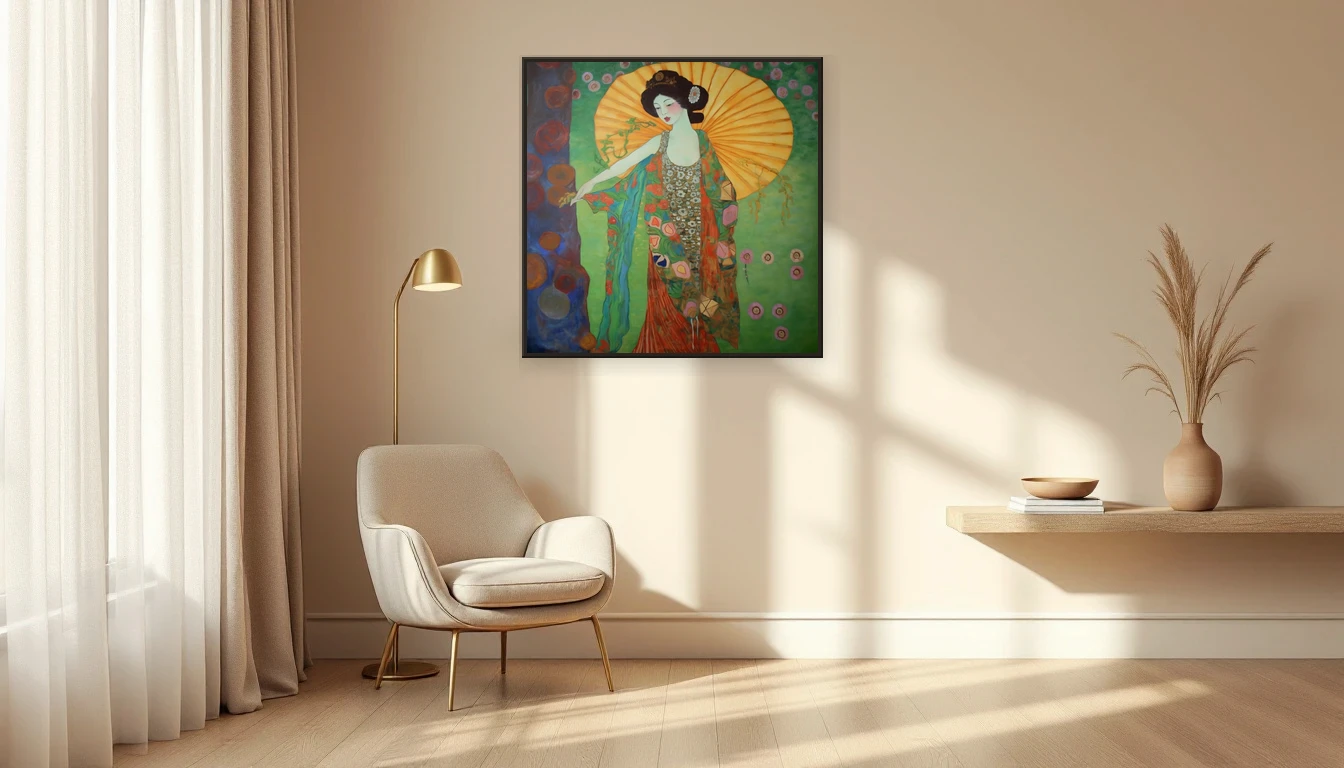
The colours in your art can make or break how spacious a room feels. Light, warm tones — cream, soft ochre, diluted terracotta — bounce light and pull the walls back optically. Deeper earth tones work too, as long as the surrounding space stays quiet.
The quiet luxury trend of 2026 fits this perfectly. Warm neutrals, soft earth tones, layers of texture rather than colour that shouts. An abstract canvas in that palette stops being decoration — it becomes part of the architecture.
Texture Does the Heavy Lifting
In my studio, I notice that texture makes the biggest difference in smaller spaces. A flat print on canvas is silent. A painting with thick paint layers, palette knife marks, visible brushwork — that lives. It catches light, casts small shadows, shifts through the day. In a compact room, where you experience the work up close, that tactile quality is essential.
It is as if the wall breathes. And in a small space, you feel that even more.
Why Abstract Works Best
Why abstract, specifically? Because it does not pin you down. A figurative painting tells one story — beautiful, but sometimes limiting in a room you see every day. An abstract work leaves room for interpretation. It feels different when you are rushed than when you sit quietly. It adapts, breathes with you.
Moreover, abstract forms create depth without visual boundaries. Where a realistic landscape ends at its edge, an abstract piece keeps going in your imagination. And that sense of openness — however small the room — makes a space feel larger.
Three Practical Rules
Fill 50 to 75 percent of your wall width. Too small and the piece disappears. Too large and it feels oppressive. That sweet spot gives the painting presence without overwhelming.
Hang at eye level, not higher. In a small room, you want the work where the light hits it most beautifully. Too high and you lose the details — and those details are exactly what give it character.
Choose a thin frame or none at all. A heavy gilded frame draws all the attention. A simple float frame, or no frame at all, lets the work speak and keeps the space airy.
Small Living as an Art Form
Perhaps a small home is the best reason to choose art with real intention. Not ten trinkets, but that one canvas that says something different every morning. That moves with the season, the light, your mood.
Compact living demands clarity. And a good painting — honest, raw, made by hand — delivers exactly that.
Curious which piece would work in your space? Browse the collection or get in touch — I would love to help you choose.