
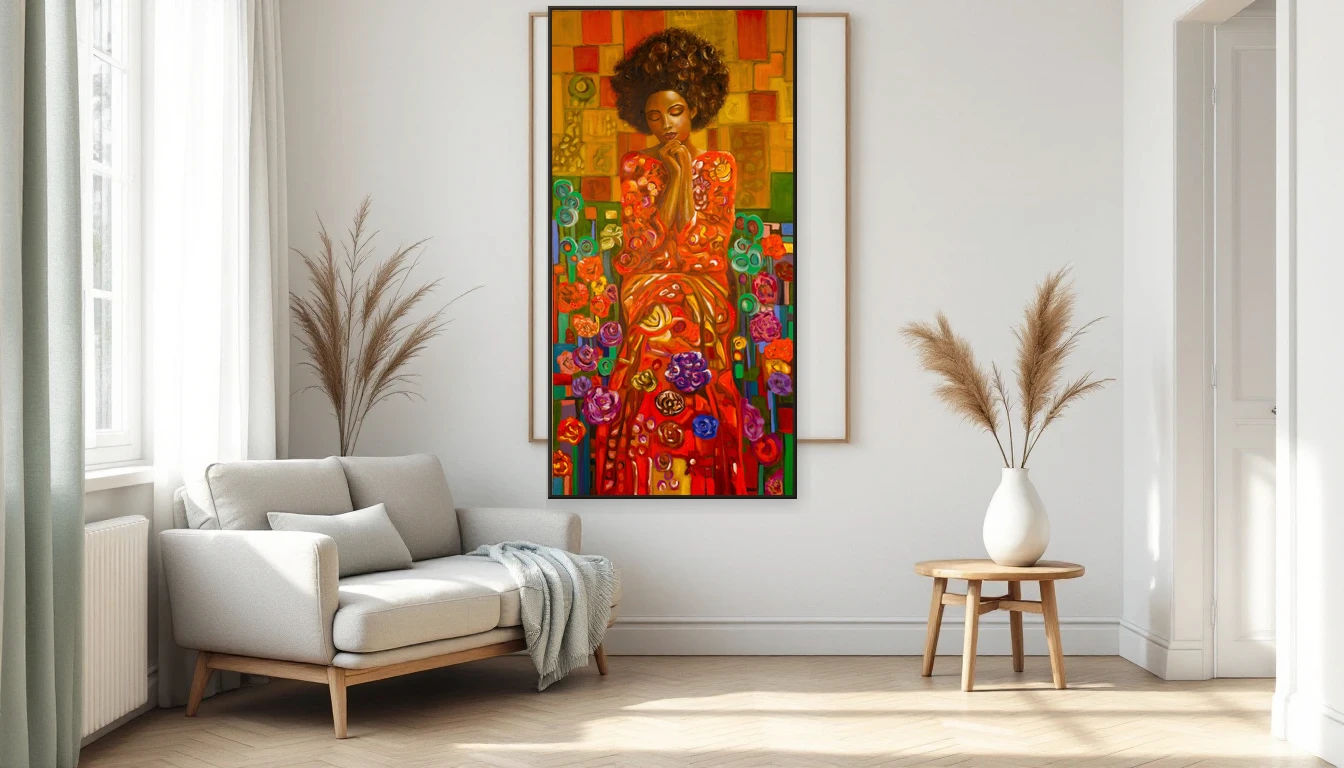
My studio is not large. Fifty square metres, and half of that is storage. Yet it never feels cramped. Not because of clever furniture or trick mirrors, but because of what hangs on the walls. Art reshapes a room. Not in square footage, but in how you experience it.
The biggest mistake in small spaces
Most people assume a small room needs small everything. Small furniture, small accents, small art. Interior designers in 2026 are saying the opposite: go bold with one statement piece. A single large painting anchors the room, draws the eye to one focal point, and lets the surrounding wall breathe. Research on spatial perception suggests that intentional art placement can increase perceived room size by up to 30 percent.
The rule of thumb? Choose a work that covers 60 to 75 percent of the available wall space. It sounds counterintuitive, but it replaces visual clutter with visual clarity.
Colour does the heavy lifting
In compact spaces, colour is your most powerful tool. Light, translucent tones in a painting can optically expand a room. Soft blue-greens, warm sandy hues, layered transparencies that suggest depth without crowding.
The 2026 palette is made for this. Dusty blue, sage green, butter and sand are everywhere, not because they are trendy, but because they do exactly what small rooms need: bring calm while adding personality. Pair these tones with Transformative Teal accents and you get a space that feels open yet characterful.
Depth without distance
Abstract art has a unique advantage in small rooms. A figurative painting tells a finished story with clear boundaries. An abstract work with layers, transparency and movement creates the illusion of depth. Your eye travels into the canvas, past the wall, as if there is more space than physically exists.
This is not a decorator trick. It is how your brain works. The same principle that makes a landscape photograph feel expansive operates in abstraction, except here there is no horizon to define the limit. Your mind fills in the space.
Think vertically
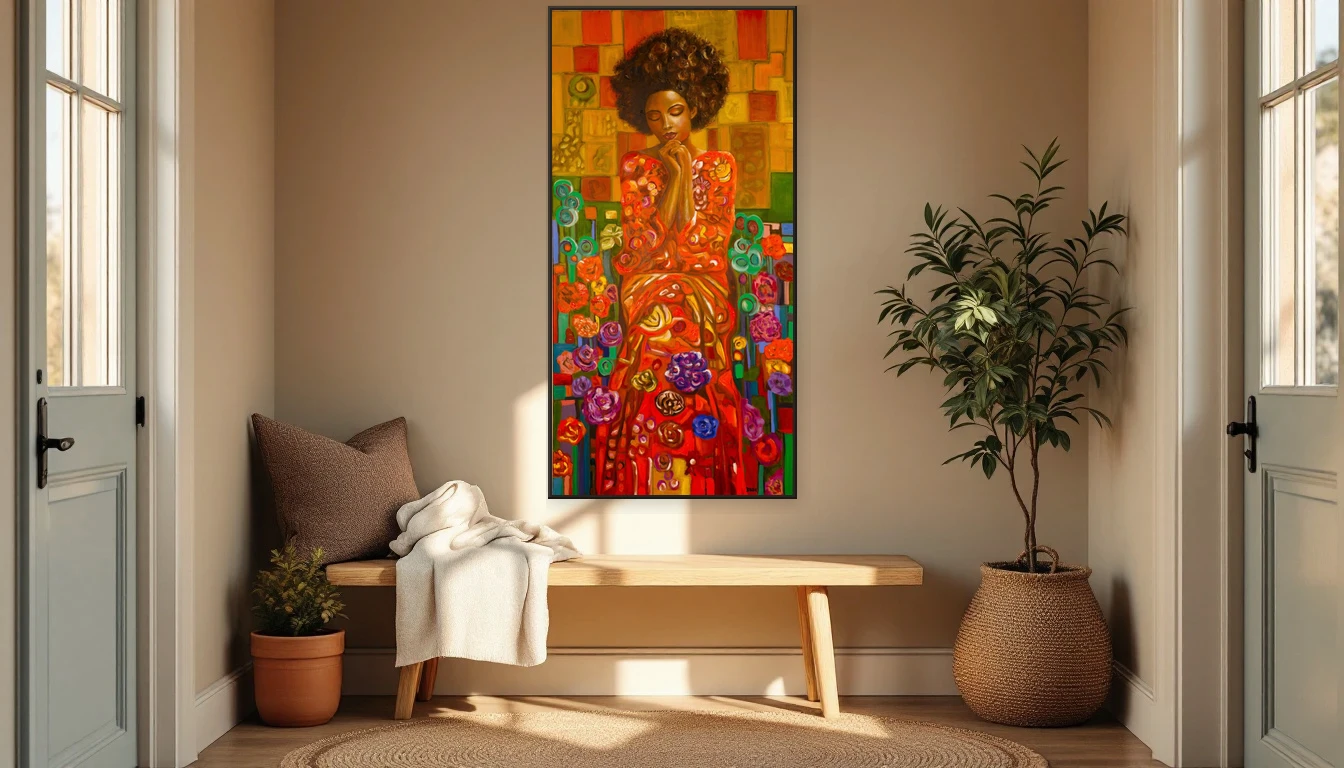
When floor space is spoken for, walls are still free. A tall, narrow canvas draws the eye upward and makes ceilings feel higher. Hang it slightly above the traditional centre line. In a compact room, raising a painting ten centimetres above eye level adds a surprising sense of airiness.
Light as a magnifier
In a small apartment, natural light is your greatest ally, and art is your second. Place a painting on a wall that catches indirect daylight. The light grazes the texture of the paint, brings colours to life, and adds a visual layer that opens the room. An original canvas shifts with the hours: softer in the morning, warmer by afternoon. That movement keeps a compact room from ever feeling static.
One piece, maximum presence
The most important lesson from living and working in a compact studio: less is more, but only when that less is chosen well. One painting that resonates, that picks up the colours already in your room, that you want to look at every single day. That is all you need.
Texture as a space expander
An original painting with visible brushstrokes and layered surfaces catches light differently throughout the day. In a small room, this shifting quality adds a living dimension that a flat print cannot match. Combine it with natural materials, linen cushions, a wooden stool, a ceramic vase, and the space grows rich in experience regardless of its measurements.
Dare to go large
The most beautiful compact interiors I know share one quality: they are not afraid of scale. Not scale in quantity, but in impact. A single abstract work that defines the room. Curious which piece could transform your space? Browse the collection or get in touch for personal guidance.