
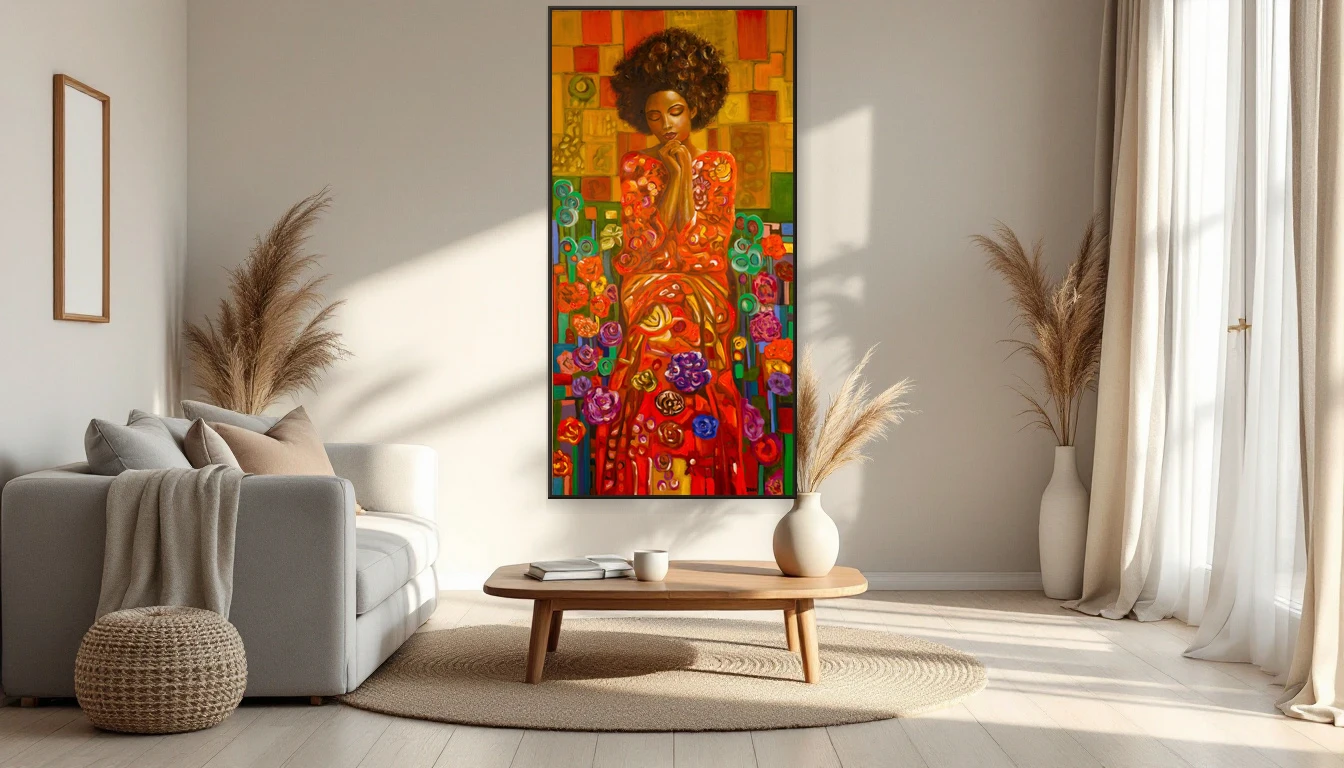
Last week I hung a new piece in my studio. Before the paint had even dried, I caught myself walking straight past it — already chasing the next task, the next idea. Sound familiar? We scan, scroll, swipe. And that habit does not stop at our screens.
The fifteen-minute rule
Neurologist Anjan Chatterjee at the University of Pennsylvania studied what happens when you look at an artwork for more than a few seconds. His finding: after roughly fifteen minutes, something measurable shifts in the brain. Your stress response settles, your attention deepens, and you enter what researchers call a state of mindful absorption. Think of it as meditation — only with your eyes open, fixed on something beautiful.
The average museum visitor spends ten to thirty seconds on a painting. That is barely enough to register the colours, let alone feel them.
Slow Art: a movement gaining ground
The Slow Art movement, marked each April by Slow Art Day, invites people to spend real time with art. Not to say clever things about it, but to lose yourself in it. The Tate Britain in London puts it well: slow looking is about you and the artwork, not about an expert’s interpretation.
At Manchester Art Gallery, curators created a Room to Breathe — a living-room setting with unlabelled paintings and comfortable chairs. Research by Goldsmiths University found that visitors in that space felt more positive and relaxed than when viewing the same works in a traditional gallery. They stayed longer, looked deeper, and engaged more fully with colour and form.
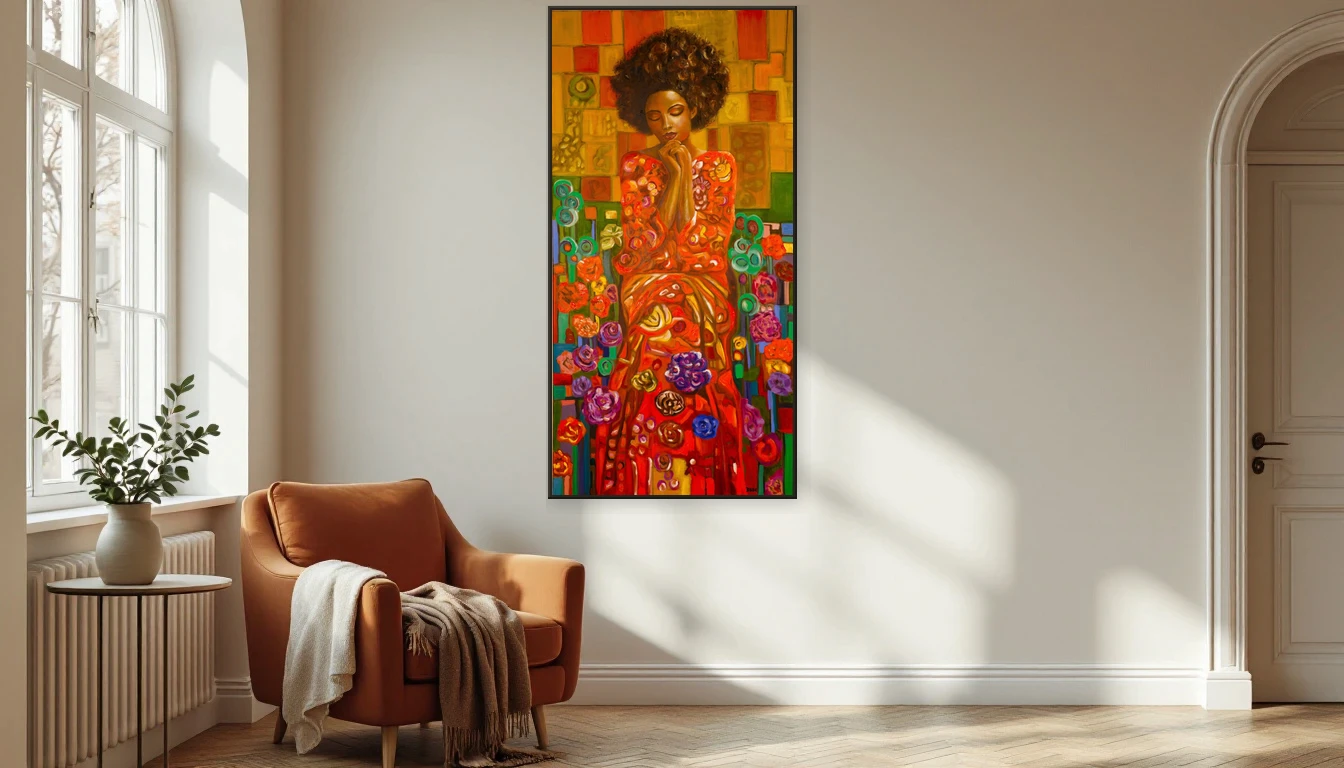
Abstract art as an anchor
Why does abstract art lend itself so well to mindful looking? Because there is no story you need to decode. No face to recognise, no landscape to place. There is only colour, texture, movement — and your own experience. Abstract art invites you to feel rather than think. That is precisely what the brain needs to slip into a flow state.
Psychologist Mihaly Csikszentmihalyi described flow as a state of optimal experience: you are fully present, time drops away, and concentration feels effortless. Painting takes me there every day — but looking at a painting can do the same.
Create your own Room to Breathe
You do not need to fly to Manchester. Your own living room can become that space. Here is how:
- Choose one piece that moves you. Not a gallery wall of ten prints, but a single work that holds your gaze.
- Make it comfortable. A chair at the right distance, soft light, no phone in sight.
- Give it time. Set a timer for five minutes. Look up close, then step back. Let thoughts come and go.
- Expect nothing. This is not about epiphanies or answers. It is about being present.
Art as a daily reset
As autumn draws in and daylight shortens, this might be the kindest gift you can give yourself: five quiet minutes with a piece that speaks to you. No podcast, no background music. Just you and the colours on the canvas.
Curious which piece might suit your own slow art ritual? Browse the DNH collection and choose with your gut. Or get in touch — I am always happy to think along.