Last week I found myself in my studio with a cup of tea and a blank canvas. No plan, no deadline, no idea where it would go. Just paint, a brush, and silence. An hour later, I'd made something I could never have designed — something that could only emerge from letting go of the rush.
What Is Slow Art?
Slow art isn't a technique or a style. It's a mindset. It's the deliberate choice to slow down the creative process, to stop fixating on the end result and be present with the act of making itself. In a world obsessed with productivity and output, that feels almost radical.
The slow art movement is gaining momentum globally — from museums asking visitors to spend five full minutes with a single work, to studios offering classes in painting without purpose. The idea is beautifully simple: when you slow down, you see more. You feel more. You create something that's truly yours.
The Science Behind Slow Making
This isn't just philosophy — there's solid science behind it. Research shows that 45 minutes of creative activity significantly lowers the stress hormone cortisol in 75% of participants. You don't need to be an artist; it's about the process, not the product.
What happens in your brain when you work slowly and attentively mirrors meditation. Your prefrontal cortex — the part that worries and plans — quiets down. Your senses sharpen. Colours appear more vivid, forms more fluid. That's not imagination; that's neuroscience.
The World Health Organization now recognises creative engagement as a meaningful contributor to mental health and wellbeing. As someone who spends her days in a studio, I find that entirely unsurprising.
How to Start With Slow Art
You don't need a studio or expensive materials. Start small.
Grab a sketchbook and a pencil. Draw what you see for five minutes — a mug, a plant, your own hand. Not to make it beautiful, but to truly look. Really look.
Play with colour without a plan. Pick up watercolours or acrylics and let hues bleed into one another. No sketch beforehand, no expectations. Watch what happens when you release control.
Make it a ritual. Like yoga or meditation, slow art works best with regularity. Half an hour once a week is enough to feel the difference in how you move through your days.
Making Art Is Coming Home
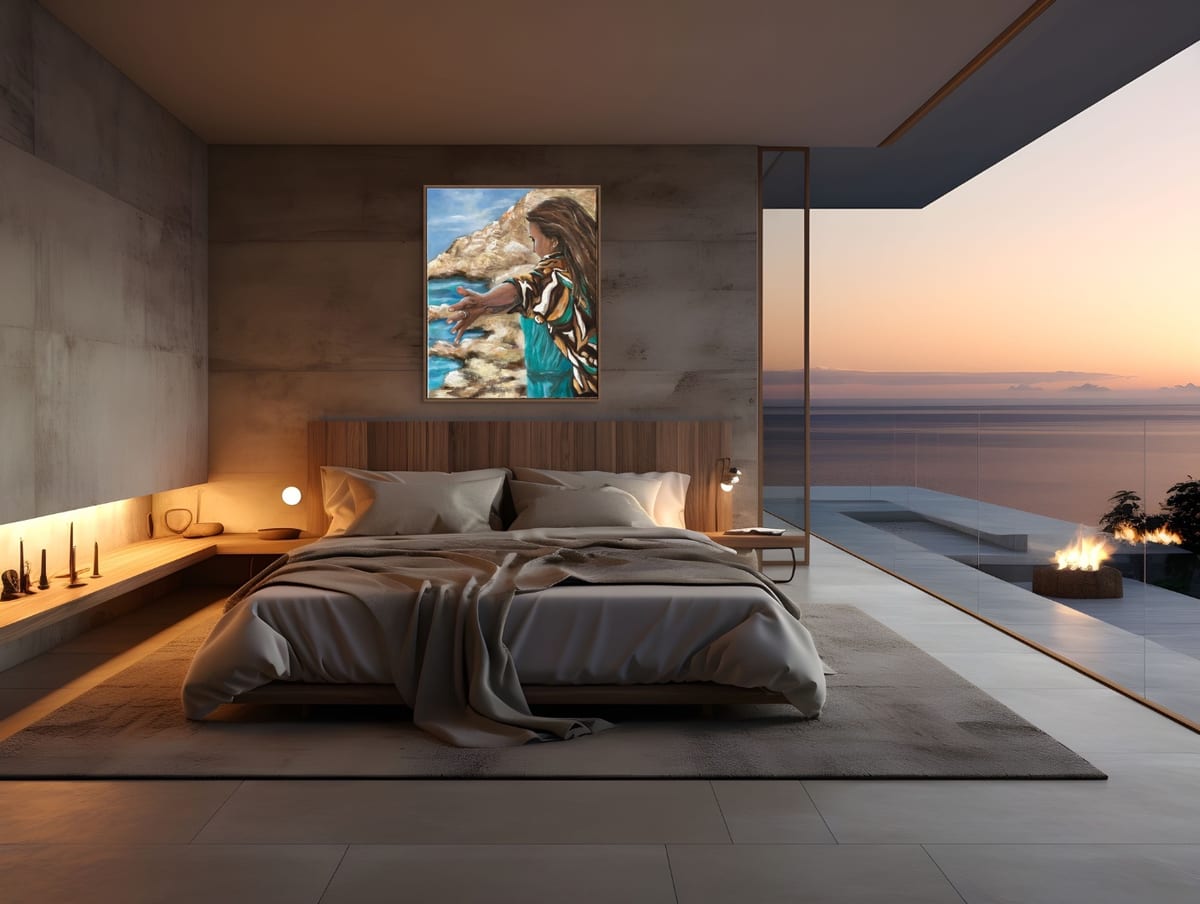
In my practice, the pieces that resonate most deeply — with me and with the people who collect them — are the works born without haste. The layers of paint I built up while I had nowhere else to be. The colours I chose because they felt right, not because they needed to match anything.
That's the promise of slow art: it brings you back to yourself. And the beautiful thing is — you don't need to be good at it. You just need to begin.
Curious how creative mindfulness might fit into your life? Explore my workshops or get in touch for a personal conversation.