Something is shifting in how we relate to the things on our walls. In a year when AI can produce a photorealistic painting in seconds, a quiet rebellion is gaining ground — and as an artist who spends weeks on a single canvas, I find it deeply moving.
The beauty of the imperfect mark
At exhibitions and in my own studio, I notice the same thing: people lean in. They want to see the brushstroke. They trace a line with their eyes, ask how a texture was built, run a finger alongside the surface without quite touching it. There is a hunger for proof — proof that someone was here, that time was spent, that a hand trembled and continued.
Art critics are calling it the Return to the Human Hand. It is not nostalgia. It is a deliberate choice. In 2026, collectors increasingly seek work where you can recognise the maker: visible layers, unexpected colour transitions, the courage of a stroke left uncorrected.
Why now? The AI context
Let me be honest: AI-generated imagery is everywhere, and some of it is breathtaking. But something is absent — and that something is precisely what makes art art. It is the risk. The vulnerability. The moment I stand before a canvas not knowing whether the next layer will save or ruin everything.
That is what you feel standing in front of an original painting. Not just the colours or the composition, but the presence of someone who was fully in it. You cannot simulate that.
Texture tells the story
One of the strongest trends in interior art this year is the return of tactile work. Paintings with visible relief, mixed techniques, layers of paint you almost want to touch. It fits perfectly with the broader interior trend of 2026: layering, warmth, materials that carry a story.
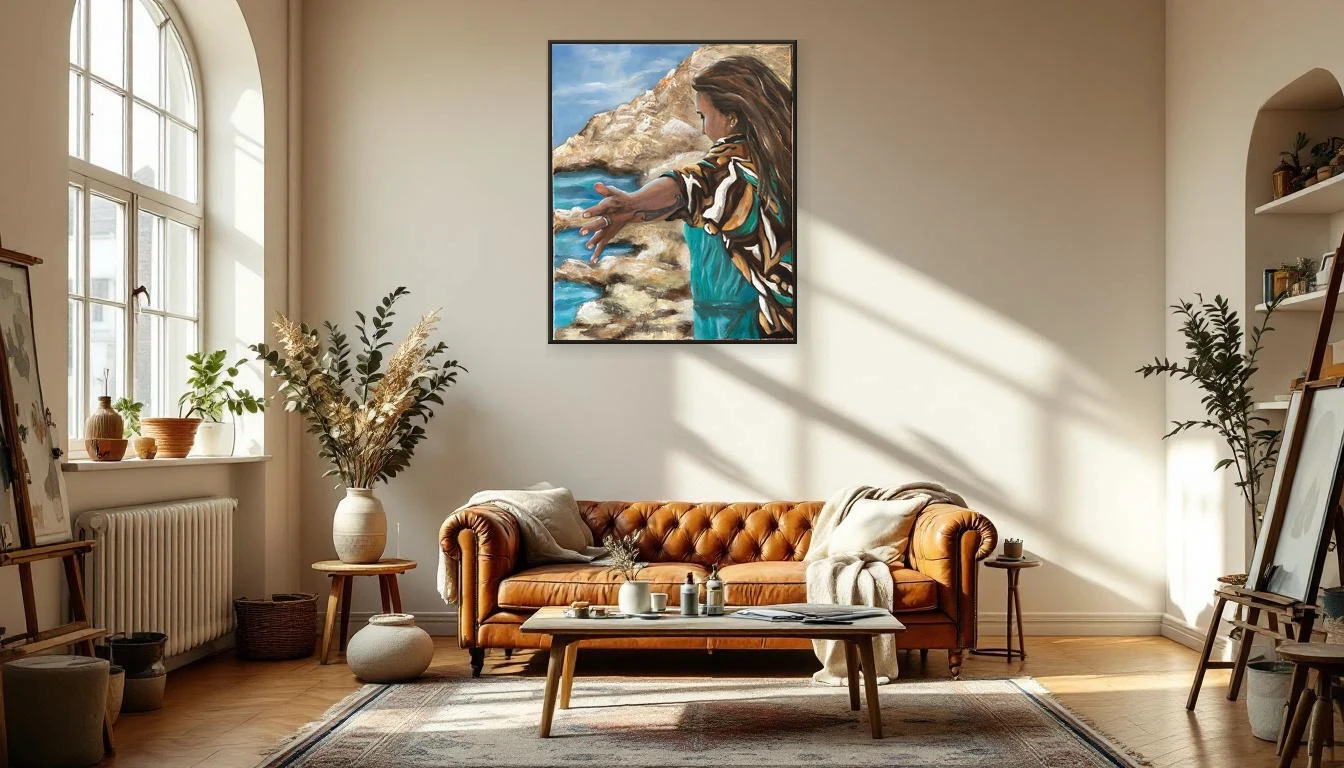
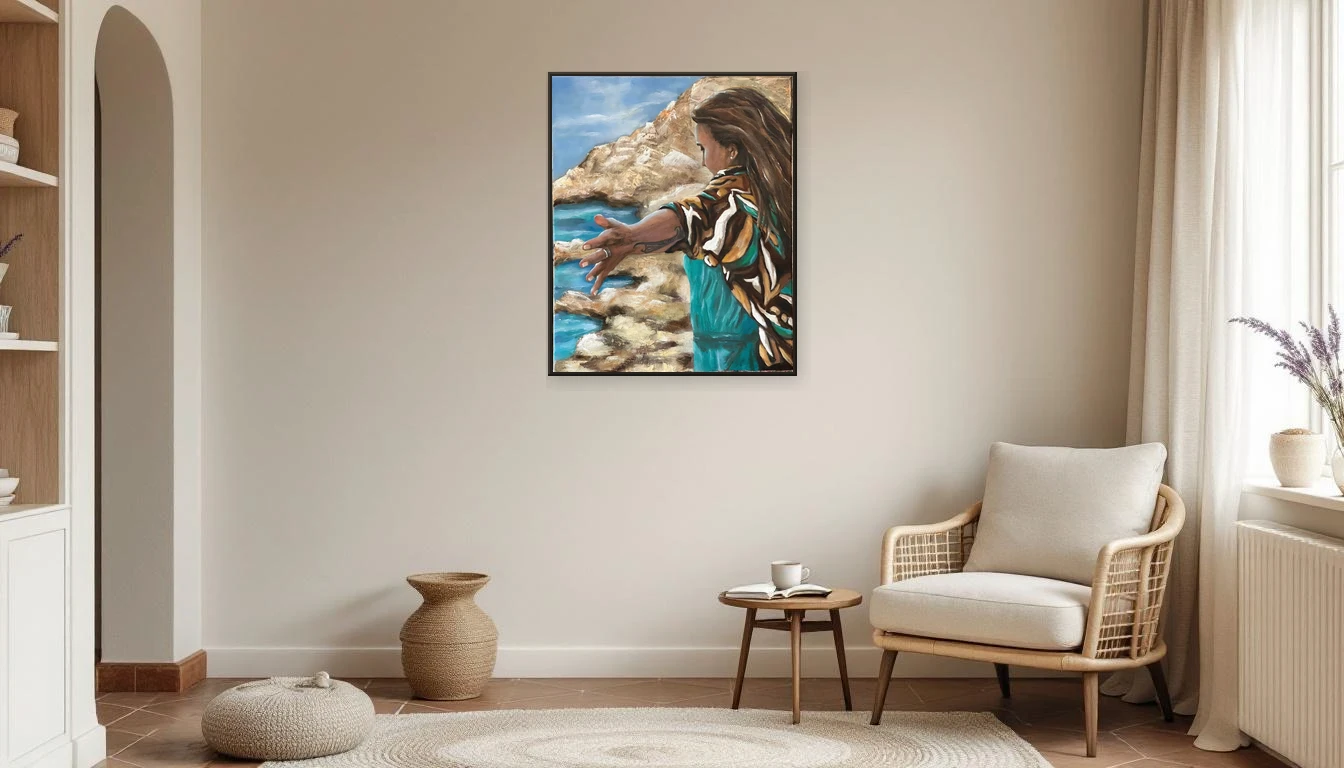
Take my painting Freedom — an oil on canvas where everything revolves around that layering. The patterns on the textile in the work are hand-painted, layer by layer. Each pattern is a small ritual. It is not efficient. It is not optimal. But it is real.
Art as antidote
We live in a time where authenticity is becoming scarce. Our feeds are curated, our photos filtered, even our messages sometimes drafted by machines. Art on your wall can be the opposite: raw, honest, unpolished. A daily reminder that beauty does not need to be perfect to move you.
The trend is clear across the global art market: from Saatchi Art to independent galleries, buyers are gravitating toward originals and handmade prints precisely because you can see the maker in them. Art is becoming more flexible — it no longer needs to be a forever choice. But the choice for handmade? That is very deliberate.
What you can do
If you are choosing between a generated image and a real painting, pause for a moment and ask yourself what you want to feel when you walk through the door. Do you want something beautiful? Or something that lives?
Browse the DNH Artful Living collection — every piece is handmade, from first sketch to final layer of paint. Or book a studio visit and experience what it feels like to be surrounded by work that still smells of paint.
The human hand is not disappearing. It is only becoming more valuable.