Yesterday I walked through the park behind my studio. It was early, the grass still wet, and sunlight broke through the canopy in patches of gold and green that you can't replicate — only feel. Back in the studio I grabbed a brush immediately. Not to paint a tree, but to capture that feeling. That breath. The calm you feel when nature wraps around you for a moment.
Biophilic design: beyond the fiddle-leaf fig
There's a word for that longing for nature in your home, and it's biophilic design. It sounds technical, but the idea is ancient: people feel better when their surroundings reflect something of the natural world. Organic forms, earthy colours, materials you want to touch. In 2026 this is no longer a niche trend — it's the thread running through virtually every interiors magazine, from Elle Decoration to Architectural Digest.
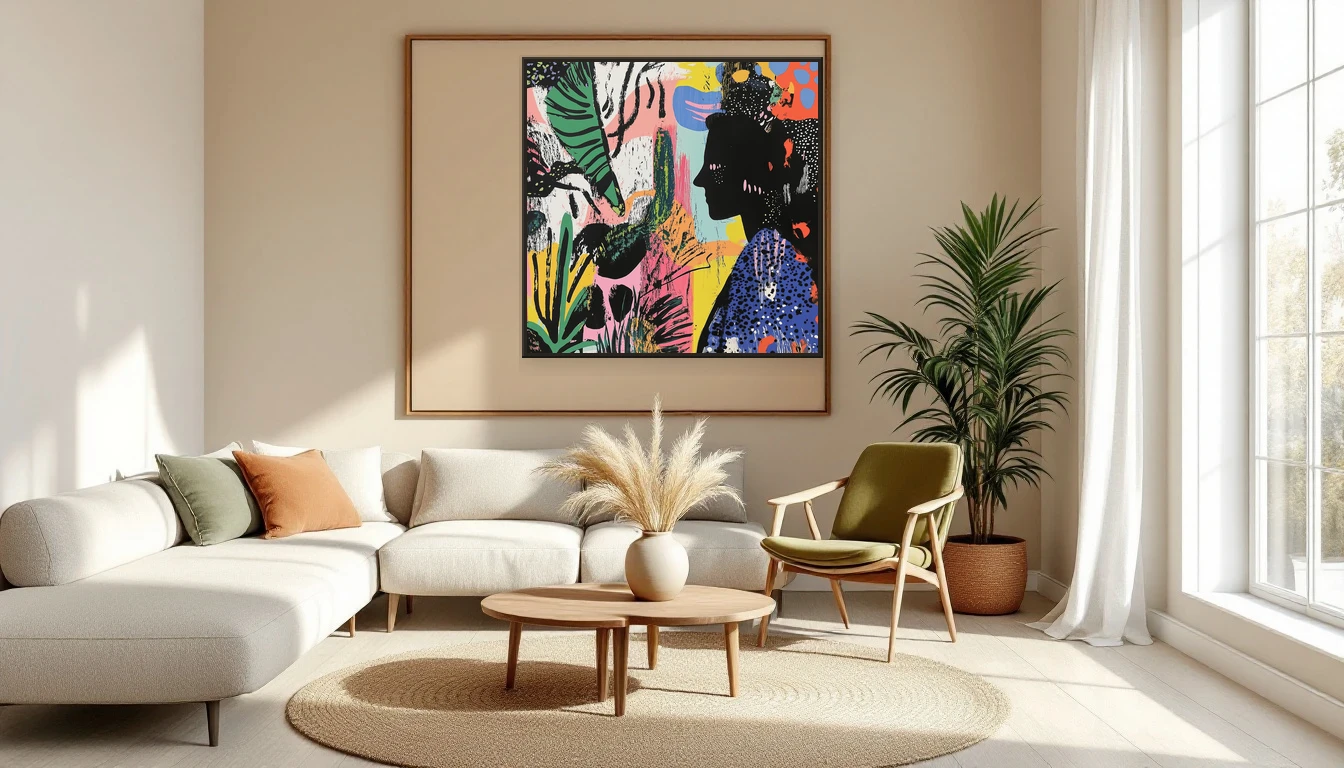
But here's the thing: biophilic design isn't just about plants. Not everyone has a green thumb (I'll be honest — my ferns have seen better days). Art can play exactly the same role. An abstract painting with organic lines and warm earth tones does for your brain what a houseplant does: it brings you back to nature, without water or sunlight.
What your brain sees in abstract forms
Neuroscientists have discovered that our brains are biologically wired to recognise patterns from nature — fractals, flowing lines, the irregular repetition you see in waves, leaf veins or cloud formations. These are called biomorphic forms, and abstract art is full of them.
When your brain registers these forms, your stress levels drop measurably. Research shows that spaces with natural elements reduce cortisol by twenty per cent. You don't need to consciously think "this looks like a leaf" — your nervous system responds on its own. It's why an abstract painting with soft curves and green tones gives you a sense of calm that a geometric print never will.
Earth tones: the palette of belonging
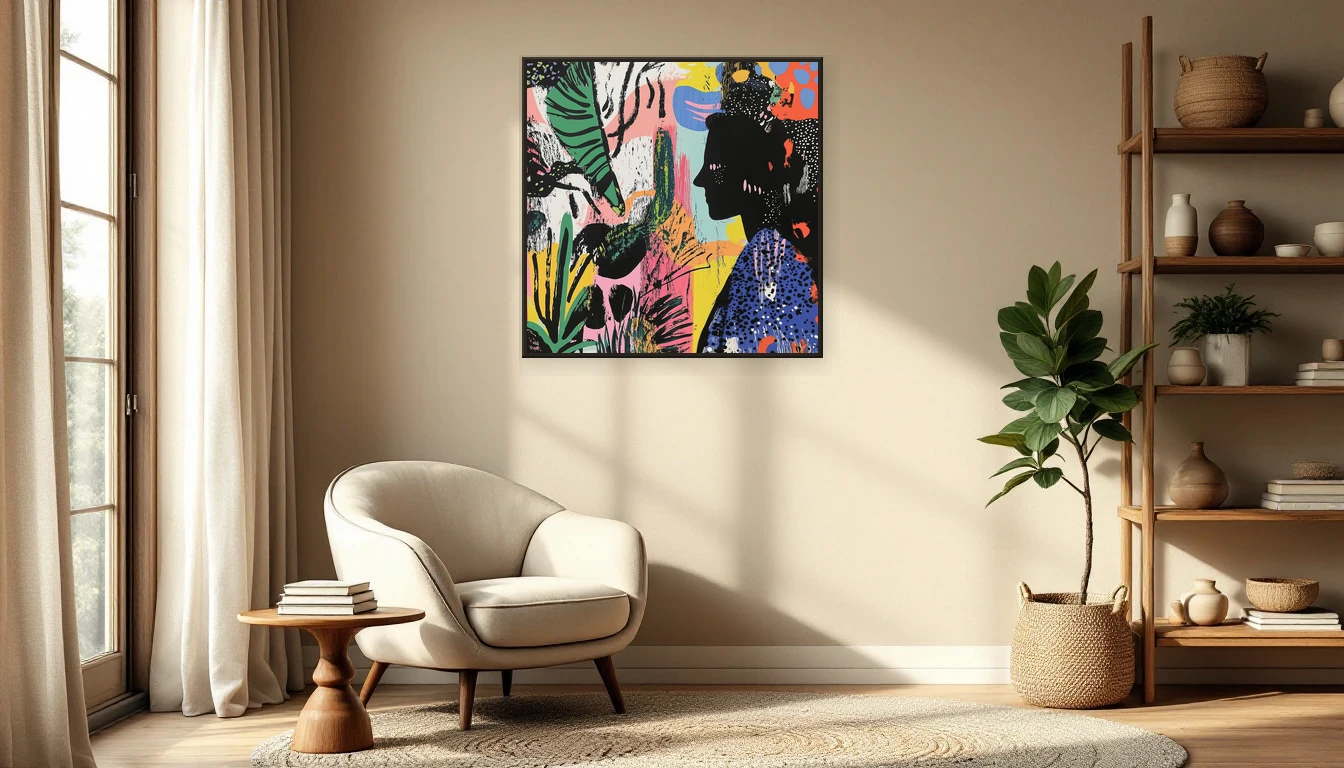
This autumn's colour palette plays into this beautifully. Olive green, moss green, copper brown, warm caramel — these are tones that come straight from the forest. Interior designers are pairing them with natural materials: raw linen, unfinished wood, hand-thrown ceramics. An abstract painting in those earth tones becomes the heart of such a space. It connects everything — the fabric of your sofa, the wood of your table, the green of that one houseplant that actually survived.
Organic shapes: the new straight line
The clean lines of minimalism are giving way to something softer. Organic shapes are the defining trend of 2026: rounded furniture, wavy mirrors, flowing silhouettes. Abstract art follows the same movement. In my own work I deliberately seek out that organic language — no sharp angles, but forms that move like water, like branches, like wind through a field. It fits how we want to live now: not in a showroom, but in a place that breathes.
The Kusama reminder
This week the Stedelijk Museum opens its major Kusama exhibition — seventy years of work by an artist who has been dissolving the boundary between art and nature for decades. Her dots, her pumpkins, her infinity rooms: they are all abstractions of the natural world. Proof that you don't need to paint a landscape to be nature.
I'm definitely going. And I'd recommend you go too — not just to look, but to feel what happens when art immerses you in something larger than yourself.
Nature on your own wall
You don't need a museum for that experience. One well-chosen abstract work on your wall creates that same connection. Choose something with organic forms and earth tones. Hang it where you see it daily — above the sofa, in the hallway, next to your favourite reading corner. And notice how the space feels different. Quieter. Warmer. More alive.
Curious which work would bring nature into your home? Browse the DNH collection or get in touch — I'd love to help you find the painting that lets your wall breathe.