
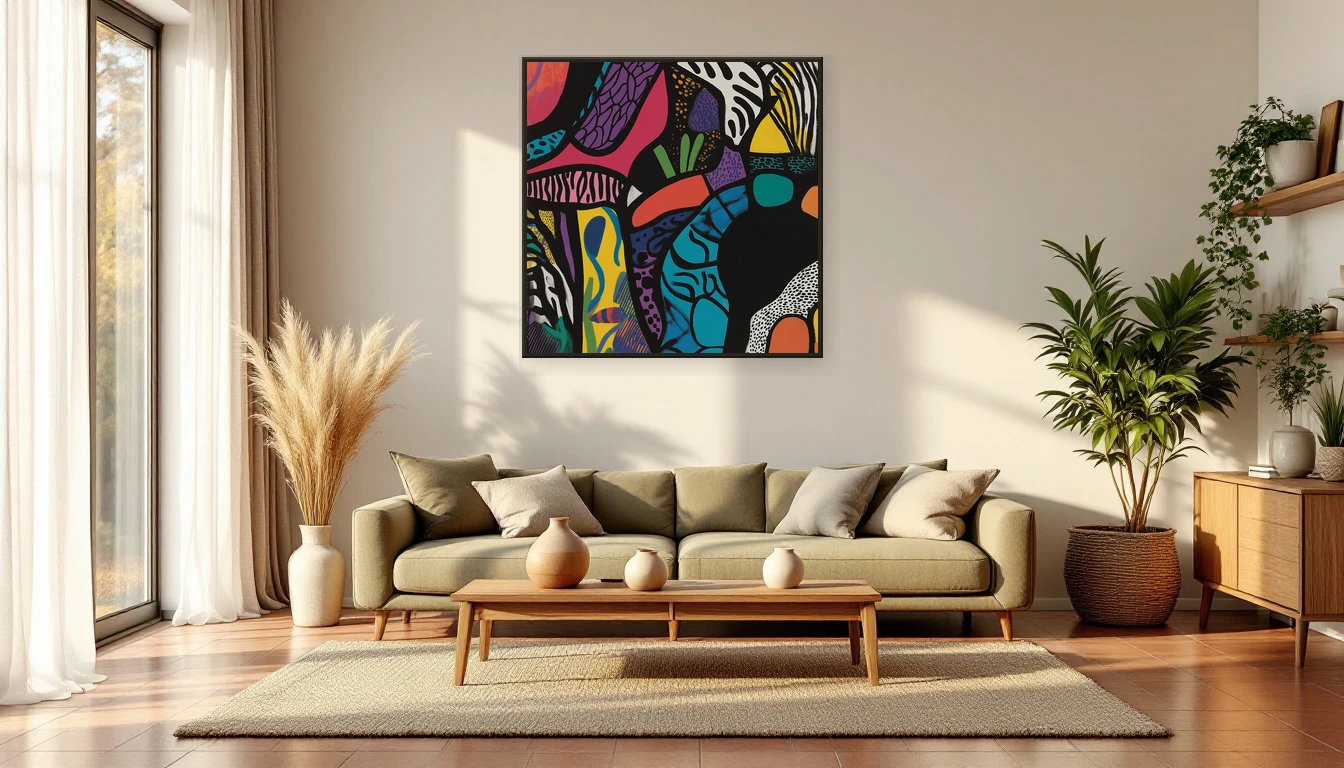
Some mornings, I leave my studio window wide open and let the light pour across whatever I'm working on. Leaf shadows dance over wet paint, and for a moment the boundary between my art and the world outside simply dissolves. That feeling — the seamless connection between indoors and out — is the beating heart of biophilic design.
What biophilic design actually means
Strip away the jargon, and biophilic design is beautifully simple: creating spaces that honour our innate need for nature. Not by filling every corner with ferns, but through deliberate choices in material, light, colour and — most importantly for me — art. Research consistently shows that nature-connected environments reduce stress by as much as twenty percent. Your own walls are the perfect place to start.
In 2026, this movement has found its stride. Designers are embracing organic forms, raw textures and palettes drawn straight from the landscape. Limewash walls, hand-thrown ceramics, visible wood grain — every surface tells a story of something real.
Abstract art as nature's translator
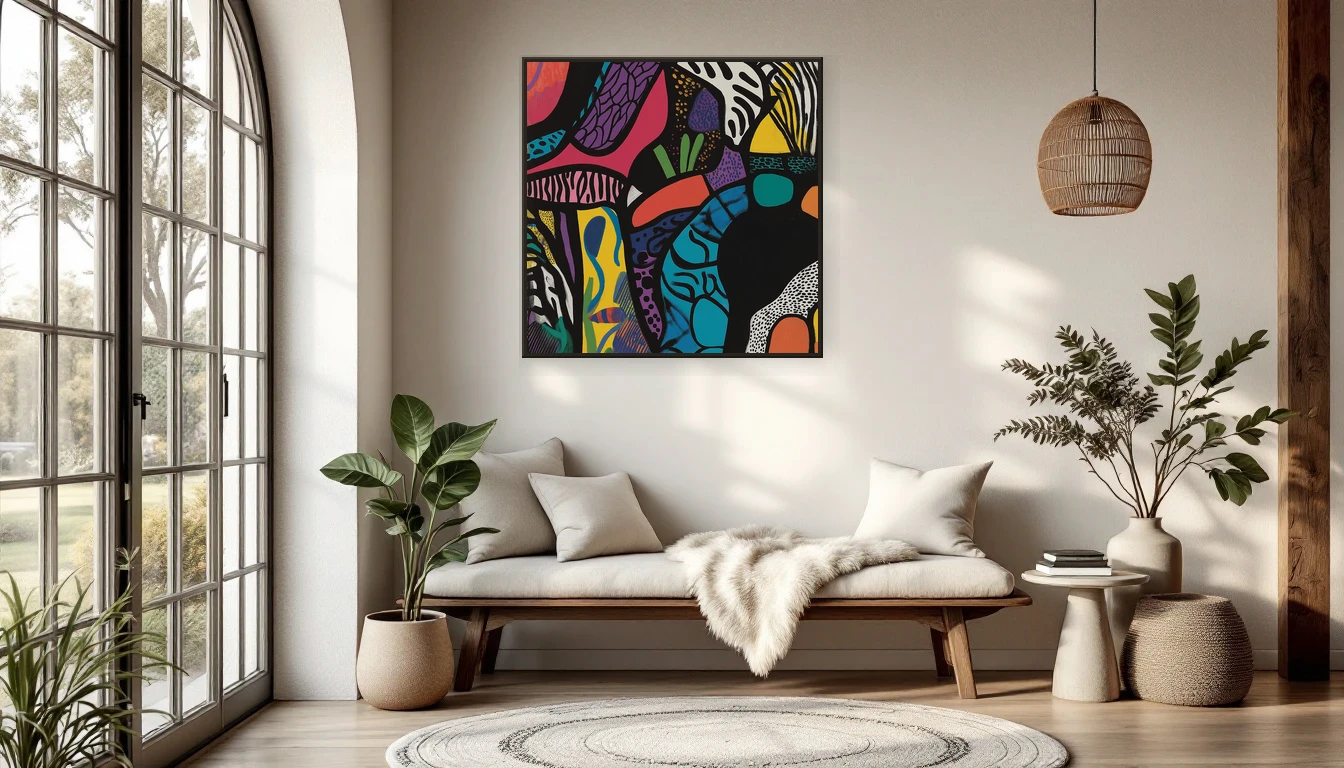
This is where my own practice lives. My abstract work has always grown from observation: the colour layers of an autumn forest, the pulse of coastal light, the quiet weight of morning fog. Abstract art doesn't need to depict a landscape literally to carry its essence. A richly textured ochre canvas above a timber dining table can evoke a harvest field just as powerfully as any photograph.
The 2026 art market reflects this shift. Collectors are gravitating toward work that is visibly handmade — thick palette-knife strokes, built-up layers, surfaces you want to reach out and touch. In a world increasingly flooded with AI-generated imagery, the desire for something genuinely crafted by human hands has never been stronger.
Designing with the seasons
September is an invitation to recalibrate your home. Outside, the light softens, colours deepen, evenings stretch longer. Biophilic living means moving with that rhythm rather than against it. Swap a bright summer piece for work in richer, warmer tones. Introduce natural styling elements — dried grasses, stone vessels, linen cushions in earthy hues.
Interior experts across Europe are noting a growing appetite for art that shifts with the seasons. Rotating your walls is no longer a luxury — it's becoming a conscious lifestyle choice.
A simple place to start
You don't need a renovation. Choose one wall — the one you pass every morning, beside the dining table, or at the end of your hallway. Place a piece there that makes you pause. Pair it with something organic: a branch, a ceramic, a linen throw in a complementary tone. Notice what happens to the room.
I see it every time in my own home: when art and nature work together, the space becomes something greater than either alone. A place that isn't just beautiful, but that genuinely makes you feel better.
Curious which piece might suit your biophilic home? Browse the DNH collection or get in touch — I'd love to think along with you.