
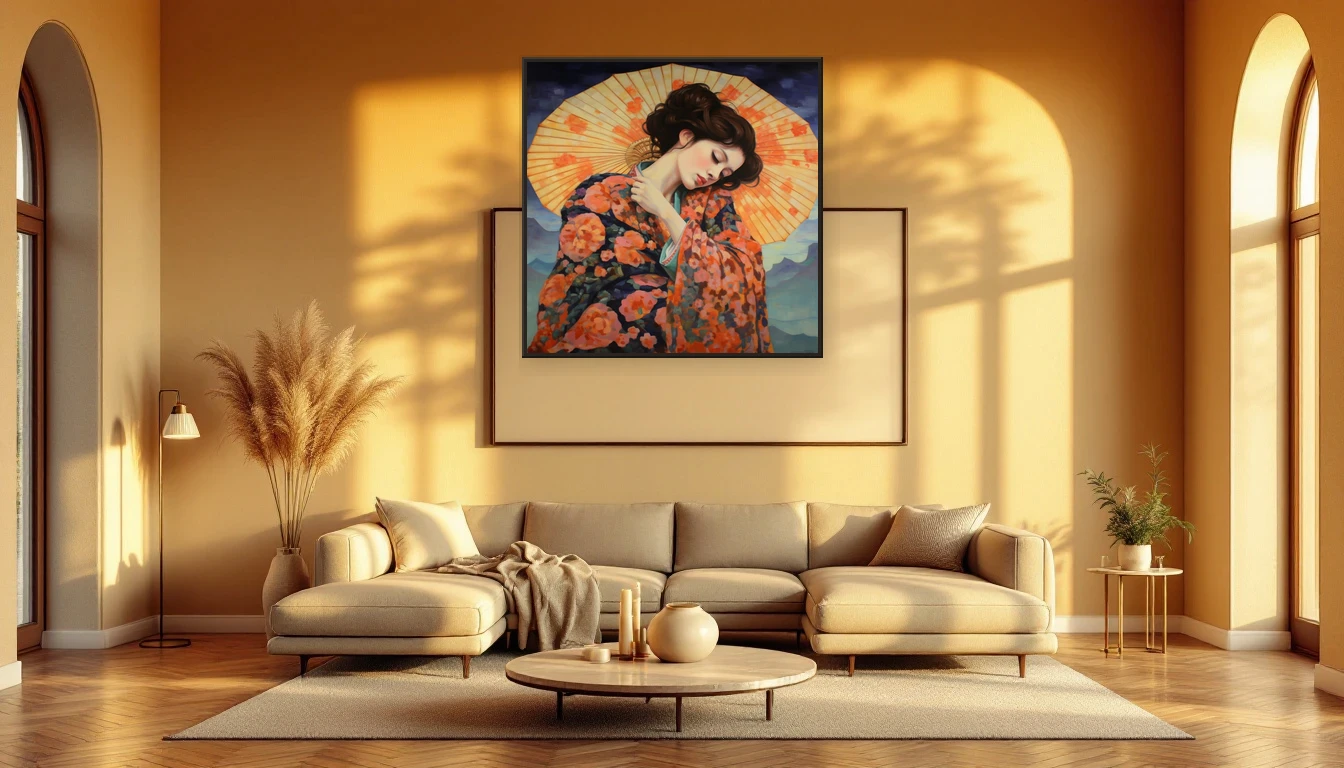
You fell in love with a painting at the gallery, yet at home it feels oddly flat. The culprit? Light. Good illumination is the invisible layer that reveals colour, texture and emotion — or hides them entirely.
Why Light Changes Everything
Something I notice every day in my studio: the same canvas looks entirely different in morning sun versus an overcast afternoon. Warm light coaxes warm pigments forward; cool northern light makes blues sing. Light isn't an afterthought — it's an invisible brush painting right alongside you.
What's true in the studio is equally true at home. That abstract piece you chose with care can become wallpaper under the wrong bulb, or the beating heart of a room when lit well.
Choosing the Right Colour Temperature
The first decision is colour temperature, measured in Kelvin. For artwork, warm white — 2700K to 3000K — hits the sweet spot. It casts a soft, inviting glow similar to golden-hour sunlight, doing wonders for warm pigments and earthy tones.
Cool white above 4000K makes art feel clinical. And harsh fluorescent light? That's the worst thing you can do to a painting — it flattens nuance, depth and feeling. Always choose a source with a CRI (colour rendering index) of 90 or higher to see every subtle colour shift.
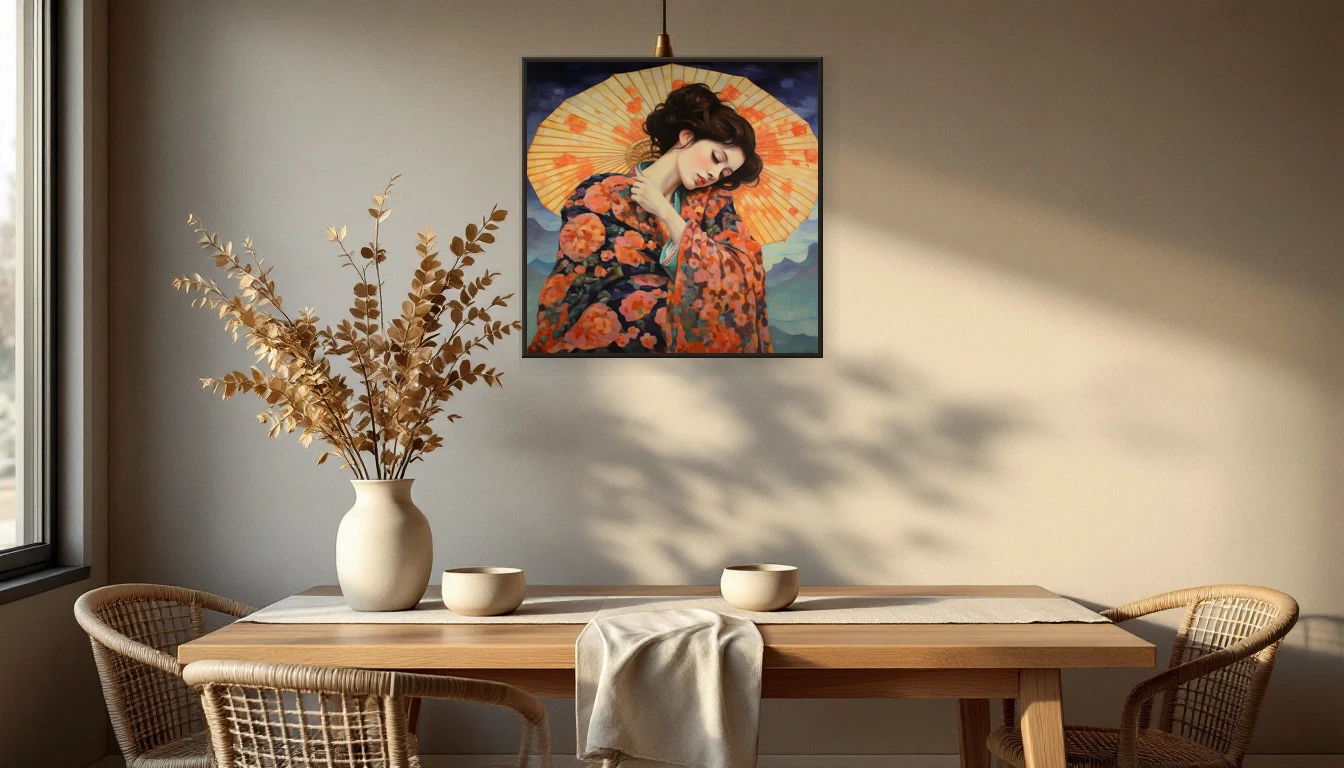
Three Ways to Light Your Art
Picture lights are the classic choice: a slim fixture above the canvas casting even light downward. In 2026 they're smarter than ever — ultra-thin LED profiles with dimming and wireless designs give your wall a gallery feel without the museum formality.
Adjustable spotlights work beautifully for multiple pieces or a rotating collection. Mount them on a track at a 30-to-45-degree angle, roughly 50 to 75 centimetres from the work. This avoids glare and creates a smooth, even field.
Integrated lighting is the most subtle: LED strips in a niche or behind a frame create a soft halo that makes art appear to float — magical with textured work where light and shadow dance.
Daylight: Ally and Enemy
A painting beside a north-facing window receives the most consistent, soft illumination there is — the same light painters have prized in their studios for centuries.
But direct sun is an enemy. UV radiation fades pigments and heat damages canvas and paint. Use UV-filtering glass for framed work, or hang art where no direct sunlight falls. Sheer curtains filter light beautifully while protecting what's on your wall.
Light as Composition
Think of lighting as composition for your interior. Just as I work with focus and rest in a painting, you can use light to create visual rhythm in a room. A spotlit artwork draws the eye, a soft reading lamp offers balance, and the rest of the space breathes around them.
The most beautiful interiors use layered light: ambient, task and accent. Art falls into that final category — it's the exclamation mark of your room.
Try It Tonight
Here's my challenge: grab a desk lamp this evening and aim it at your favourite painting. Play with the angle, the distance, the brightness. You'll be amazed at how much you've been missing.
And if you discover you're ready for something that truly deserves the spotlight — take a look at my collection. Every piece is painted to be seen.