
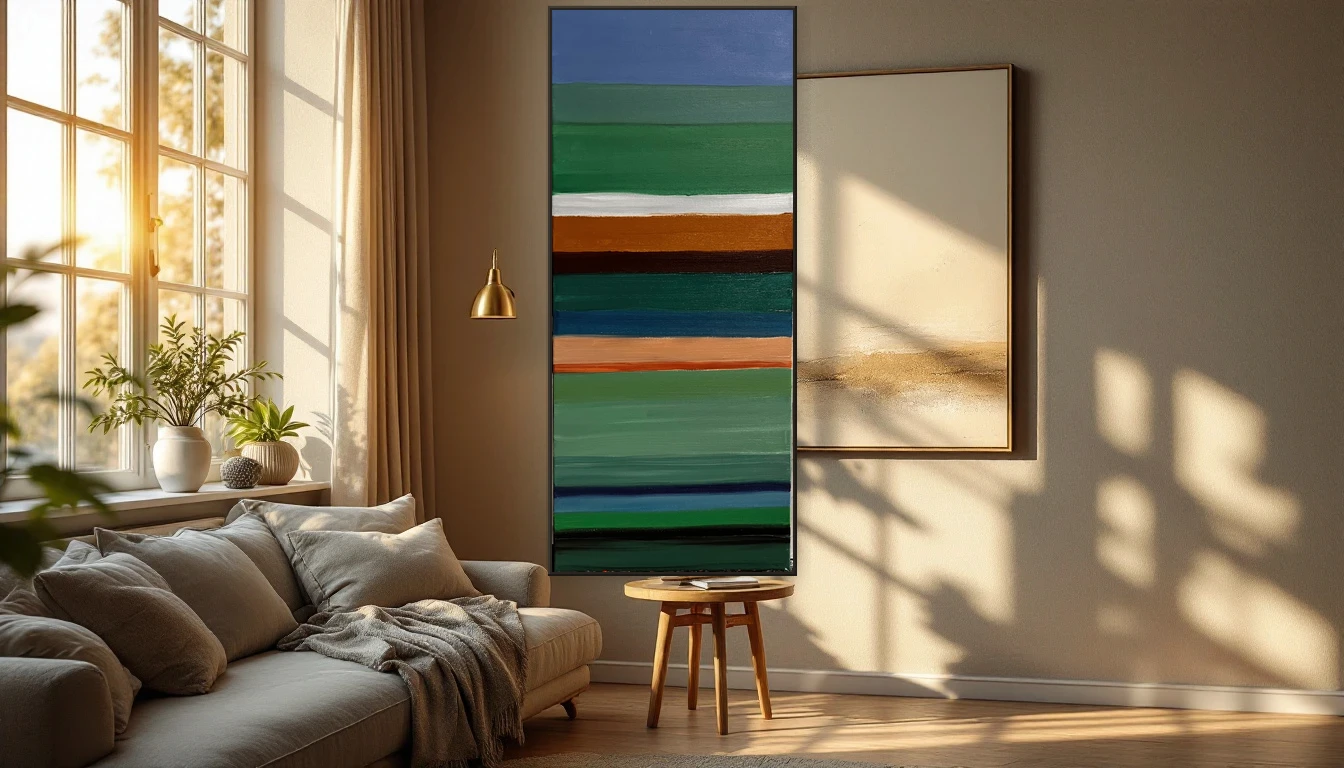
There's a painting in my studio I've known for two years. It still surprises me. Not because it changes — but because the light does. In the morning it's soft and reserved. Around midday it comes alive, almost aggressive. And in the late hour, when the sun sits low and pours golden through the window, it becomes a different work entirely. Warmer. Deeper. As though the painting takes off its coat.
The light makes the work
We invest in art, in frames, in the perfect spot on the wall. But the lighting? We leave that to chance. And that's a shame, because light is the difference between a painting that's furniture and a painting that lives.
Museums have known this for centuries. The light falling on a Rembrandt in the Rijksmuseum is calculated down to the lux. But you don't need museum techniques to achieve the same effect at home. A few principles are enough.
Natural light: your best friend
The first step is to look — really look — at how daylight moves through your room. North-facing light is cool and constant: ideal for works with subtle colour gradients. South-facing light is warm and shifting: it gives earth tones depth and makes cool blues and greens come alive.
Don't hang your abstract work directly opposite a window — that creates glare. Better on a wall perpendicular to the window, so the light rakes across the work at an angle. That's the moment when texture becomes visible: the direction of a brushstroke, the thickness of a paint layer, the relief you feel when you step close.
Art lighting: warm and focused
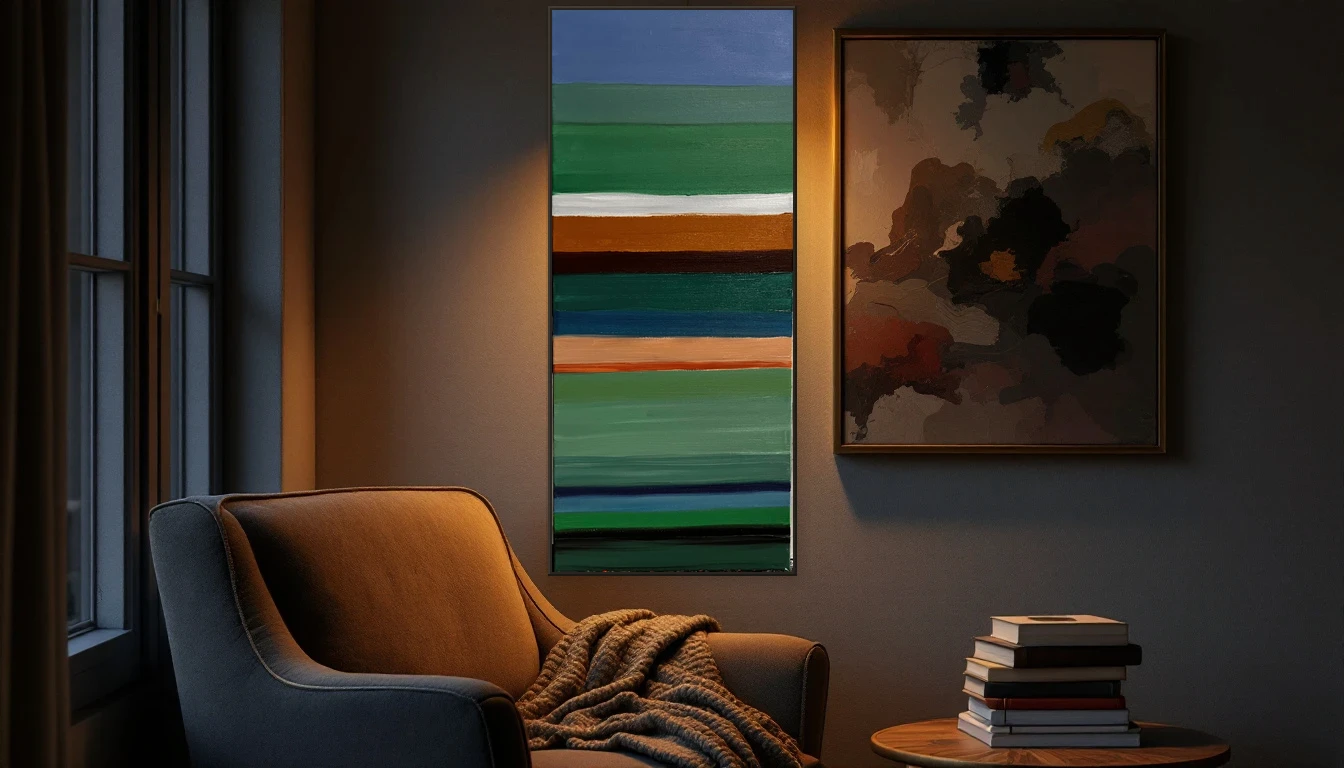
When daylight fades, you take over. The trend in 2026 is warm — very warm. Interior designers recommend light sources of 2700K or lower, the colour temperature of candlelight. Cold fluorescent light makes every colour look washed out; warm light brings out the golds and earth tones.
A picture light — that classic lamp above the painting — isn't old-fashioned. It's a tool. It directs attention, creates a cone of light that isolates your work from the rest of the wall, and delivers exactly the drama that daylight provides for free during the day.
Alternatively: an adjustable floor lamp at two metres' distance, angled upward at thirty degrees. That gives soft, even illumination without harsh shadows.
Seasonal shift: your art moves with you
August brings the longest light, but it's already changing. The sun sits lower, its colour grows more golden. In a few weeks, autumn twilight begins — and that's the moment warm abstracts look their best. The ochre tones, terracotta, deep greens: they catch that soft autumn light as if they were made for it.
Rotate your art with the season. Move a cool, blue work to the summer side of your home. Hang that warm abstraction where the autumn twilight will reach it. You'll see the same work suddenly breathe differently.
Look tonight
Try an experiment tonight. Dim the overhead light, aim one warm lamp at your favourite painting, and sit down. Look. You'll discover you're getting to know the work all over again — the shadows, the textures, the colours you never saw by day. That's the magic of light: it reveals what was always there.
Curious which work looks best in your light? Browse the collection or get in touch — I'd love to help.