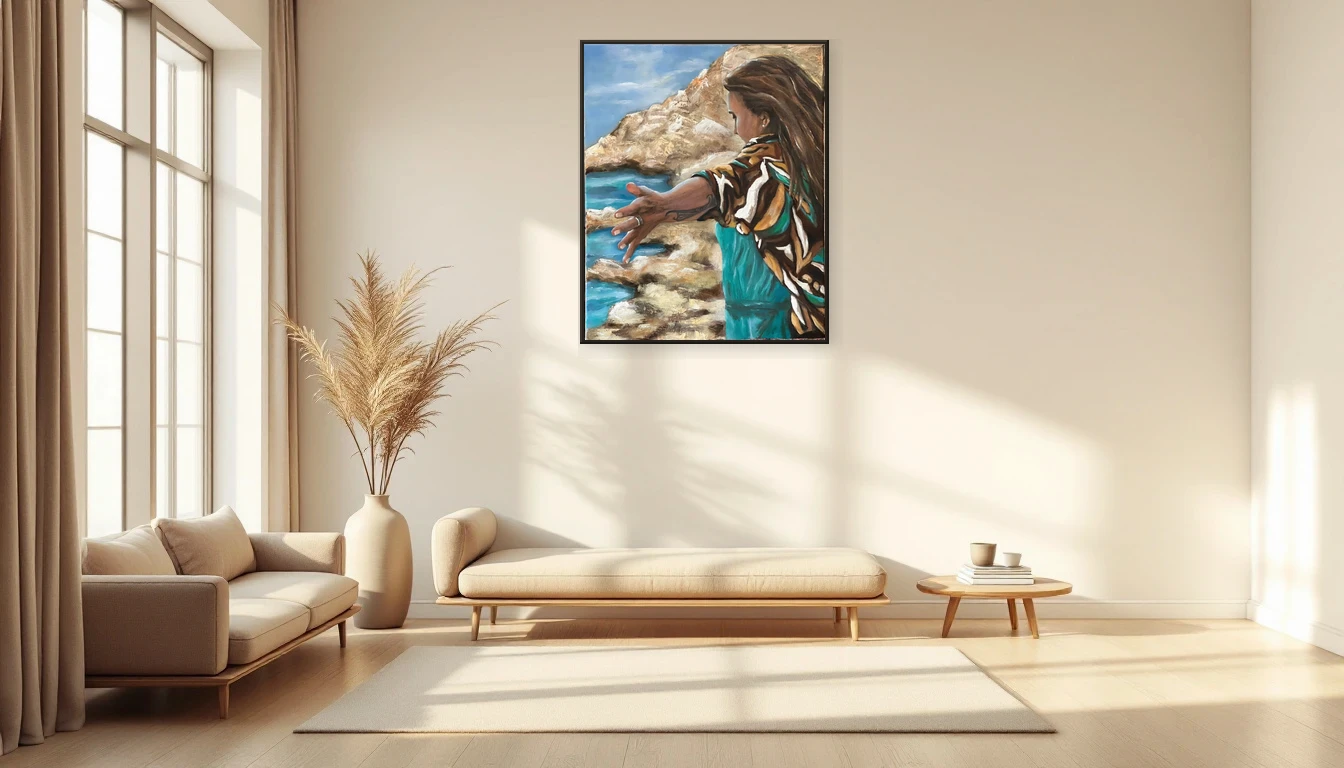
There's a moment every art lover knows. You hang a painting you adore, step back, and think: beautiful. Then your eyes drift to the bare wall beside it, and something twitches. Shouldn't there be something else there? A print, a mirror, another piece? Before you know it, every surface is covered — and somehow the room feels less, not more.
The Paradox of Fullness
Here's the counterintuitive truth: the more you hang, the less you see. Our brains struggle with visual overload. A single powerful composition on an otherwise bare wall commands attention, invites contemplation, creates emotion. Empty space isn't absence — it's an invitation to look.
Why 2026 Design Is Embracing the Void
This year's design world has a clear message: intentional beats abundant. Dutch interior stylists champion objects you've truly thought about — furniture that endures, art that stirs something real. Internationally, the same shift is underway: the best gallery hangs succeed not through abundance but through what designers call carefully considered negative space. The breathing room between artworks matters as much as the artworks themselves.
Space as a Listener
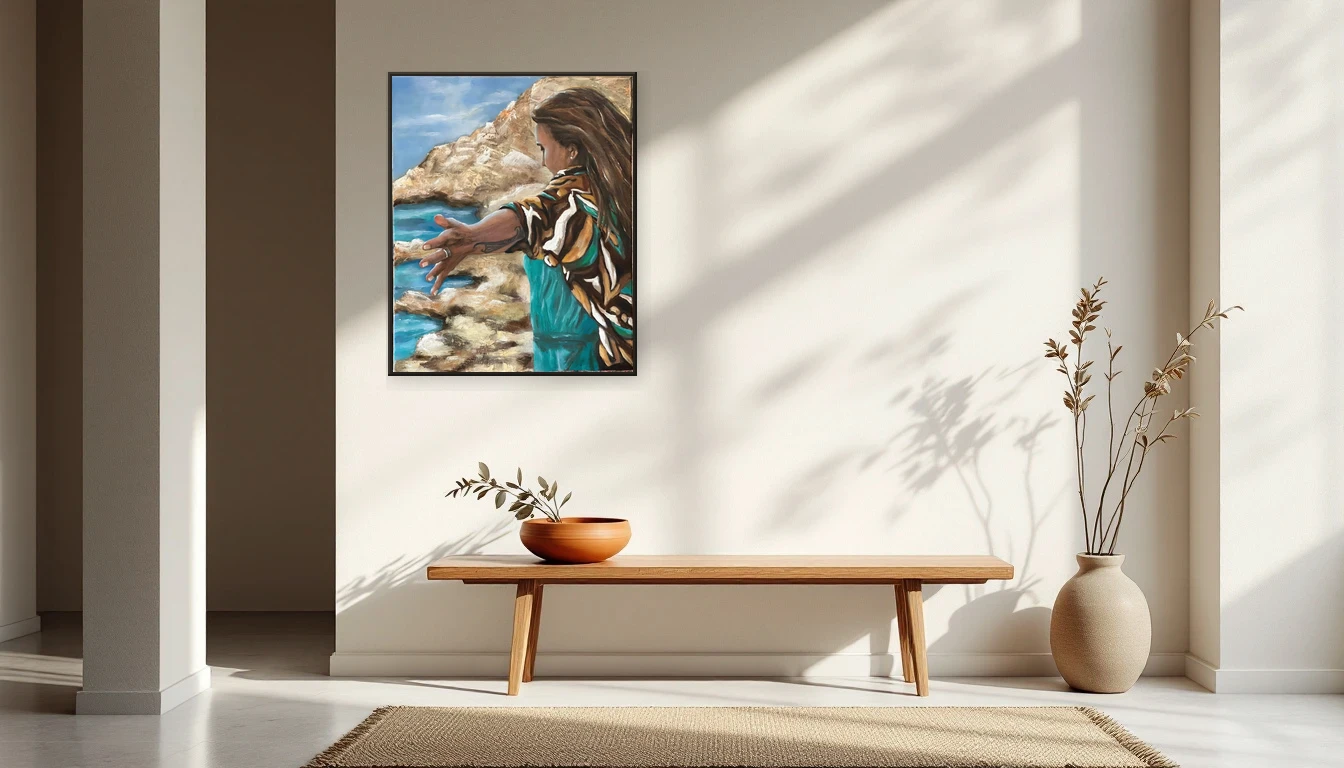
In my studio, I witness this daily. When I lean a fresh canvas against the wall, it needs room to land. Colours deepen when they have air around them — they become more vivid, more alive. An abstract piece on a quiet, light wall functions like a window into another world. Place that same work in a cluttered setting, and it disappears into noise.
The Golden Rule of Hanging
How much space does art actually need? A reliable guideline: leave at least half the width of the work free on either side. So a painting that's one hundred centimetres wide deserves at least fifty centimetres of clear wall on each flank. This visual breathing room lets the work speak on its own terms. When in doubt, more space always beats less.
Empty Walls Are Not Empty Spaces
A bare wall beside a painting isn't a missed opportunity — it's a deliberate choice. It's the silence between two notes that creates music. The pause between sentences that gives a story its weight. In a world screaming for attention, empty space is a statement of confidence: confidence in the work that hangs there, and confidence in yourself to resist filling every gap.
Less Wall, More Magic
The power of nothing may be the best-kept secret in interior design. Where we're trained to think in terms of adding — another print, another shelf, another detail — the real transformation lies in taking away. One strong work on a breathing wall changes not just the room, but how you live in it. It invites calm, reflection, and genuine attention.
Start with One Wall
My suggestion? Choose your favourite painting. Give it the best wall in your home — and give that wall to nothing else. No shelves, no clocks, no clutter. Just the work, the wall, and the light. You'll find yourself looking at it differently. More quietly. More deeply. As if seeing it for the first time.
Curious which piece your wall deserves? Explore the DNH Artful Living collection and discover abstract art that gives space as much as it takes.