
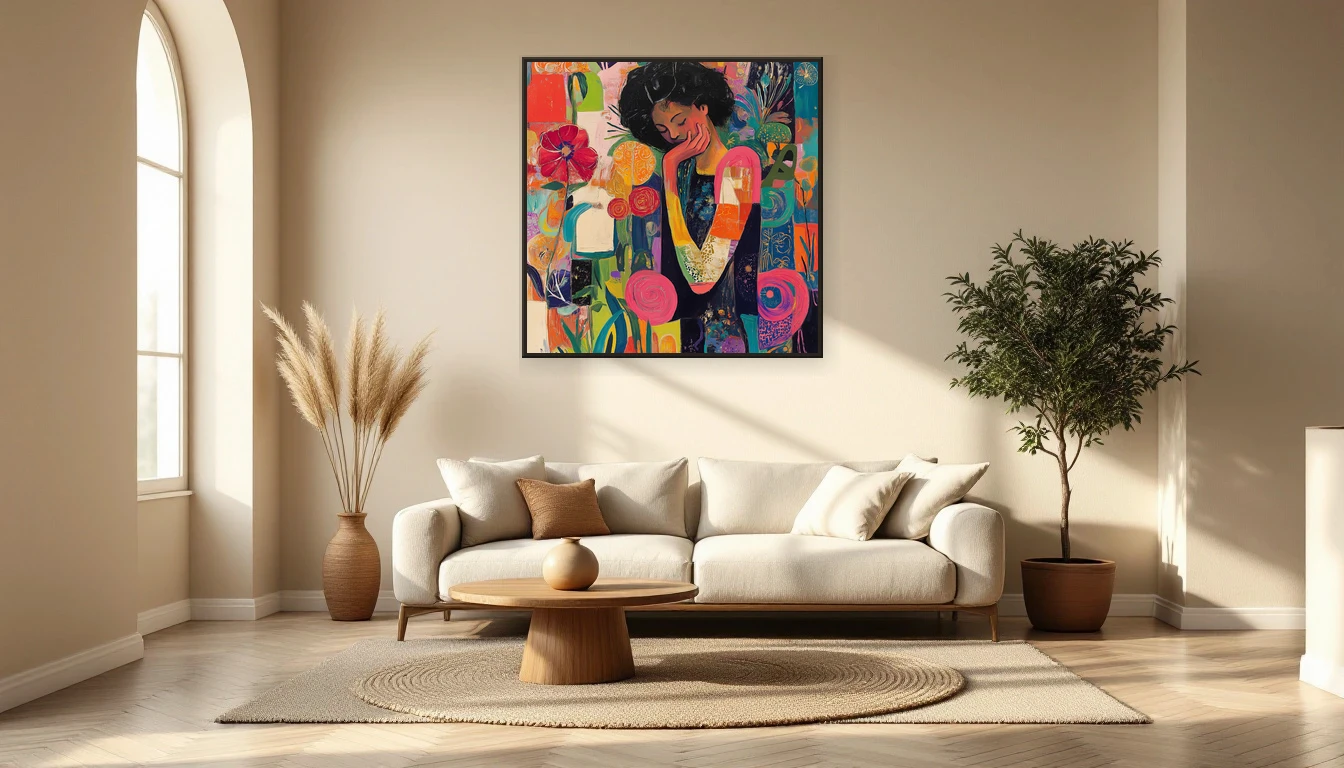
One question follows me from studio to showroom: how should I frame this? My answer always starts the same way — the frame you choose is as much a design decision as the art itself.
The Frame Is Part of the Story
A frame isn’t an afterthought. Think of it as the threshold between your art and your room — a visual handshake that can elevate a painting or shrink it. Get it right, and the frame disappears into the experience. Get it wrong, and it’s all you see.
The Floating Frame: Gallery Energy at Home
The floating frame is one of 2026’s standout trends, and for good reason. The canvas sits inside the frame with a narrow shadow gap all around, creating the illusion that the artwork is hovering. The effect is clean, architectural, and deeply contemporary — particularly striking with abstract paintings that have textured edges or painted sides you want to show off.
The Return of Warm Wood
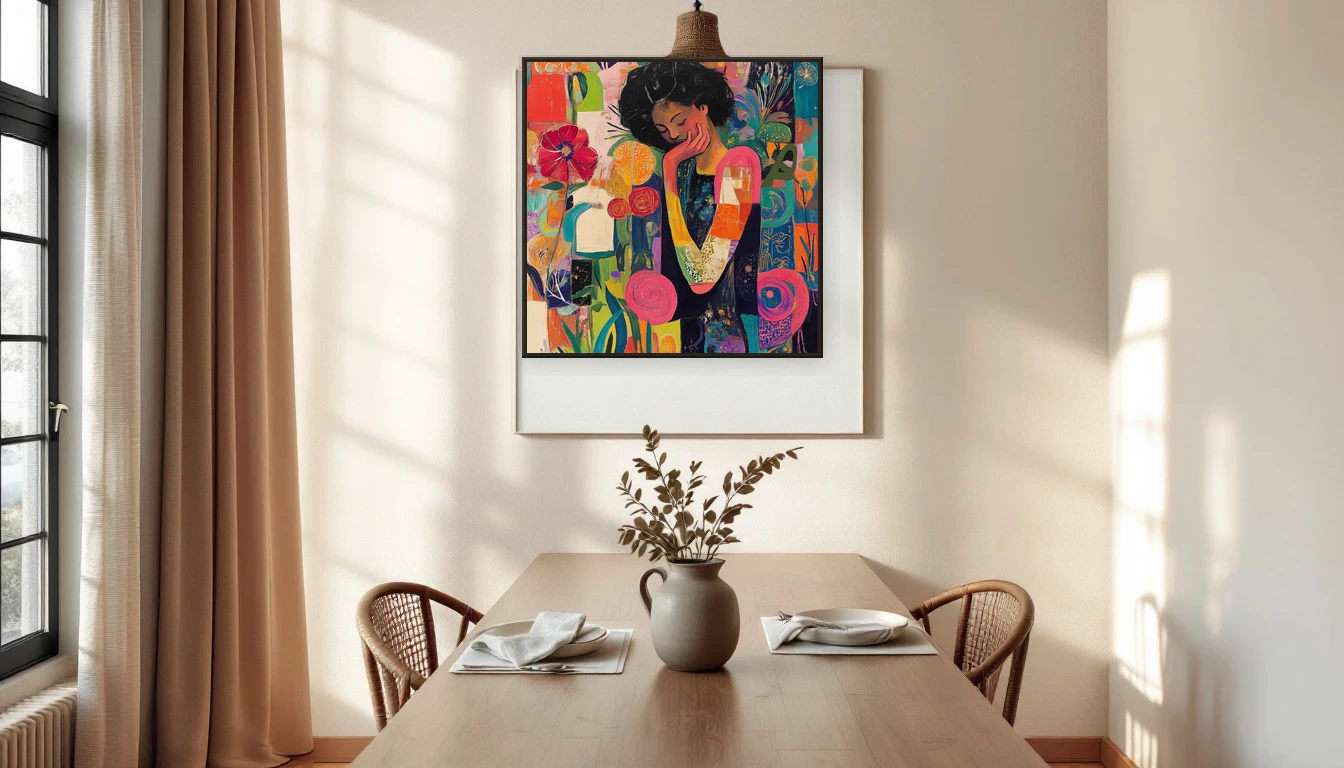
After years of monochrome frames dominating the scene, natural wood is making a decisive comeback. Walnut, oak, and maple add organic warmth without competing with the artwork. A warm wood frame next to abstract earth tones creates an instant sense of grounding and intention — it feels deliberate, not decorative.
Colour as Connection
Your frame’s colour can whisper or declare. A frame matched to the wall tone lets the painting merge seamlessly into the space. A contrasting frame — dark wood against a light wall — pulls every eye to the artwork. Matte black, warm grey, and natural wood remain the most popular choices, and for good reason: they ground without competing.
Slim Profiles: The Quiet Heroes
Matte black or brushed aluminium frames with slim profiles are the silent workhorse of modern framing. They define without dominating, offering just enough structure to contain the composition while keeping all attention on the paint. When in doubt, go slim — the painting will thank you.
Shadow Boxes: Depth as Drama
If you want museum-level presentation at home, consider a shadow box. By setting the artwork slightly forward from the backing, you create a natural shadow that adds dimension and gravitas. That single centimetre of space between canvas and frame transforms how you perceive the scale and depth of a piece — a favourite among collectors, and among artists too.
No Frame at All
Sometimes the boldest choice is no frame. A painting on a well-stretched canvas with painted edges can stand beautifully on its own — raw, immediate, as if you’re looking straight into the studio. This works especially well for large-scale abstracts where the energy of the paint needs no boundary.
My One Rule
Here’s the advice I give every collector: the frame should serve the work, never the other way around. Look at your room’s light, the wall colour, the mood of the painting. Then ask yourself — does this frame whisper, or does it shout?
A practical starting point: match the frame’s tone to either the lightest or darkest value in the painting. And if you’re unsure? Live with the canvas unframed for a week. The wall often tells you exactly what it needs.
Let’s Find the Right Frame
Not sure which presentation suits your piece? I’d love to help. At DNH Artful Living, I think alongside you about scale, colour, and style — so your painting finds exactly the place it deserves. Browse the collection or reach out for personal advice.