
The hand behind the canvas
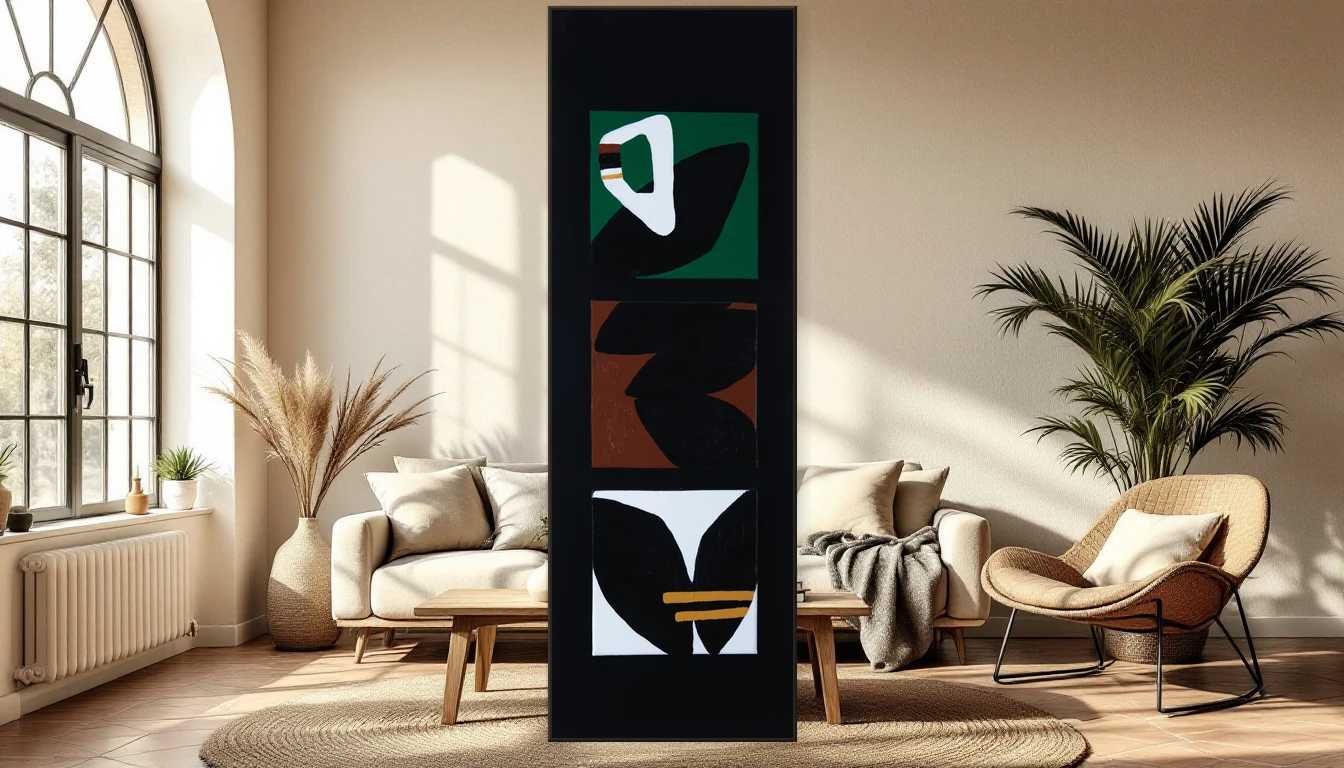
I recently hung a new piece in my living room — a thick, layered canvas full of palette knife marks and dry paint ridges. My daughter walked past and reached out her hand. Not to touch, but almost. That 'almost' is exactly the point. Texture in art does something colour alone cannot: it draws you in. And in 2026, that pull has never been stronger.
Why we crave texture
We live in a world of smooth screens. Everything we touch is flat glass — our phone, our laptop, our tablet. Neuroscientists call it 'tactile deprivation': our sense of touch is being underfed. It is no coincidence that interior trend-setters are calling for surfaces you actually want to touch. Limewash walls, bouclé fabrics, raw timber, ceramics with irregular glazes — and above all: art with depth.
The term you hear increasingly is 'haptic luxury' — luxury you feel, not just see. Interiors are being designed to be touched, not photographed. And handpainted art with thick paint layers, palette knife structure and visible brushwork fits seamlessly into that movement.
Impasto: ancient craft, modern obsession
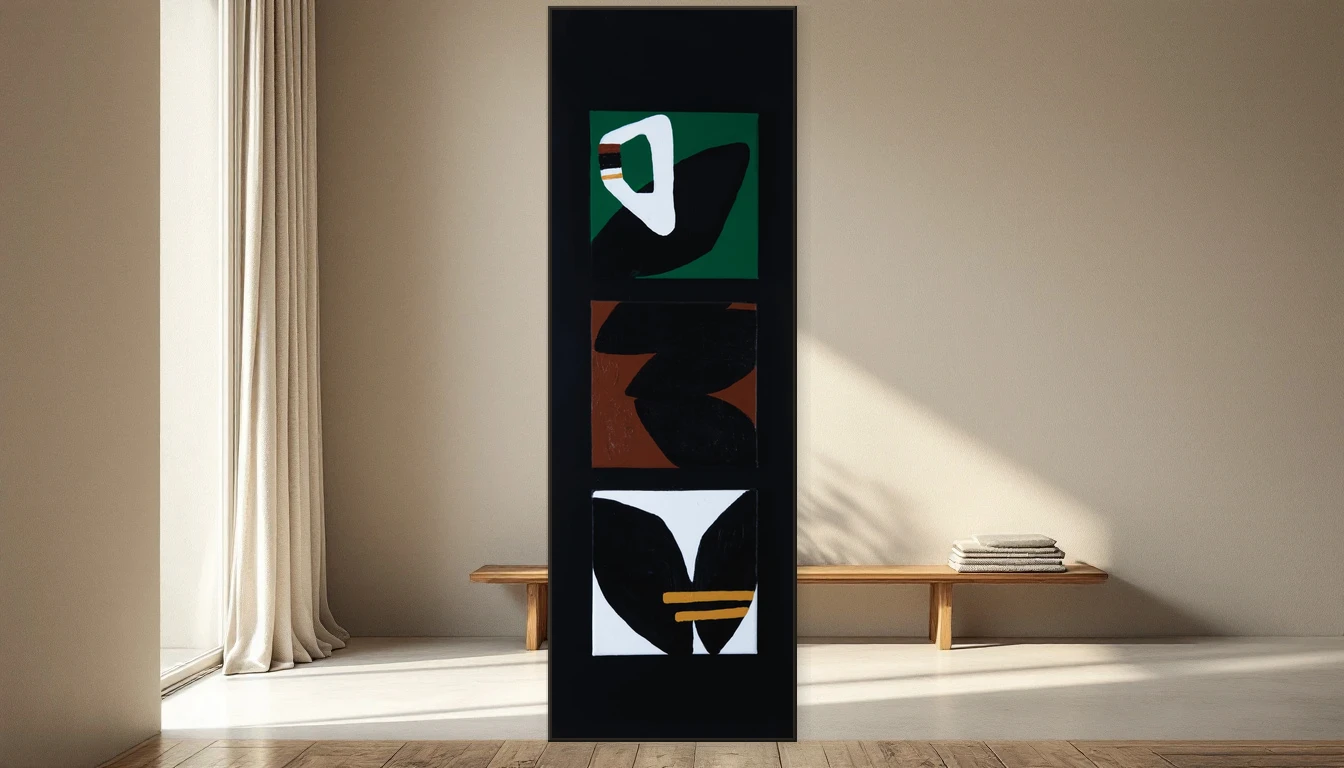
Impasto — applying paint in thick, relief-like layers — has been around for centuries. Rembrandt used it, Van Gogh made it legendary. But where it was long considered 'old-fashioned' in the smooth, minimalist interior world, it has returned with a vengeance. Collectors and interior designers are seeking work that is unmistakably made by human hands. Not an AI-generated print, not mass production, but paint you can feel with your eyes.
In my own work, it is precisely the layers that tell the story. A painting doesn't start as a composition — it grows. Layer upon layer, sometimes rough, sometimes fluid, until the canvas has developed its own character. You can see that build-up in the surface: the edges of a palette knife stroke, an unexpected texture shift, a spot where the underlayer shimmers through.
Texture transforms light
Here is something many people don't realise: a textured painting looks different at every moment of the day. Morning light catches the edges of a paint layer and casts tiny shadows. Evening light softens everything and brings the deep layers forward. A flat canvas doesn't do that — it is static, constant. A textured work lives with the light, with the season, with the time of day.
This is why I always recommend hanging art where natural light reaches it. Not in direct sunlight — that is too harsh — but where the light moves. A wall opposite a window, a hallway where morning light falls in, a living room where the evening light slowly turns. Then you see your painting anew every day.
Wabi-sabi: beauty in imperfection
The texture trend is closely connected to the wabi-sabi philosophy that has been flowing through contemporary interiors for several years. Wabi-sabi celebrates the imperfect, the handmade, the material that grows more beautiful with use. An abstract painting with visible brushstrokes fits perfectly — it is not a polished product, but an object with history.
In a wabi-sabi interior, textured art forms a natural bridge between limewash walls, weathered wood and unglazed ceramics. The whole space breathes authenticity. Not because everything is coordinated, but because everything is real.
How to choose textured art
A few practical pointers. Look beyond colour and composition — look at the surface. Ask yourself: do I want to run my hand across this? That impulse is a signal. Choose work that attracts you physically, not just visually.
Pay attention to scale, too. Texture needs space to breathe. A small textured piece loses its impact on a large wall. But a large canvas with deep palette knife structure can define an entire room — it becomes a landscape in miniature, a world on your wall.
Touch it (almost)
Texture in art is ultimately an invitation. To come closer, to slow down, to let go of the screens for a moment and feel something. Not with your fingers — please leave the paint alone — but with your eyes, with your attention.
Curious about art you want to touch? Explore the DNH collection — every piece is built by hand, layer by layer, for precisely this feeling.