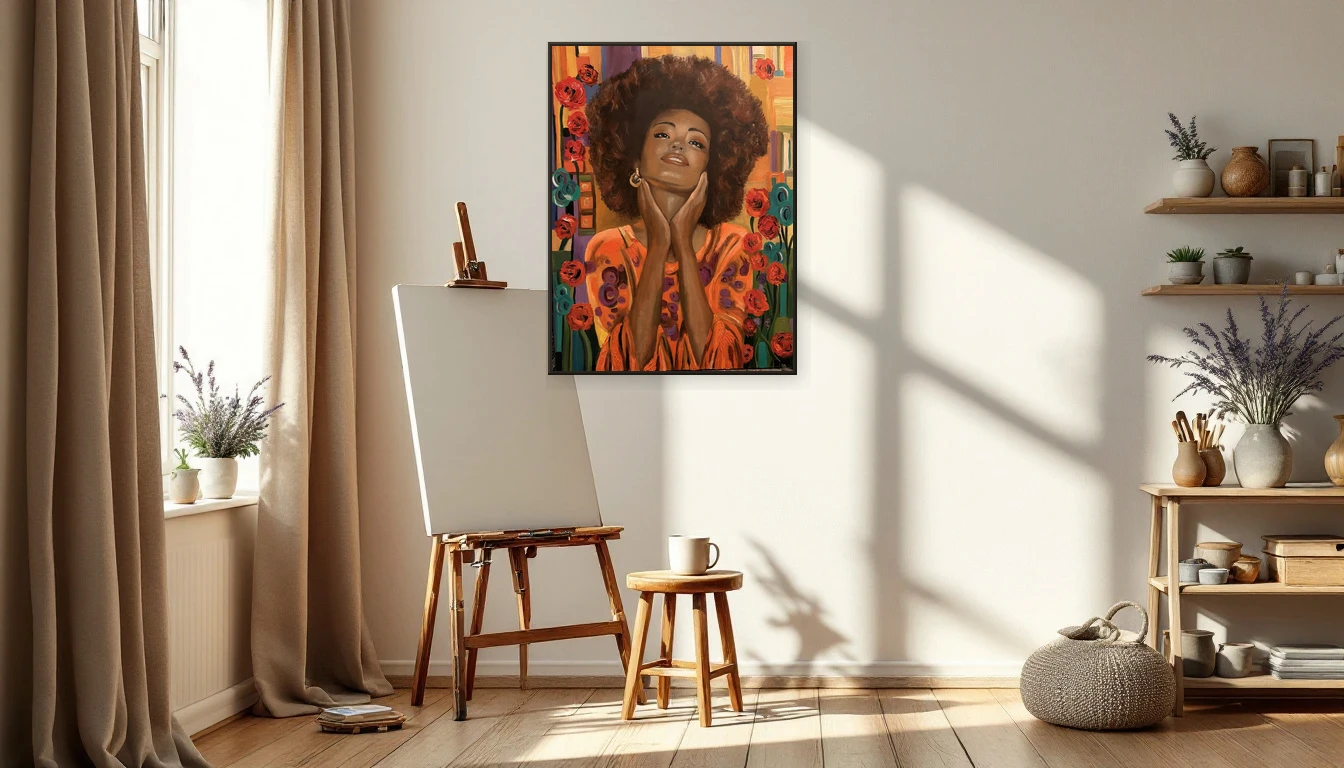
I was in my studio yesterday, paint up to my elbows, and realised it was the first moment all day I hadn't thought about my phone. No notifications, no mental checklist, just pigment and canvas. Two hours later I looked up and felt as though I had slept, only better. That is not coincidence.
What the science says
A study published in The American Journal of Art Therapy found that 45 minutes of creative activity measurably lowers cortisol, the hormone your body produces under stress. It does not matter whether you are a practised artist or picking up a brush for the first time: the effect is the same. Your brain shifts from alarm mode into a state of focused calm.
Psychologists call this the flow state: that moment when you become so absorbed in what you are doing that time disappears. Mihaly Csikszentmihalyi described it as the ultimate form of engagement. And creative pursuits, from painting to drawing to working with clay, are among the most reliable paths to get there.
Slow living starts with your hands
The slow living movement is gaining real momentum in 2026. Not as a vague aspiration, but as a deliberate choice: less screen time, more tangible experience. Interior designers talk about mindful minimalism, an approach where your home does not have to be empty but must be intentional. Every object tells a story, every artwork carries a purpose.
The same applies to the process behind it. A painting made with attention carries that energy into the room. You feel the difference between something that was printed and something that was lived.
My studio as sanctuary
I do not paint to be productive. I paint because it is the only place where my mind goes quiet. In my studio in Zoetermeer, there is the smell of linseed oil and turpentine, music in the background, and no agenda. Sometimes I work on a canvas for hours. Sometimes I sit for ten minutes staring at a colour before I begin. Both are good. Both are necessary.
That is something we have lost in our culture of performance: the idea that being unproductive can still be valuable. Making art without a goal, without pressure for a result, purely for the process. That is self-care in its most honest form.
Looking at art works too
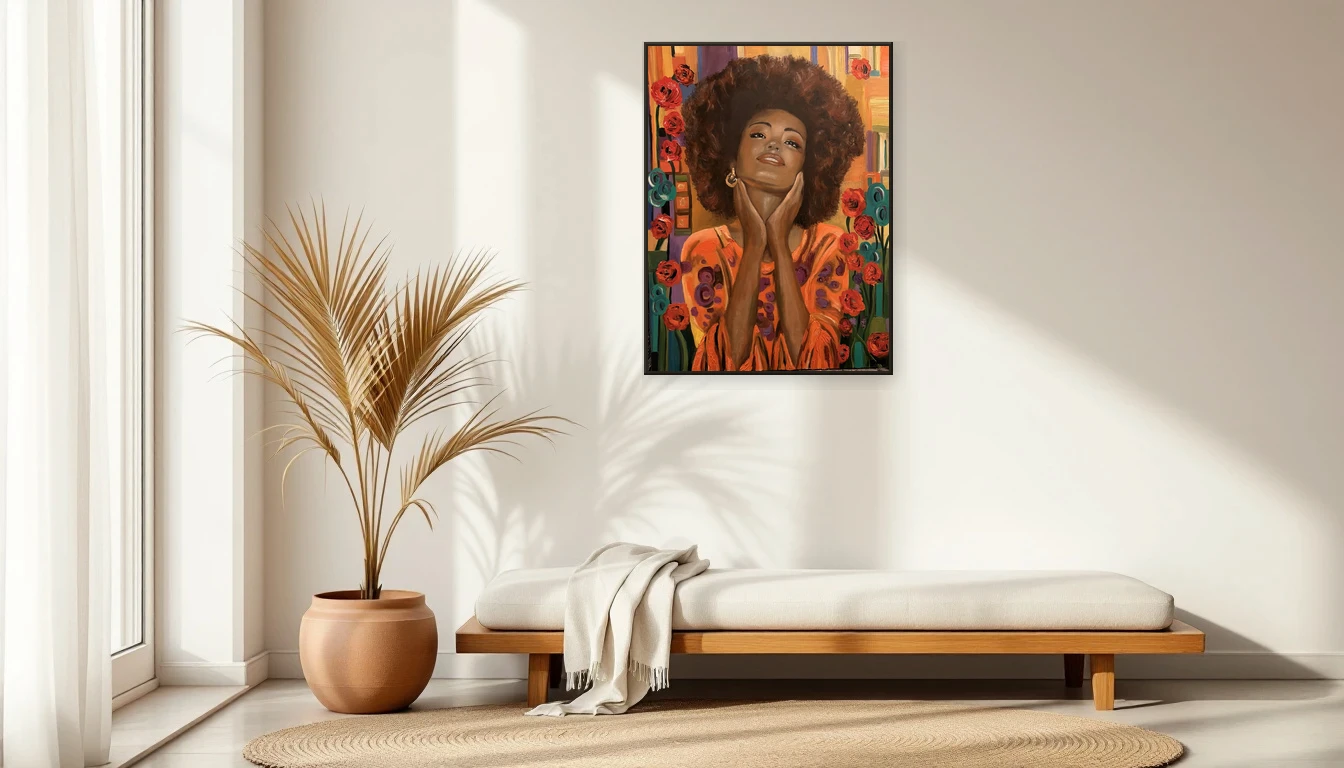
You do not need to pick up a brush to benefit. Research shows that sustained looking at art releases serotonin, the same feel-good hormone that sunlight activates. An abstract painting in your living room is not just decoration. It is a daily moment of stillness, an anchor in the visual noise of life.
Contemporary art activates complex neurological processes. The contemplative nature of authentic artworks invites a form of conscious presence that breaks through stress and opens new perspectives. Exactly what you need after a day full of stimulation.
Five minutes a day
You do not need a studio. Start with five minutes. Sit in front of a piece of art you have at home. Really look. Follow the lines, the colour transitions, the texture. Notice how your breathing slows. That is not vague spirituality, that is neuroscience.
Or pick up a sketchbook and draw without a plan. No expectation, no judgement. Just your hand and the paper. After a week you will notice the difference. After a month you will not want to stop.
Art as a daily ritual
In a world that demands constant attention, pausing at something beautiful is a radical act. Whether you paint yourself or spend a quiet moment each morning looking at your favourite canvas, you are giving yourself permission to slow down. And that is exactly what self-care is. Not bubble baths and face masks, but real, quiet attention to what does you good.
Curious which piece could become your daily moment of calm? Browse the collection or sign up for one of my workshops and discover how creativity can heal you.