A few weeks ago, someone messaged me to say she had been looking at my work for months but felt she didn’t "know enough" to buy a painting. That sentence stayed with me — because it describes a barrier that no longer needs to exist.
The Gate That Opened
Buying art used to feel like an insider’s game. You needed gallery contacts, a grasp of art-speak, and a budget that matched. That era is fading fast. In 2026, over sixty percent of collectors buy directly from artists — through a website, a social media post, sometimes a simple message. The middleman is disappearing, and with him, the intimidation.
What remains is the only question that ever mattered: does this work move me?
Feeling Over Status
The art market is shifting at its core. Where it once revolved around names, prestige, and investment returns, a growing number of buyers — especially millennials and Gen Z — are choosing emotional connection. They are not purchasing a brand. They are purchasing a feeling. A memory of a colour seen on a Greek island. A texture that brings calm after a long day. A canvas they want to wake up to every morning.
This is exactly why an original painting feels so different from a print. A print is an image. An original is an object — with paint layers you can see, a surface that shifts with the light, an energy that comes from human hands.
How to Know It’s Right
Here is my honest advice after years of painting and just as many years of conversations with people buying art: forget everything you think you should know. You do not need a degree in art history. You do not need to understand whether something is "good" by market standards.
Ask yourself three questions. Do I keep looking? Would I want to see this every day? Does it make me feel something — warmth, energy, calm, recognition? If the answer is yes, it is right. It really is that simple.
Size and Placement: What Works
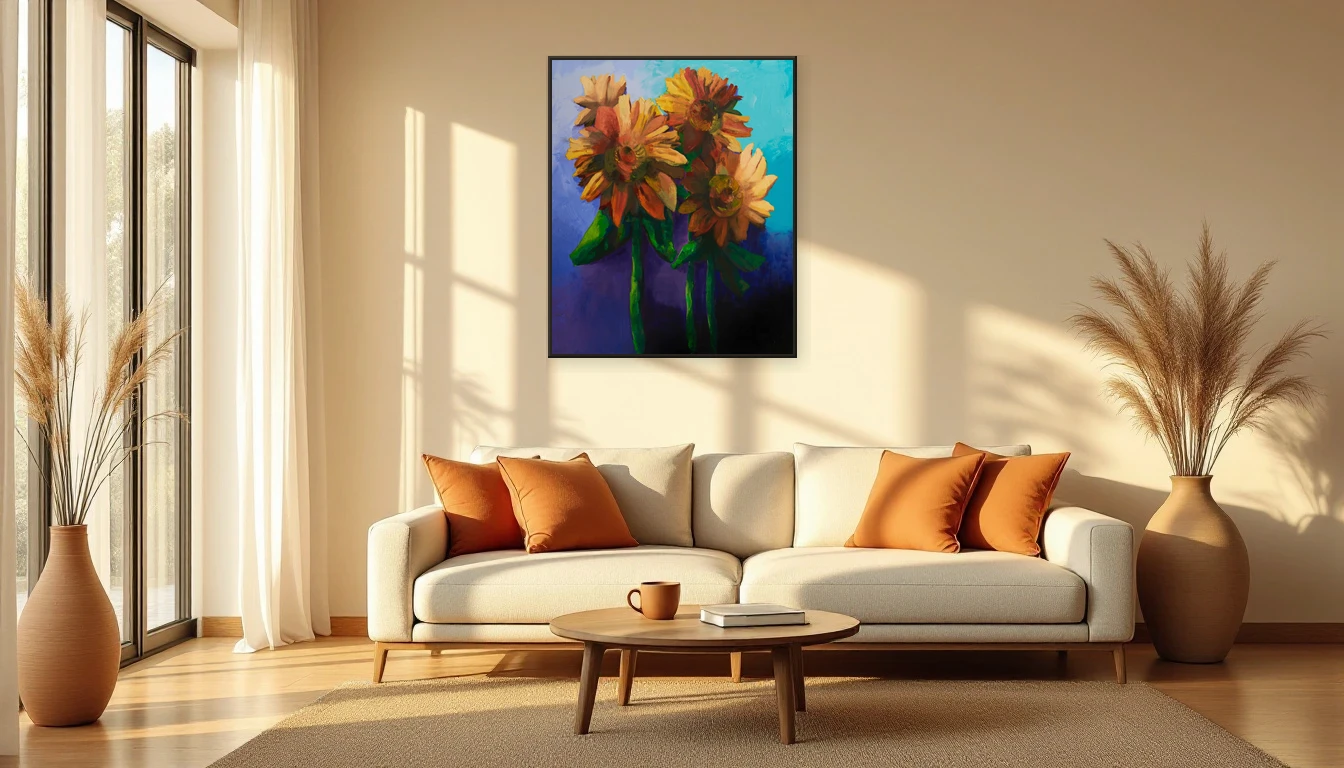
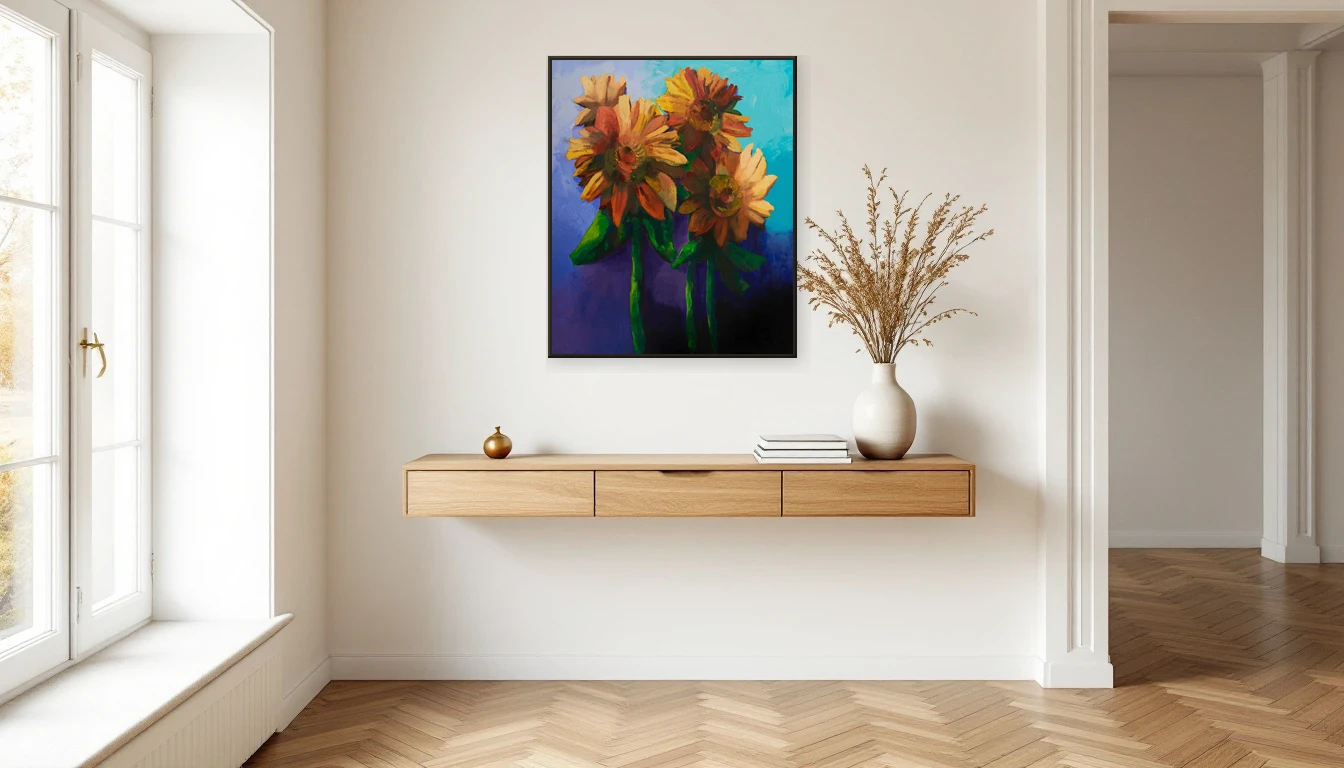
A few practical pointers. Choose a work that suits the wall it will hang on — not too small, or it vanishes. One large painting makes more impact than three small ones. Measure your wall and choose a canvas that fills at least two thirds of the available width.
Think about light, too. Art thrives in daylight, especially morning or evening sun. A wall opposite a window is ideal. And if you choose a work with texture — impasto, palette knife, thick paint layers — the painting will literally change from hour to hour.
Why Now Is the Moment
Over eighty percent of contemporary artworks sold at auction go for less than five thousand euros. But you do not even need an auction. The beauty of this moment is that you can buy directly from an artist — you know exactly where the work comes from, you hear the story behind it, and you support someone who lives for what they make.
The art world is no longer a closed circle. It is open, personal, and accessible. And it is waiting for you.
Start With What You Feel
My advice? Do not scroll past the piece that catches your eye. That feeling is not coincidence. It is recognition. And a home filled with art that moved you feels fundamentally different from a home filled with decoration.
Curious where to begin? Browse the DNH collection and see what speaks to you. No gatekeepers, no pressure — just you and the art.