Some of my best studio hours are the ones I cannot account for. I look up and the light has shifted, my tea has gone cold, and there is cadmium yellow in places it should not be. That feeling of dissolving into the work - it is the deepest quiet I know.
What Flow Actually Is
Hungarian psychologist Mihaly Csikszentmihalyi gave it a name: flow. That cognitive state where you are so absorbed in what you are doing that everything else falls away. No ruminating about yesterday, no planning for tomorrow. Just now. Research shows that as little as 45 minutes of creative activity measurably lowers cortisol, your primary stress hormone.
Why Painting Works Differently Than Sitting Still
I have tried traditional meditation. Sitting on a cushion, breathing, letting thoughts pass. It works, but my hands want to move. Painting gives my body something to do while my mind goes quiet. The movement of the brush, the resistance of the canvas, the mixing of pigment. It is meditation that travels through your hands.
Your Brain on Colour
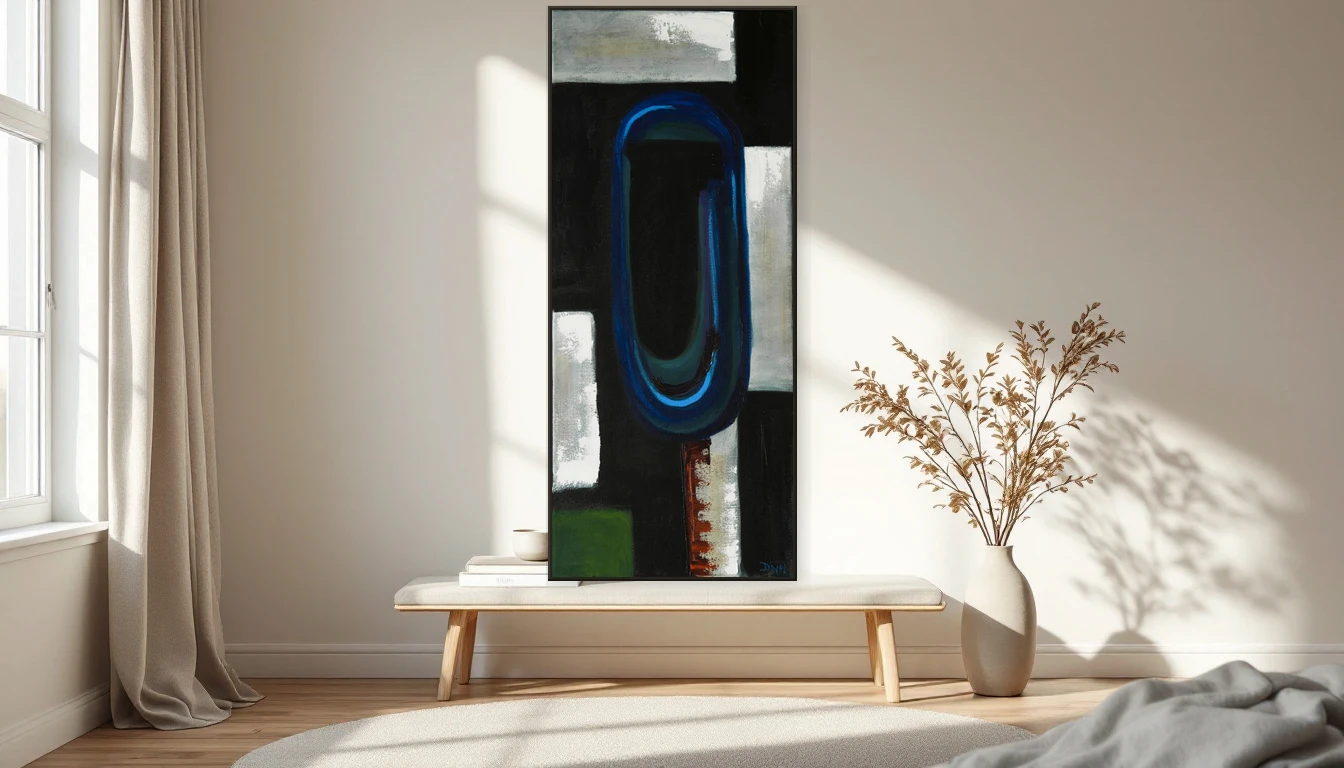
Neuroscientists have discovered that abstract painting activates a unique combination of brain regions. Your visual cortex processes colour and form while your prefrontal cortex - the part that normally works overtime with worry and planning - takes a pause. Meanwhile, your limbic system comes alive: emotions flow freely. The result resembles deep meditation, only with paint under your fingernails.
The Power of Not Knowing
The most liberating thing about abstract work is that there is no wrong. No apple that does not look like an apple, no perspective that is off. You begin with a colour that calls to you and let the canvas lead. That surrender to process - without judgment, without expectation - is precisely what mindfulness asks of us.
Ritual, Not Performance
In 2026, designers and wellness experts are converging on a concept called 'Ritual Restoration': the home as a place to slow down, not to perform. Creating a small ritual around creative practice fits perfectly. An hour on Sunday morning with watercolours. A sketchbook by your bed. It is not about what you produce - it is about what the process does to you.
Colour as Emotional Language
Every colour carries a feeling. Warm ochre brings comfort. Deep blue creates space. Soft green calms. When you choose colours intuitively, you are listening to your own emotional state. This is not mysticism - it is neuropsychology. Your brain links colours to experiences, memories, feelings. Painting becomes a conversation with yourself.
Looking as Practice
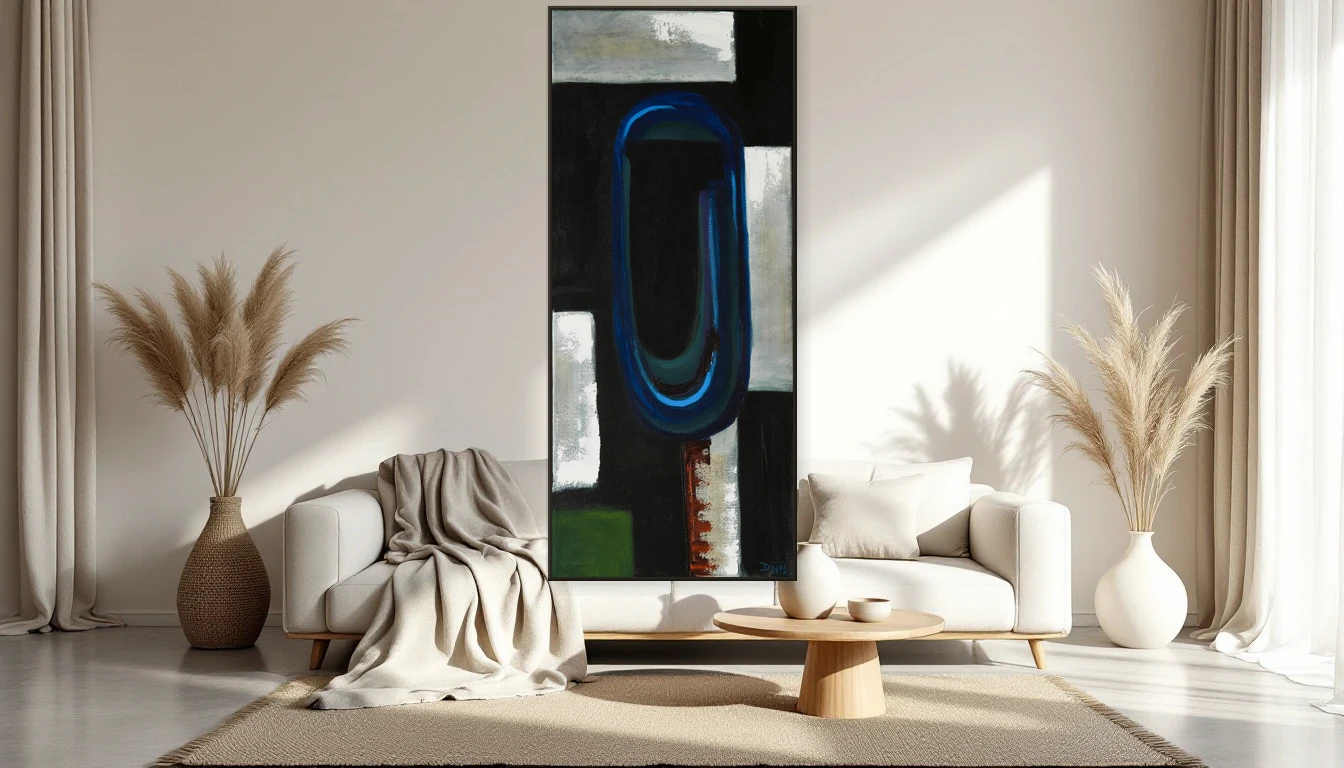
You do not need to paint to experience this. Research shows that attentive viewing of abstract art triggers similar neural activity to creative engagement. Your brain searches for patterns, makes connections, allows emotions in. A painting on your wall is not just decoration - it is a daily invitation to pause.
What Your Wall Tells You
This is why I choose my work not only for colour or size but for what it does to a room and to the person standing before it. Does it bring stillness? Does it open something? Does it invite you to stop for a moment? That question travels with every canvas that leaves my studio.
Your Moment of Quiet
Perhaps this is your invitation. Not to become an artist, but to claim a moment where your hands move and your mind is still. And if you are looking for a painting that brings that same feeling into your home? Browse the collection or get in touch. I would love to tell you which piece fits your silence.