
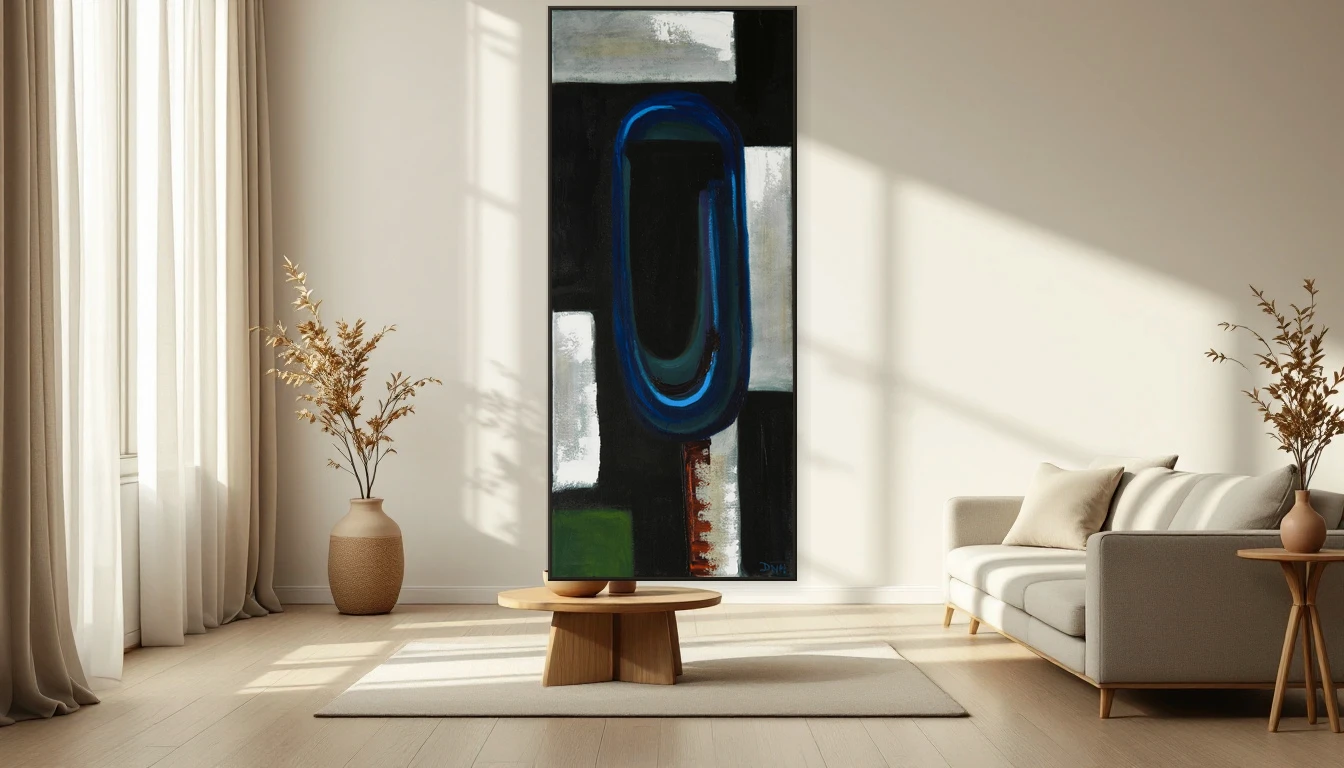
I almost made a mistake last month. I'd just hung a new piece — a large abstract in deep olive and gold — and my instinct was to fill the space around it. A shelf here, a mirror there, maybe a smaller work to keep it company. But something stopped me. I left the wall bare. Just the painting and the empty space around it. And the entire room shifted. It grew quieter. Deeper. As if the walls themselves exhaled.
The neuroscience of empty walls
We tend to treat blank walls as problems to solve. But neuroscience tells a different story. Research published in PNAS found that when we contemplate art that moves us, our brain activates the default mode network — the same neural circuit involved in daydreaming, self-reflection, and creative insight. Here's the thing: that network needs visual calm to engage. A wall crowded with ten framed prints gives your brain nowhere to land. One work with breathing room around it? That's an invitation to pause, wander, and arrive.
In a world saturated with notifications and algorithmic feeds, a bare wall with a single painting isn't empty. It's generous.
Why 2026 is the year of mindful decorating
The interior world has a name for this shift: mindful decorating. Not cold minimalism, but intentional curation. Every object in your home earns its place — not because it fills space, but because it adds meaning. The slow living movement, gaining serious momentum across Europe, follows the same logic: choose less, choose better. Choose a hand-painted original over five mass-produced prints. Choose materials you want to touch over objects that merely occupy.
Eighty percent of designers now say they prioritise wellbeing in their projects. The home isn't just where you live — it's where you recover.
How to create breathing room
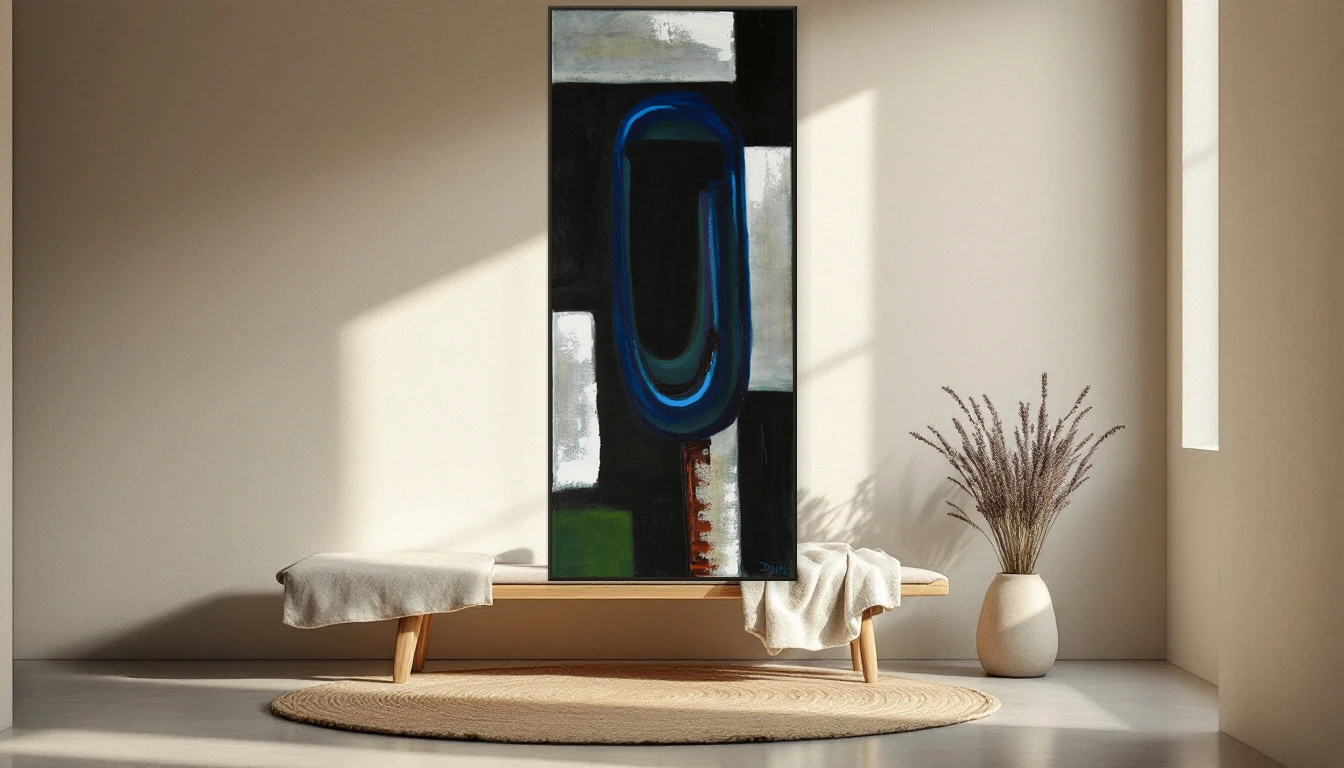
Start with one wall. The one you see most — where you sit in the evening, or the first thing you notice when you walk through the door. Remove everything that's hanging there. Look at the bare wall. Sit with it. Then hang one work that stops you.
The guideline? Leave at least half the wall empty. No shelves flanking it, no photo collage surrounding it. Just the work, the wall, and light. Choose a spot where natural light falls — it transforms the painting throughout the day, turning a static object into something alive.
August as an invitation
There's something about late summer that makes this experiment natural. The pace slows. Calendars thin out. There's literally more space. Use that pause to look at your walls with fresh eyes. Where is it too full? Where does something hang out of habit rather than love?
Remove one thing. Leave the spot empty for a week. And notice what happens — to the room, and to the way you feel in it.
Three seconds of stillness
What I love most about breathing room is what it does to your daily life. You walk into the room, your eye lands on that one work, and for a moment — maybe three seconds — you stop. No phone, no checklist. Just you and a canvas that says something without words. In those three seconds, something resets. Your brain steps out of doing mode and lands in the present.
That's not a luxury. It's a necessity.
Space for what matters
My work is built around exactly this idea: art that says enough to anchor a room, but leaves enough space to breathe. Abstract works in warm earth tones that don't shout but invite. That reward longer looking, and turn your home into a place where you can truly arrive.
Curious which piece might give your wall the breathing room it deserves? Explore the collection or get in touch — I'd love to help you find it.