
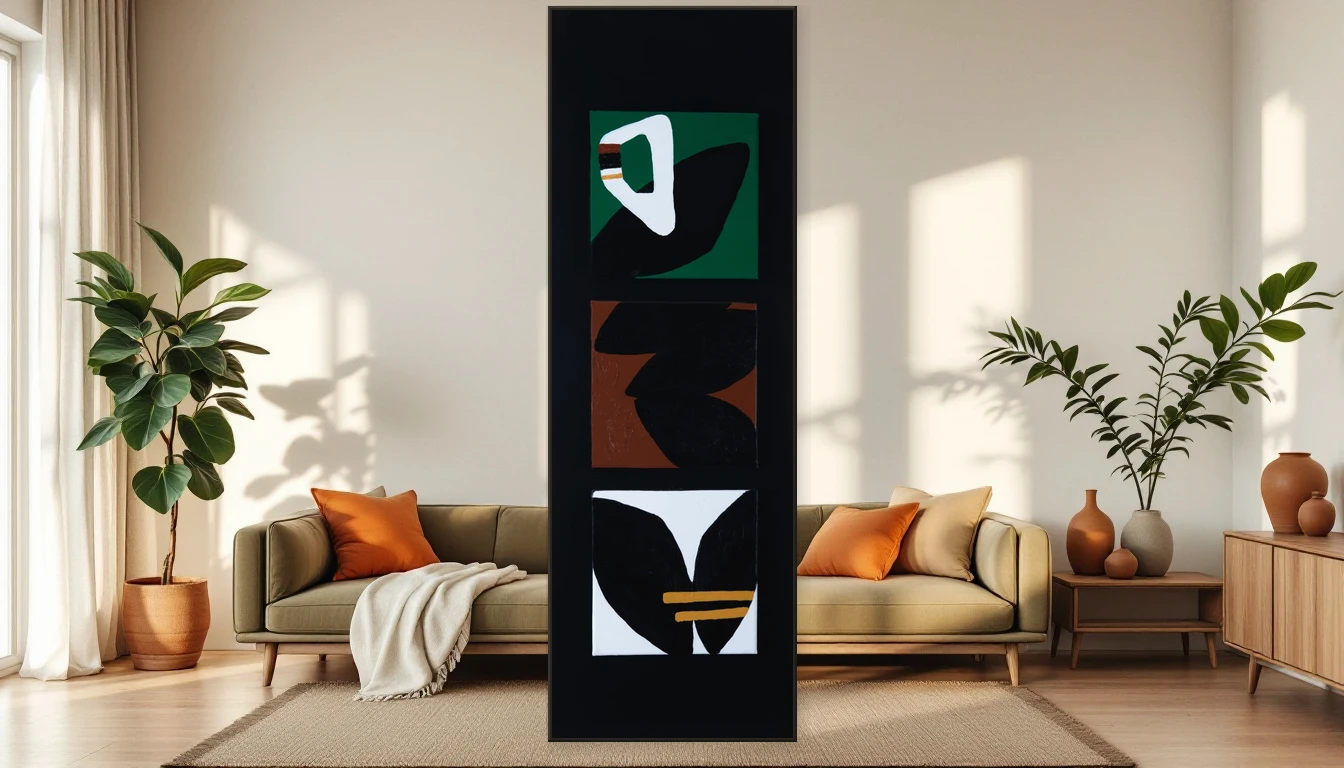
Last week, I was painting with every window in my studio thrown open. The light kept shifting, the wind carried in the scent of summer grass, and it struck me: this is what most living rooms are missing. Not more furniture. More nature.
What biophilic living actually means
Biophilic design is based on a simple truth: humans feel better when they are connected to the natural world. Not just through houseplants, but through everything that surrounds them. Light, materials, colour, the shapes on a wall. In 2026, this has moved from architectural theory into mainstream interiors. From Milan to Amsterdam, the direction is clear: homes that breathe.
Your brain on nature
Research shows that nature-connected environments can lower cortisol levels by around 20 percent, sharpen focus, and spark creativity. But not everyone has a garden view or a forest nearby. That is exactly where your interior becomes a tool. What hangs on your wall, what textures you touch, which colours surround you: these are not decorative choices. They shape how you feel in your own home.
Abstract art as a bridge to nature
This is where it gets personal. My abstract paintings carry landscapes I feel rather than copy. An ochre layer that echoes dry earth. Blue-green strokes that hold something of water. Organic forms that never seek a straight edge. These elements invite the brain to slow down, without needing to recognise a tree or a flower.
The colour palette of summer 2026
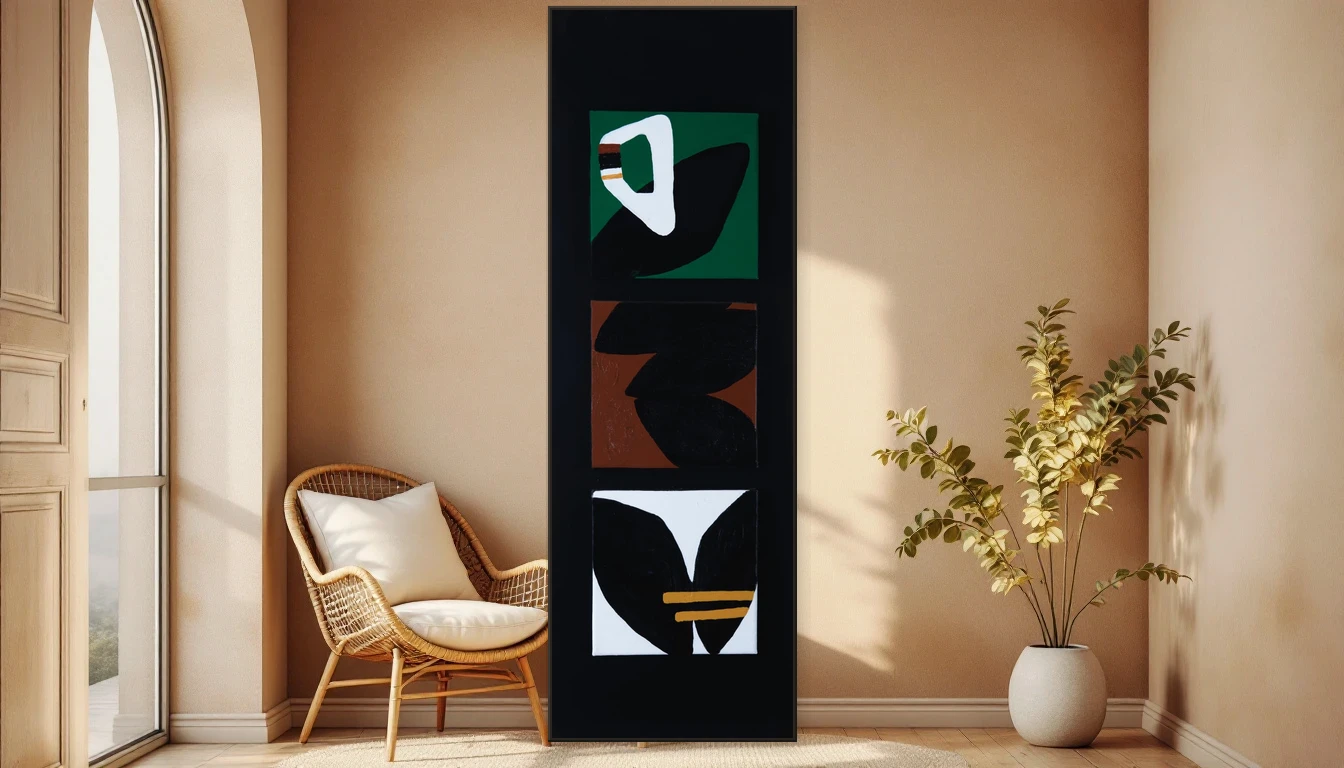
This season's palette tells the same story. Olive green, terracotta, sand tones, moss, warm ochre. These are the colours of clay, soil, and dappled forest light. I use them in my work not because they trend, but because they do something to a space. They pull the outside in. They make a room feel both more intimate and more open, a paradox that good colour always creates.
Materials that join the conversation
A painting never stands alone. It is the dialogue with its surroundings that completes it. Wood with visible grain, linen curtains, ceramics with an irregular glaze, a stone vase. When everything in a room speaks the same language, the language of nature, the space feels like a breath. Not decoration, but belonging.
Light as a living layer
The most beautiful quality of summer light is that it moves. Morning differs from afternoon. A painting with texture and earthy pigments changes alongside it: warmer, cooler, softer, deeper. Choose a spot where indirect daylight can reach the work. Not in direct sun (that fades), but on a wall where light plays. Exactly as it does outdoors.
The power of less
Biophilic living also means knowing what to leave out. A beautiful painting needs space to work. Not a cluttered wall, but deliberate emptiness around it. That is where the magic lives: the work grows larger, the room grows calmer, and you feel the difference the moment you walk in.
Start today
You do not need to redesign your entire home. One painting in the right place can shift everything. Choose a piece that moves you, not one that matches the sofa. Browse the collection or book a studio visit. I would love to show you how a single painting can bring the outside in.