
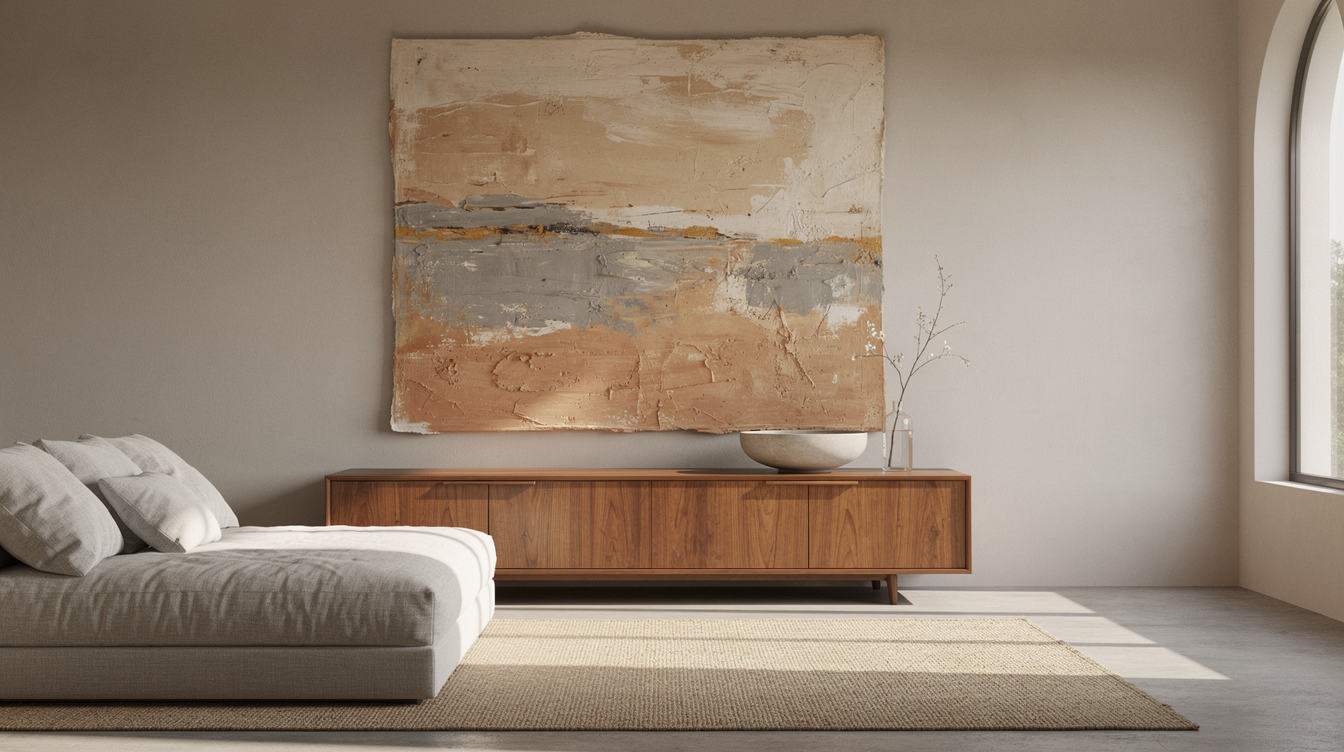
The other day a thinned drop of paint ran down my canvas — an unexpected streak cutting straight through my composition. A year ago I would have painted over it. This time I left it. It became the most beautiful part of the piece.
Perfection Is Over. Character Is Everything.
Something is happening in the design world that deeply resonates with me as an artist. The obsession with flawless spaces is giving way to something warmer: the beauty of the unfinished, the lived-in, the imperfect. In Japan, this philosophy has a name — wabi-sabi — and in 2026 it is everywhere. Searches for wabi-sabi interiors have surged ninety percent over the past year. Not as a passing fad, but as a fundamental shift in how we want to live.
Wabi-sabi is about finding beauty in transience and imperfection. A wooden table with the marks of daily use. Linen that wrinkles. And on the wall: art that doesn't shout for perfection but whispers about process.
Why Abstract Art and Wabi-Sabi Belong Together
Abstract art is inherently imperfect — and that is precisely its power. Every brushstroke carries the energy of the moment it was made. Every layer of paint tells the story of a choice, a hesitation, a breakthrough. Where figurative art strives for recognition, abstract work reaches for feeling. That aligns seamlessly with the wabi-sabi philosophy.
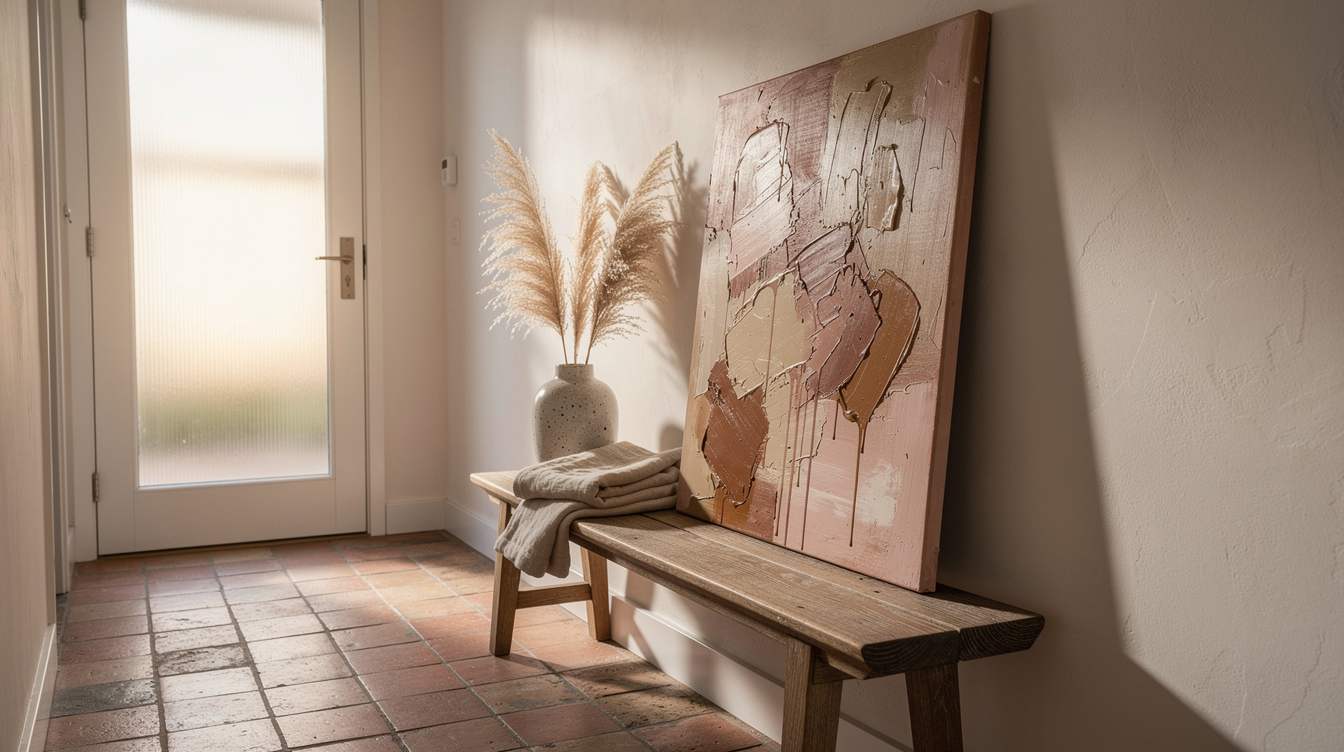
In my studio I embrace that unpredictability deliberately. I work with thick layers that I partially scrape back, revealing earlier colours beneath — like geological strata in paint. That layering, those traces of the process, is what draws people in when they stand before a work. You can see it was made. By hands, not by a machine.
The design world confirms this direction. Designers are increasingly choosing handmade over mass-produced, artisan over industrial. Sand-textured canvases, clay-inspired sculptures, rice-paper panels that catch light differently throughout the day — it all centres on authenticity and the courage to let imperfection in.
Wabi-Sabi Styling: Art as an Anchor of Calm
How do you bring this philosophy into your home? It starts with letting go. Letting go of the urge for everything to match, for every corner to be styled, for your walls to look like a catalogue spread.
Choose one piece with soul. Not a smooth print but an original work with visible process — brushstrokes, texture, colour layers you want to study up close. Hang it where you see it daily and let it set the tone for the rest of the room.
Pair it with honest materials. Wabi-sabi thrives on the combination of art with materials that age gracefully: weathered wood, unglazed ceramics, natural stone, washed linen. Together they tell the same story — one of time, use, and beauty that deepens.
Leave space. In wabi-sabi philosophy, emptiness is as important as fullness. A wall doesn't need to be covered. One powerful work with breathing room around it says more than a packed gallery arrangement.
Imperfection as Liberation
What I find most beautiful about this movement is that it sets us free — as homeowners, as art lovers, as makers. You don't need a perfect interior. You don't need to choose a perfect artwork. What matters is that it feels real. That there is a story behind it. That you chose it because it stirred something in you, not because it matched something else.
In my own practice I increasingly seek that edge between control and surrender. The moments when paint finds its own path, when a colour reacts unexpectedly to the layer beneath it — those are the moments that make a painting come alive.
Curious how wabi-sabi art could enrich your interior? Browse my collection or get in touch — I would love to help you find the perfectly imperfect piece.