
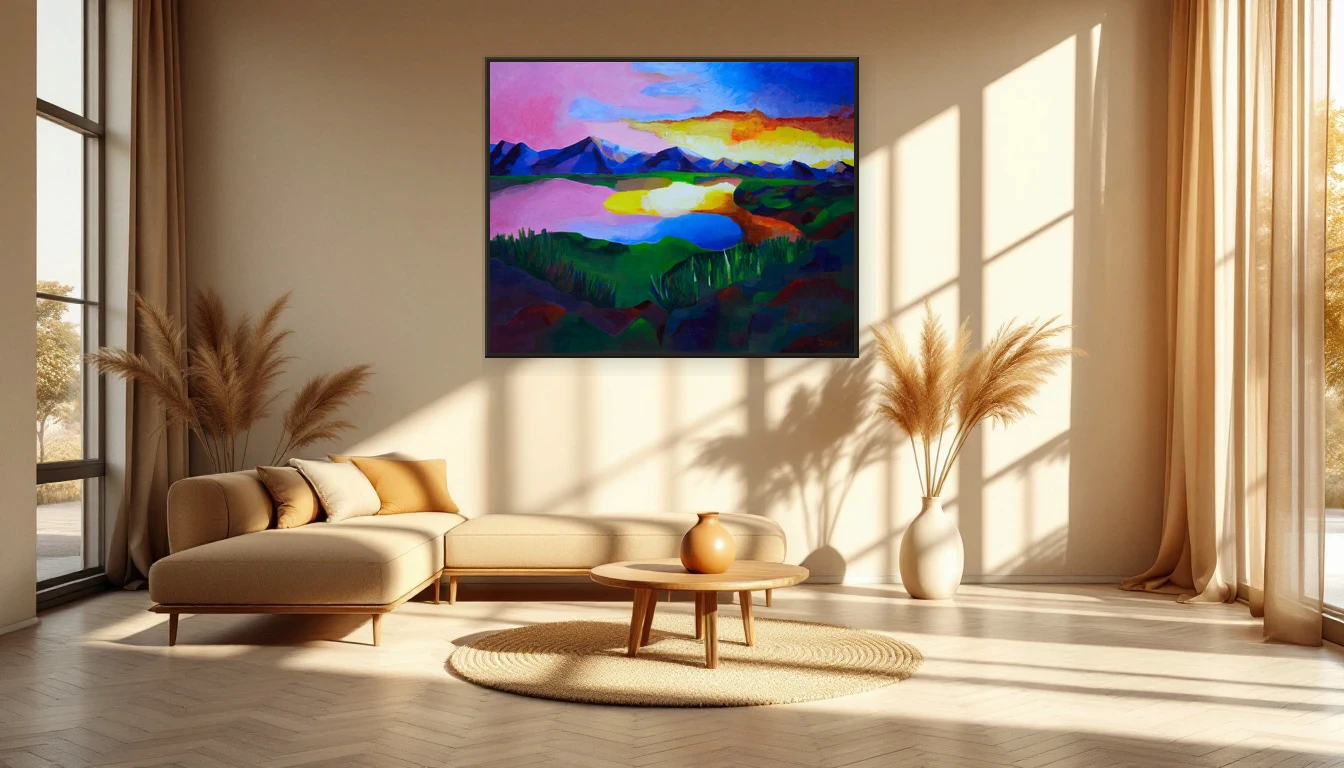
There's a moment in early autumn when the light in my studio shifts. The sun sits lower, the rays come in sideways, and suddenly a painting I've been looking at for weeks appears entirely new. Deeper. Warmer. More alive. That shift isn't my imagination — it's physics. And it's happening right now on every wall in your home.
The Golden Hour Stretches On
As autumn settles in, the sun's lower angle stretches the golden hour from a fleeting moment into what feels like an entire afternoon. That warm, amber light doesn't just fill a room — it transforms it. Interior designers have been calling lighting the defining design element of 2026, and it's easy to see why. The way light enters a space determines how everything in it feels, and art responds to it most of all.
Your Art Lives on a Clock
The same painting at eight in the morning and four in the afternoon tells two different stories. Morning light tends to cool and clarify, drawing out blues and greys. Late afternoon warms everything it touches, amplifying ochre, rust, and gold. Candlelight after dark softens edges and creates intimacy. Your art isn't a static decoration — it's a living surface that shifts with every change of light throughout the day.
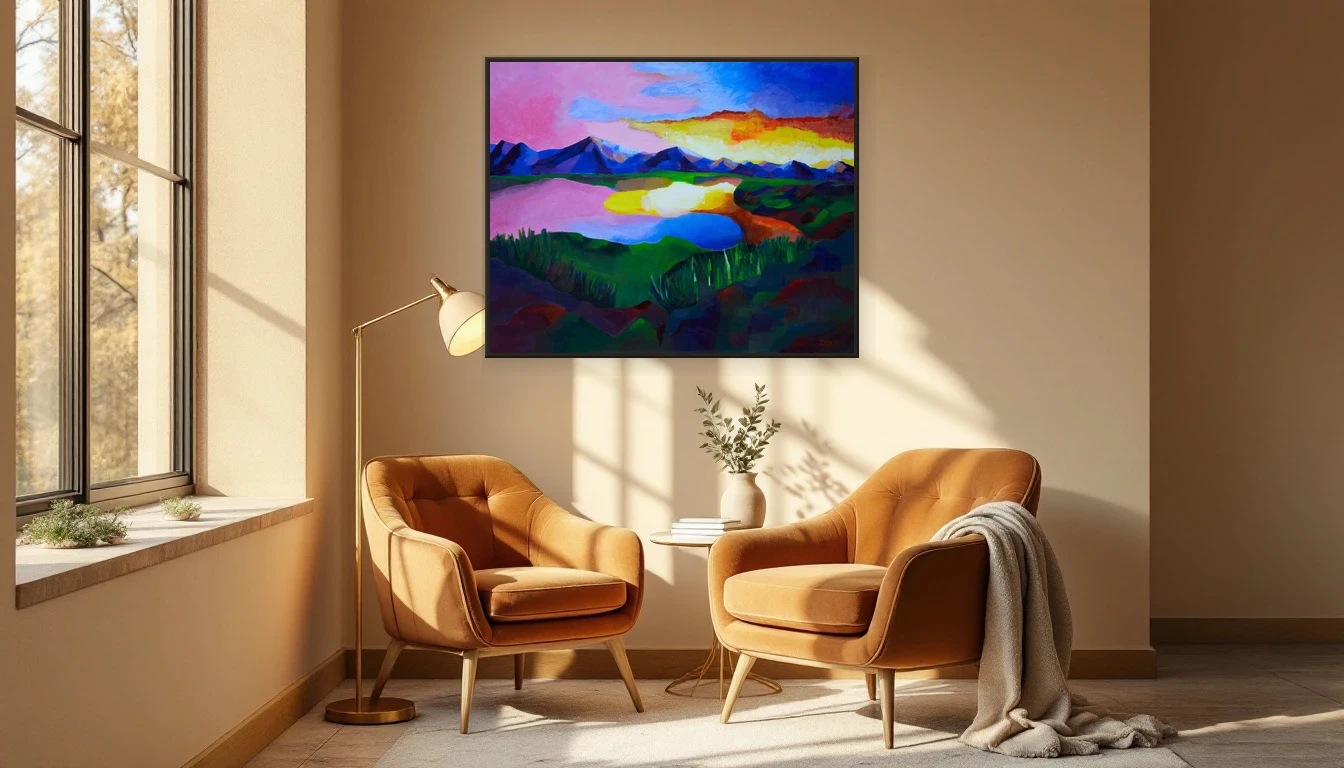
Lighting Art the Right Way
As days grow shorter, artificial lighting plays a bigger role. A few principles from my own studio practice: position a warm spotlight — around 2700 Kelvin — at a thirty to forty-five degree angle to your painting. This prevents glare while revealing texture and brushwork. Steer clear of cool white LEDs, which flatten colour and drain warmth. The quiet luxury movement in interior design is partly about exactly this: intentional, invisible lighting that allows materials and craftsmanship to speak without competing for attention.
When Texture Reveals Itself
What I love most about low autumn light is what it does to texture. When light grazes a canvas at an angle, every layer of paint, every ridge and valley of brushwork becomes visible. Abstract art thrives on this built-up, textural depth — but it only shows its full dimension when light sweeps across the surface. Design experts confirm that textural art feels timeless precisely because it looks different in every light, offering something new with each glance.
An Invitation for Tonight
Here's what I'd love you to try: tonight, dim the overhead lights. Place a single warm lamp near your favourite piece of art. Then sit. Watch how shadows shift, colours deepen, and the surface seems to breathe. That moment when art begins to glow — that is exactly why I paint.
Curious which piece plays best with light? Explore the DNH collection and find the work that will transform your wall this season.