
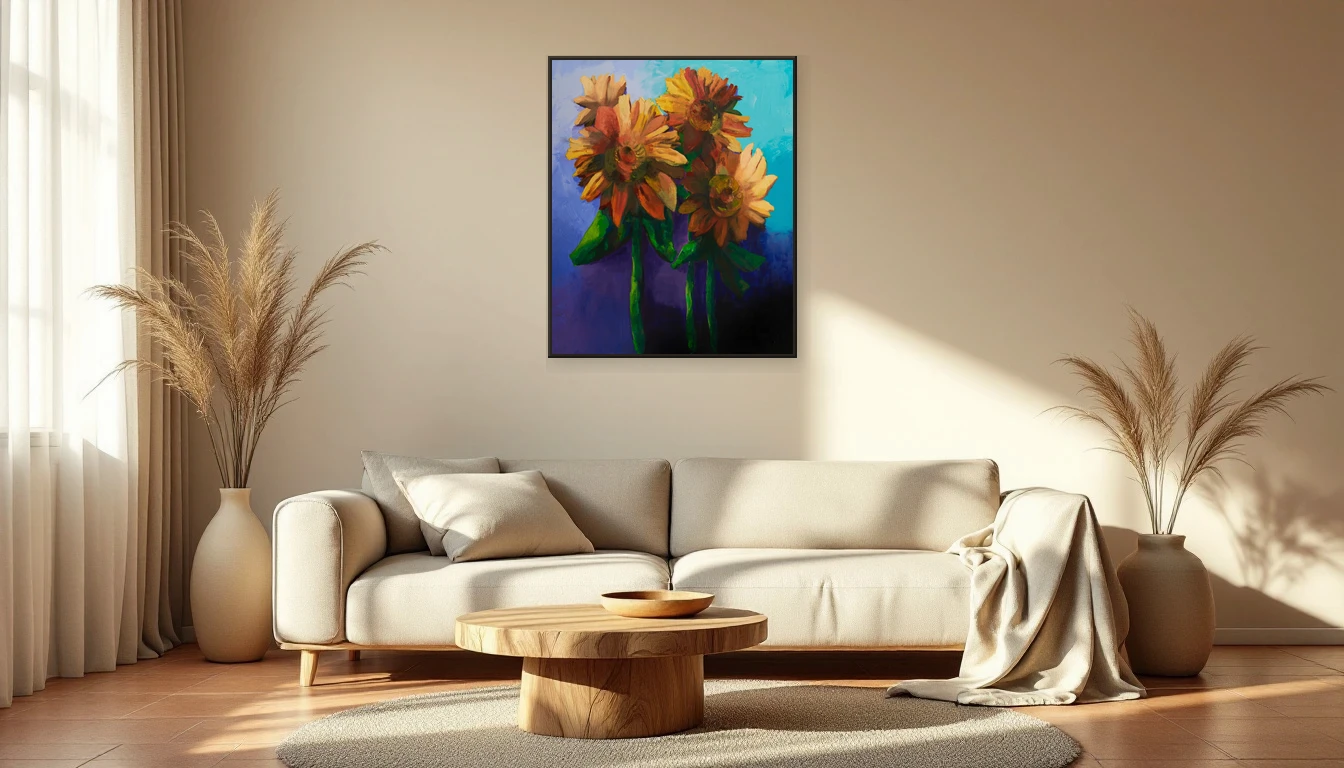
A visitor stood in my studio last week and reached toward a canvas, stopping halfway. "Can I touch it?" she asked. That moment says everything about what texture does. It pulls you in, physically. Your eyes look, but your hands want to join.
The end of flat walls
For years, smooth and sleek ruled our interiors. Flat prints, digital reproductions, white walls without a story. In 2026, the direction has shifted fundamentally. Designers and collectors are choosing surfaces you can feel, even when you do not actually touch them. Demand for textured work has risen 40% this year on platforms like Artsy and Etsy, while impasto painting has grown 25% globally. This is not a passing fashion. It is a correction after a decade of screen-based aesthetics dominating our walls.
Why your hands want what your eyes see
The design movement is called tactile minimalism: spaces that stay calm but never feel bare. Texture replaces visual clutter. A single relief-rich painting on a wall does more than ten posters side by side. That is because your brain reads texture as information. Thick paint layers, palette-knife marks, dried pigment peaks: they activate the same neural pathways as physically touching something. Neuroscientists call this distant haptic perception. Your nervous system responds to what it sees as if it feels.
Light and shadow as co-creators
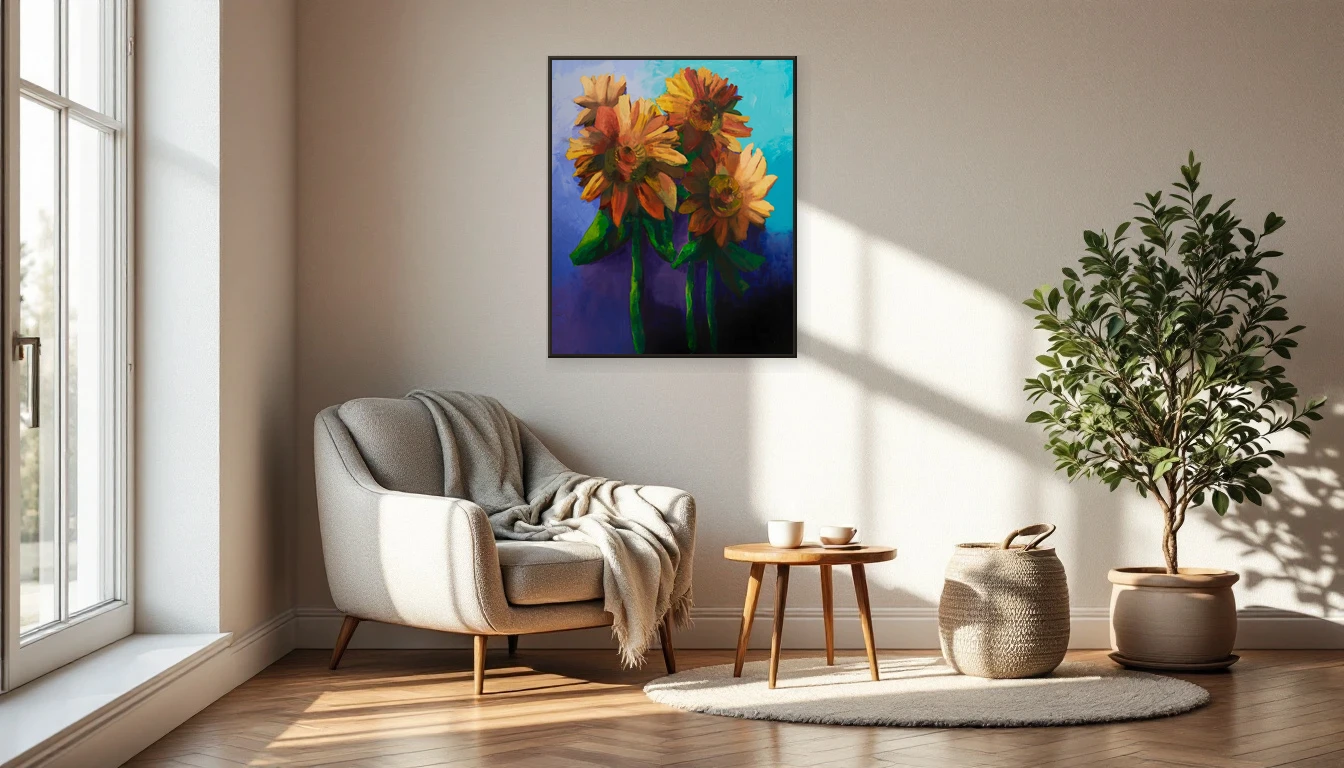
What separates textured work from flat prints is how it interacts with light. An impasto canvas literally changes throughout the day. Morning light casts soft shadows across the ridges, midday sun catches the peaks of paint strokes, and evening light reveals deep shadows invisible during the day. You do not need spotlights. The painting responds to whatever light is present, giving your room a rhythm that moves with the hours.
How I build texture
In my studio, I rarely work with thin layers. I use a palette knife, sometimes my hands, and build the canvas like a landscape. Layer upon layer, until the paint stands physically off the surface. Sometimes I mix sand or stone powder into the acrylic, so the surface gains not just visual but material depth. The process is physical, almost architectural. Every painting has weight, not just visually but literally.
The answer to AI imagery
Something bigger is at play. In a world where AI generates perfect images in seconds, the appetite for art that is unmistakably human-made is growing. Palette-knife marks no algorithm replicates. Irregularities that prove a hand was at work. Art critics speak of a new renaissance in texture: collectors no longer just want to know if a piece is beautiful, but whether it is real. Handmade. Lived. That shift explains precisely why impasto work resonates so deeply right now.
Where to place textured art
A textured painting needs space and light. Hang it on a wall where indirect daylight reaches the surface, so the shadows can play. Avoid spotlights aimed straight at the canvas; angled light brings the relief to life most beautifully. For the background, a warm neutral wall works best: soft white, linen, or the limewash finish that has become so popular this year. The contrast between the smooth wall and the rough canvas amplifies the effect.
Wabi-sabi and the beauty of imperfection
The Japanese philosophy of wabi-sabi, finding beauty in imperfection, aligns seamlessly with textured abstract art. A crack in the paint layer, an unexpected burst of colour, an edge that does not run straight: those are precisely the qualities that make the work human. In an interior increasingly drawn to raw wood, handmade ceramics, and crumpled linen, textured art is the natural companion. It does not belong with perfection. It belongs with life.
Feel it with your eyes
You do not need to touch anything to feel texture. Stand in front of a textured painting for five minutes. Follow the ridges with your gaze. Notice how your eyes move back and forth, how your attention deepens. That is not decoration. That is an experience.
Curious which piece could bring your walls to life? Browse the collection and discover how tactile art transforms your interior. Or get in touch and come experience it in my studio.