
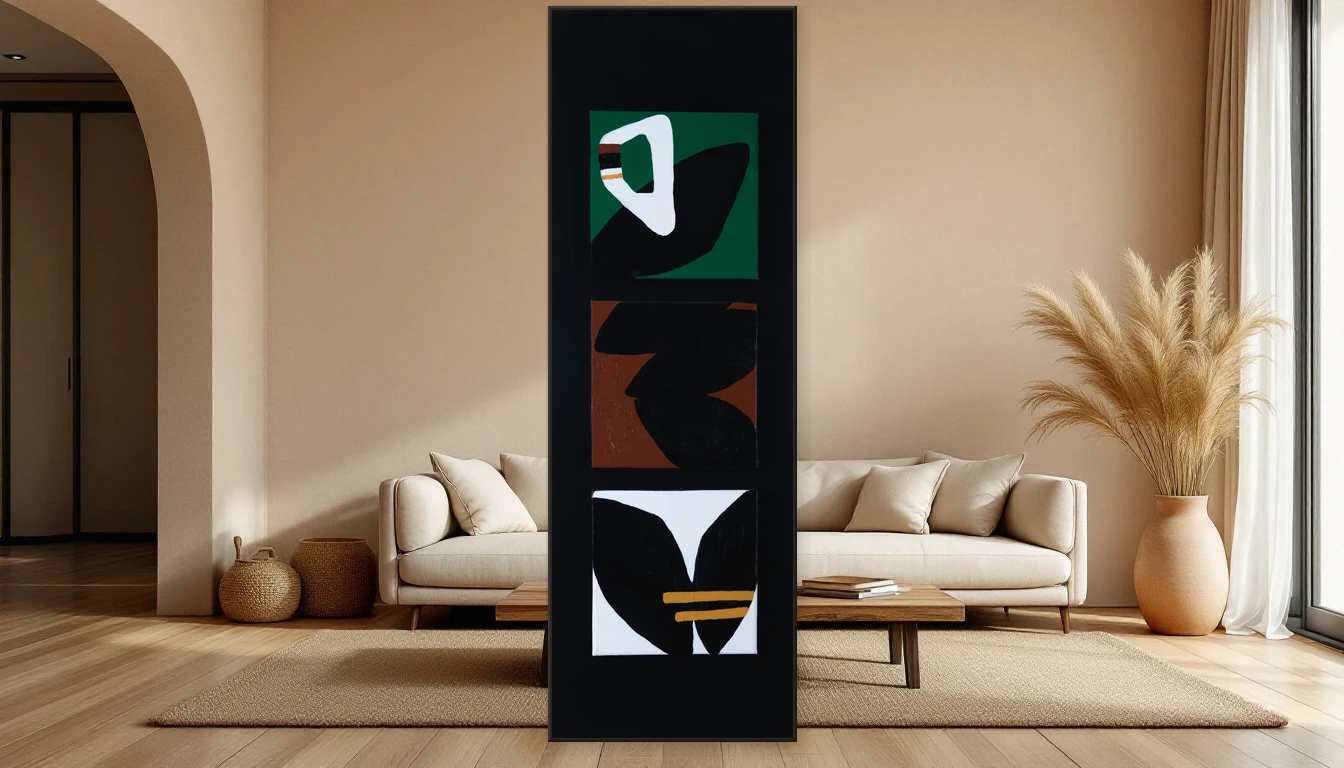
There's a moment in my studio when a painting stops being something you look at and becomes something you want to reach out and touch. Thick layers of acrylic catching the light, raw pigment mixed with sand creating tiny ridges across the canvas. That impulse to touch — it turns out the entire design world is feeling it too.
The Texture Revolution
For years, interiors leaned smooth and streamlined. Clean walls, flat prints, everything polished to perfection. But 2026 has firmly declared: texture is the new colour. Interior designers across Europe and beyond are prioritising how a space feels under your fingertips, not just how it photographs.
The reason is surprisingly simple. After years of screen-dominated lives, our brains crave the tactile. Texture grounds us. It makes a room not just beautiful, but real.
Tactile Minimalism: Less Stuff, More Substance
The defining paradox of this year's design landscape is tactile minimalism. Spaces stay calm and uncluttered, but every surface earns its place through material richness. A linen sofa with visible weave. A hand-thrown ceramic on a weathered oak shelf. An abstract painting with impasto layers that shift with the afternoon light.
It's not about filling a room — it's about making every element worth touching.
Why Abstract Art Leads This Trend
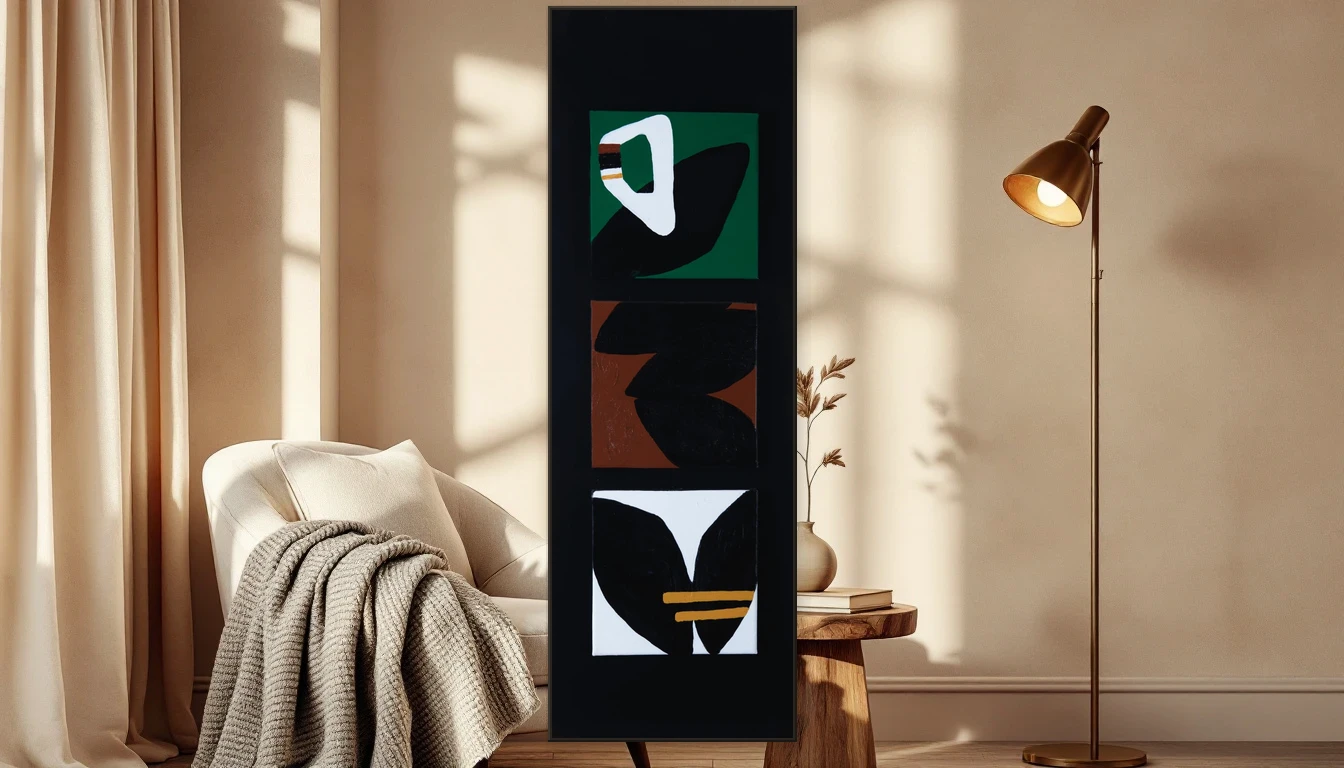
Abstract art is uniquely suited for the texture moment. While figurative work directs your eye to the image, abstract work directs it to the material itself — the way paint flows and collides, how a palette knife drags through wet acrylic, where layers build up and crack apart.
In my own practice, I deliberately build thick textures. Sometimes I fold structure paste into my paint; sometimes I let layers dry and work over them again. The result is a piece that looks different with every shift in light.
Mixed Media: Where Art Gets Physical
One of the strongest movements in contemporary art this year is the rise of mixed media. Artists are combining paint with textile, found materials, resin, and natural elements to create works that refuse easy categorisation.
For your home, this means: look for art with layers. Literally. A work with relief, with visible brushstrokes, with materials that surprise you when you step closer.
How to Bring Texture into Your Space
Starting with texture doesn't require a renovation. Choose one wall as your focal point and hang a work with physical depth. Pair it with natural materials nearby — a wooden side table, a stoneware vase, a wool throw. Let light do the heavy lifting: texture comes alive with side-lighting, so consider where your lamp sits relative to the art.
Most importantly, stop trying to match everything. The power of texture lives in contrast. Smooth against rough. Soft against hard. That tension is what makes a room feel alive.
Permission to Touch
We live in an increasingly digital world. Texture in your home — especially in your art — is an antidote. It reminds us that beautiful things don't need to be flawless. That a surface with character says more than a perfect wall ever could.
Curious how tactile art could transform your space? Explore the DNH Artful Living collection or get in touch for personal advice.