Here's something I never planned: my studio became my office. I paint surrounded by unfinished canvases, dried palettes, and rolls of linen. And whenever I get stuck on something — an email, a plan, a decision I keep circling — my eyes drift to a painting across the room. Not deliberately. It just happens. And somehow, the answer follows.
That's not coincidence. That's what living with art actually does.
Your Office Wall Is the Most Underrated Surface in Your Home
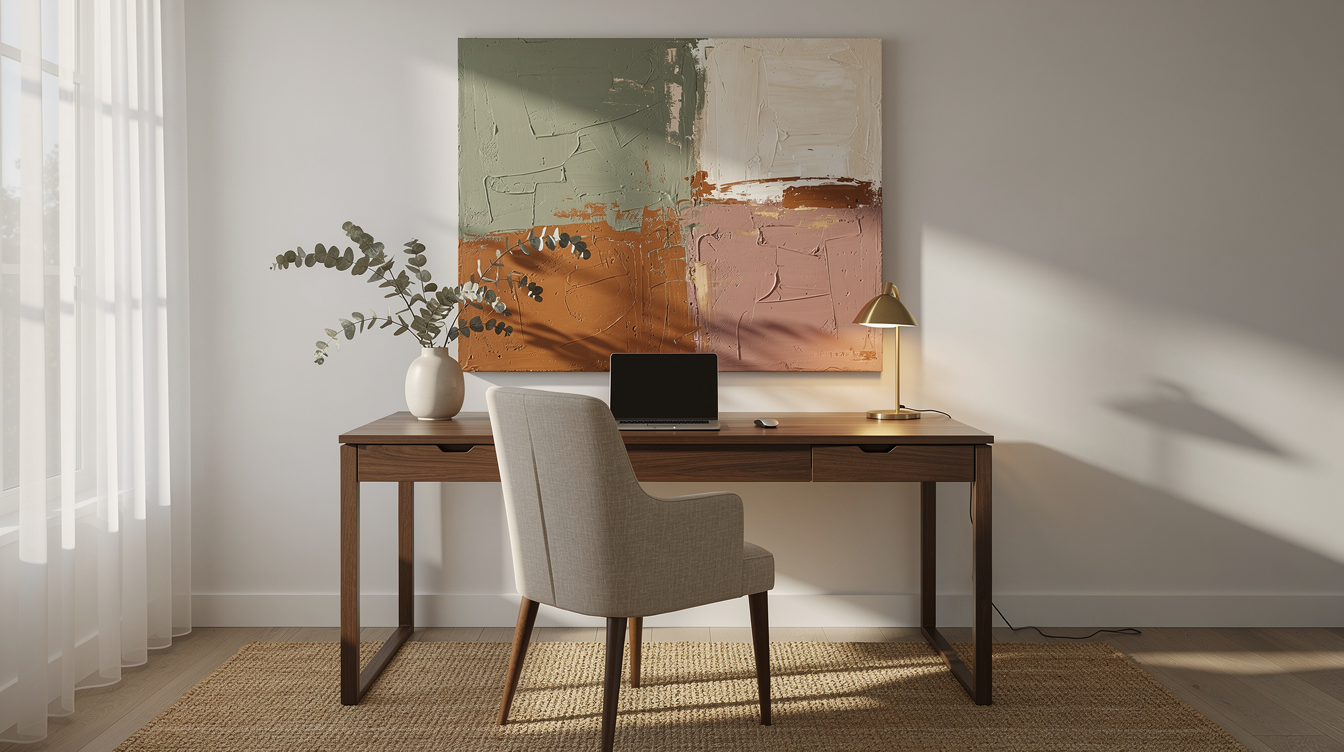
We agonise over the right desk chair, the perfect monitor, the ideal lamp. But the wall behind the screen — the one you stare at for hours every day? It stays blank. In 2026, that's finally changing. Interior designers are treating the home office as a full room, not a functional corner. The term they use is emotional design: shaping your surroundings based on how you want to feel, not just what you need to function.
Abstract Art as a Visual Anchor
Research shows that abstract patterns and colours can boost creative thinking by up to 15% compared to bare walls. But it goes beyond numbers. An abstract painting gives your eyes somewhere to land without locking onto a recognisable image. It's a visual breathing space. Soft flowing forms, layered textures, warm colour fields — they give your brain the micro-reset it needs between meetings or deep focus sessions.
Matching Art to How You Work
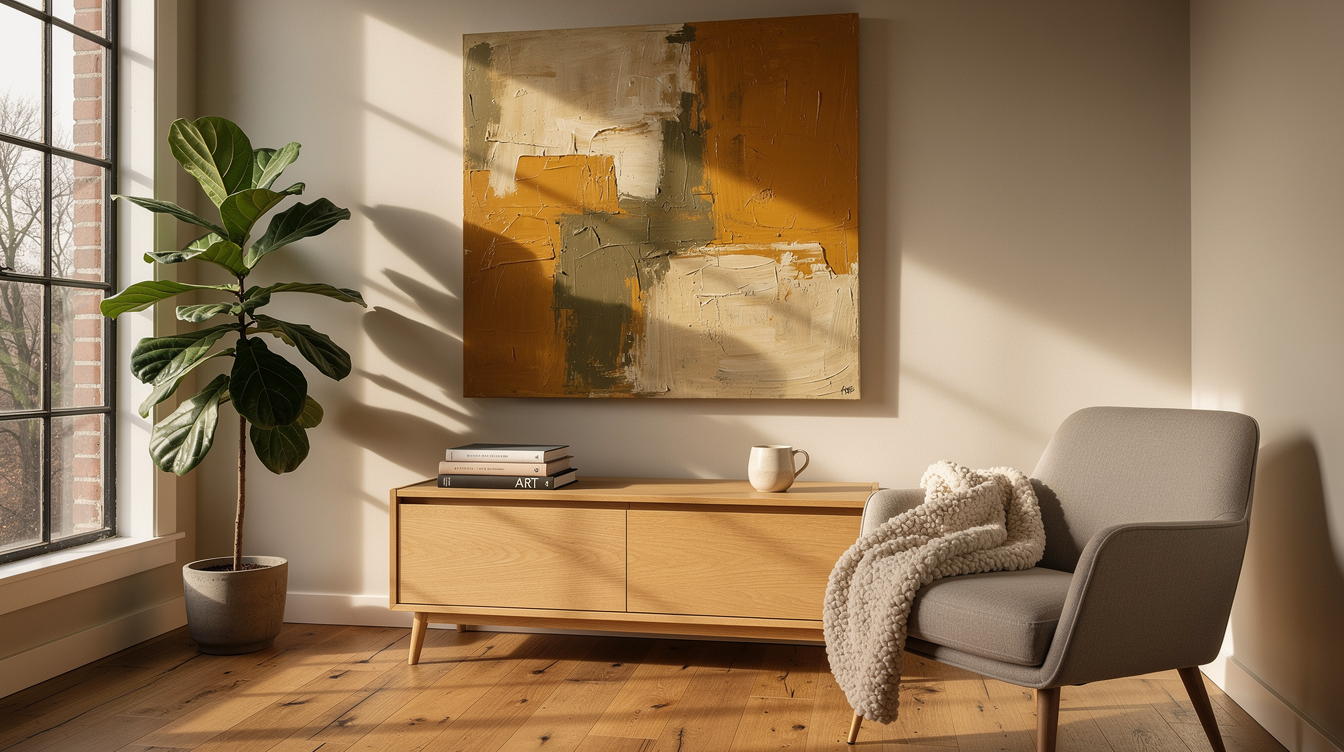
This is where it gets personal. If you need energy to get going in the morning, look for work with contrast and movement — deep tones against bright accents, expressive brushstrokes that radiate dynamism. If you do your best thinking in calm, go for gentle gradients and organic forms — earth tones, sand colours, the kind of piece that makes your shoulders drop the moment you look at it.
And don't forget your video call backdrop. More people are intentionally choosing artwork behind them on camera — not to impress, but because it says something about who they are. An abstract painting says: I think in possibilities.
Texture Over Prints
The 2026 trend is clear: texture wins. Work with visible brushstrokes, relief, mixed media — it brings depth and warmth to a space that can otherwise feel clinical. In my own practice, I layer thick paint over subtle transparency, so the painting shifts with the light throughout the day. You see different colours in the morning than in the afternoon. That's the beauty of original work — it lives alongside you.
Practical Tips for Hanging Art in Your Workspace
A few rules I always share with clients:
Hang the artwork at eye level when seated, not standing. You'll be looking at it from your desk chair, so that's your reference point. Choose a size proportional to the wall — too small and it disappears, too large and it overwhelms. As a guideline, the piece should span roughly two-thirds to three-quarters of your desk width.
And light matters. Natural light is ideal, but a subtle picture light above the work can make a real difference, especially during darker months.
The Colours of Productivity
This year's favourite workspace palettes lean toward sage green, powder blue, and dusty rose — colours that happen to appear frequently in abstract art. Terracotta and warm browns bring a sense of grounding, while olive green evokes connection with nature. Choose a painting that carries these tones, and you'll create a space that feels intuitively right.
Art as a Daily Ritual
What I love most about art in the workspace: it becomes part of your rhythm. You see it when you open your laptop in the morning. It catches your eye when you glance away from your screen. It reminds you there's more to a day than checklists and deadlines. Art at your desk isn't a luxury — it's an investment in how you feel while you work.
Curious Which Piece Fits Your Workspace?
Explore the DNH Artful Living collection and discover which abstract work could transform your home office. Or get in touch — I'm happy to help you find the right size, palette, and style for your space and work rhythm.