
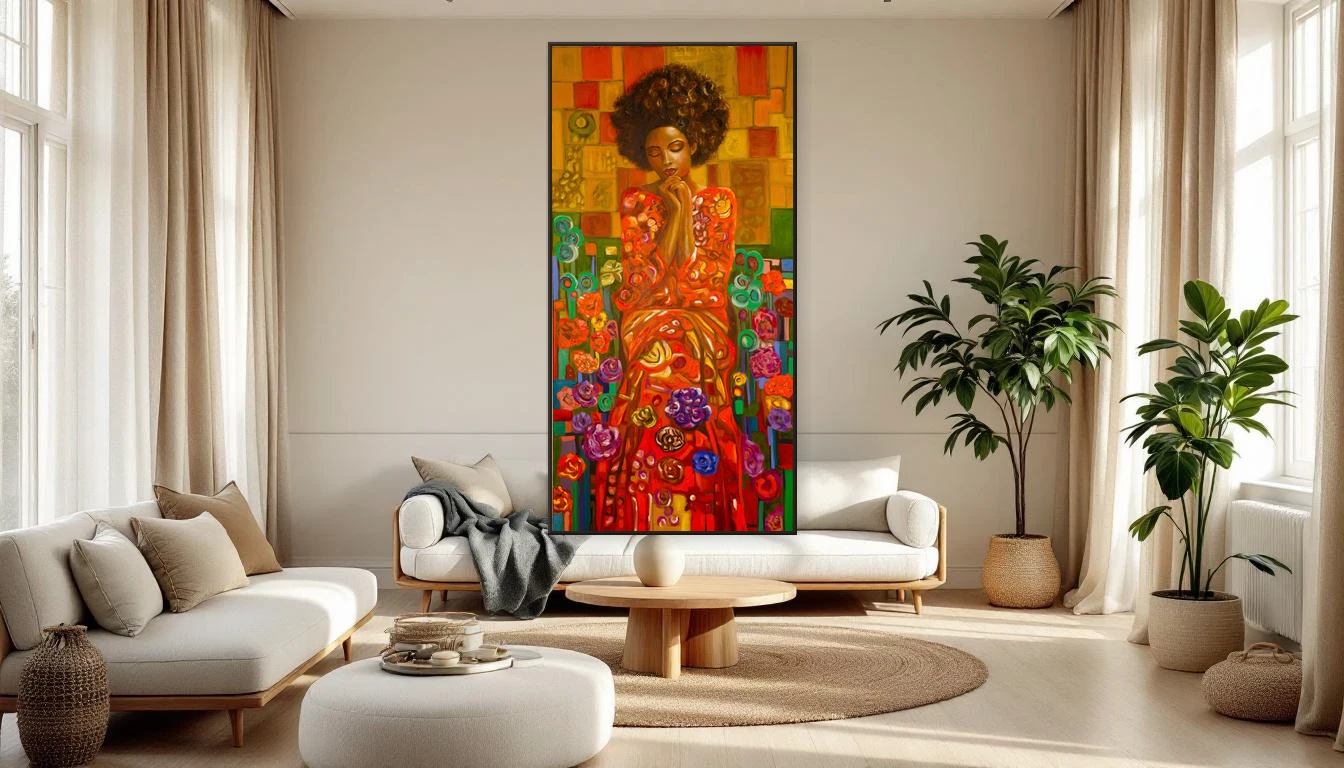
There's a moment in my day when everything stops. I'm standing in my studio, coffee in hand, looking at a canvas. Not scrolling, not planning — just looking. And in those few seconds, something shifts. My shoulders drop, my breathing slows, and I'm present again. That's not a coincidence. That's what art does when you give it space.
The Science of Looking
Research from the University of Arizona confirms what artists have felt for centuries: engaging with visual art activates brain regions tied to emotional regulation and stress reduction. The World Health Organization now formally recognizes arts engagement as a meaningful contributor to mental health. We're not talking about vague wellness vibes — these are measurable effects on cortisol levels and heart rate.
In 2026, the interior world is catching up. The conversation has moved beyond aesthetics into how a room feels. And art — particularly original, textured, layered work — plays a central role in shaping that feeling.
From Decoration to Daily Ritual
I hear it from collectors all the time. They hang a piece, and a week later they call me: "Dinah, I keep catching myself just standing there, staring at it." That's the point. A painting that truly resonates doesn't fade into the background after a month. It becomes an anchor — a fixed point in your daily flood of screens and stimuli.
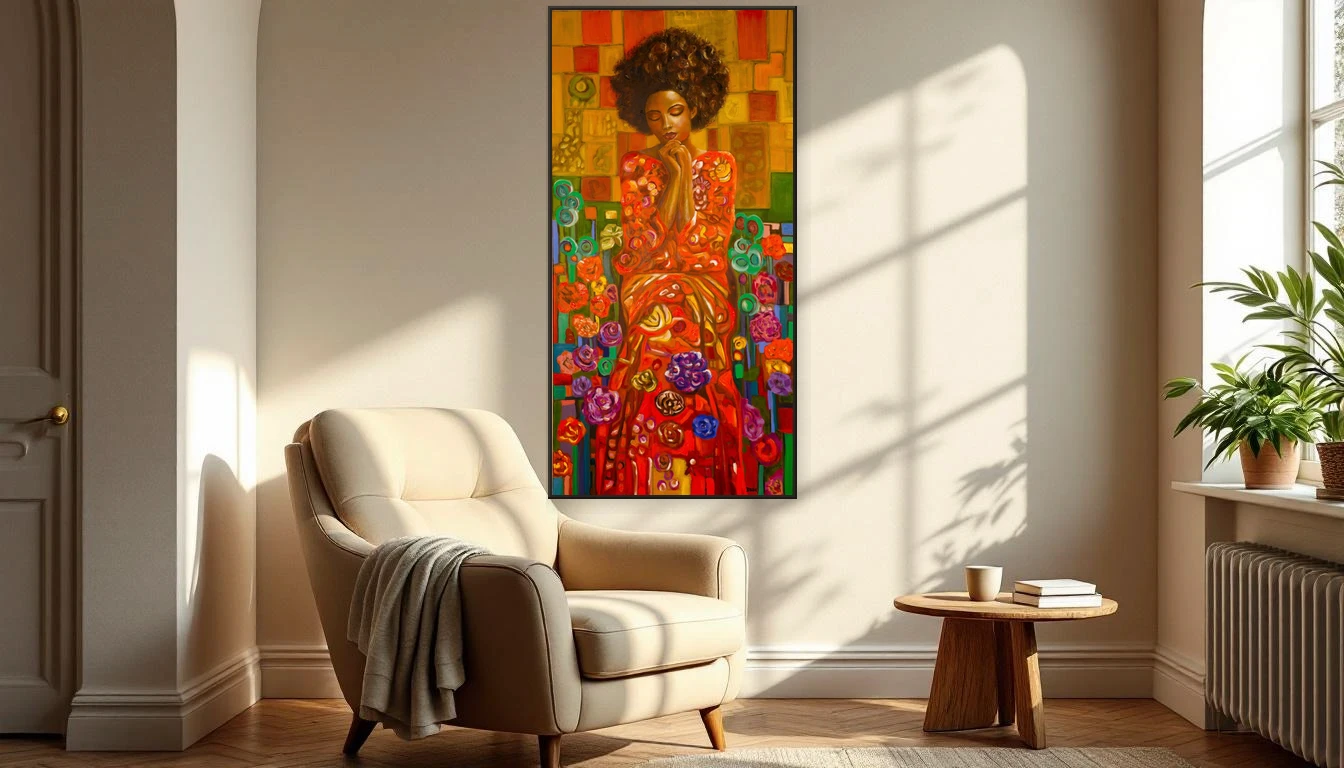
The Dutch interior philosophy of 2026 centres on bewust wonen — conscious living. Your home as a reflection of who you are, not what an algorithm suggested. Organic shapes, warm materials, intentional choices. Art fits seamlessly into this approach, as long as you choose from feeling rather than from a colour swatch.
Creating a Point of Calm
Not every artwork functions as an anchor. It needs a few things. First: breathing room. A piece drowning between photo frames and shelves loses its power. Give it an empty wall, let it lead the room.
Second: personal resonance. The most stunning abstract work in the world does nothing if it doesn't move you. Choose something your eye keeps returning to, something where you discover a new detail each time. That's the piece that gives your mind the rest it craves.
Third: light. Natural light transforms a painting throughout the day — soft and warm in the morning, bright at midday, intimate in the evening. That subtle shift makes your artwork live, and makes you pause again and again.
Mindful Looking as Practice
You don't need a meditation cushion. No app, no course. Just this: stand in front of the work on your wall for two minutes. Notice the colours. Follow a line. Observe what you feel. That's mindful looking — and it costs nothing but attention.
In my own practice, I find that abstract pieces excel at this. They don't tell you what to see. They invite you to find your own story. And that story shifts with you — with your mood, your season, your state of mind.
Stillness as Luxury
We live in a world that screams for attention. Your phone, your inbox, your feed — everything pulls. Art on your wall is the opposite. It waits. It's there when you're ready. And in that waiting lies a kind of luxury you can't buy anywhere else.
Curious which piece could become your anchor? Browse the DNH collection or get in touch for personal guidance. Sometimes one canvas is enough to change an entire room — and your entire day.
Choosing with Feeling
There's no formula for the perfect artwork. But there is a simple test: if you see a piece and something slows down — your gaze, your thoughts, your pulse — you've found it. That's the work that doesn't just decorate your wall, but structures your day.
This spring I'm working on a new series born from exactly this philosophy. Every layer of paint is a moment of attention, every colour choice a conscious decision. Because if I feel that presence while creating, you'll feel it while looking.
Your Wall Is Waiting
Maybe you've had the same piece hanging for years. Maybe your wall is still bare. Either way, this is the moment to choose with intention. Not for the trend, not for the match — for the feeling. That one work that makes you pause, every single day.