There's a moment in my studio — usually in the late afternoon — when the light shifts and the trees outside start throwing shadows across my canvas. I've learned to stop working when that happens. Not because it's distracting, but because it's a reminder: the most powerful art already exists outside.
We Forgot What We're Missing
Here's a number that stopped me: most of us spend around ninety percent of our time indoors. Our bodies evolved surrounded by forests, rivers, and open skies. Our living rooms? Not so much. And yet we wonder why a blank white wall feels so hollow.
Biophilic design — one of the defining interior movements of 2026 — is the answer to that disconnect. It goes far beyond potted plants and nature documentaries. It's about weaving the feeling of nature into every layer of your home, from materials and textures to the art on your walls.
Why Abstract Art Does What Photographs Cannot
A landscape photograph shows you nature. Abstract art makes you feel it. The sweep of water, the unfurling of a petal, the fractured light through autumn leaves — these aren't images to be copied. They're sensations to be translated.
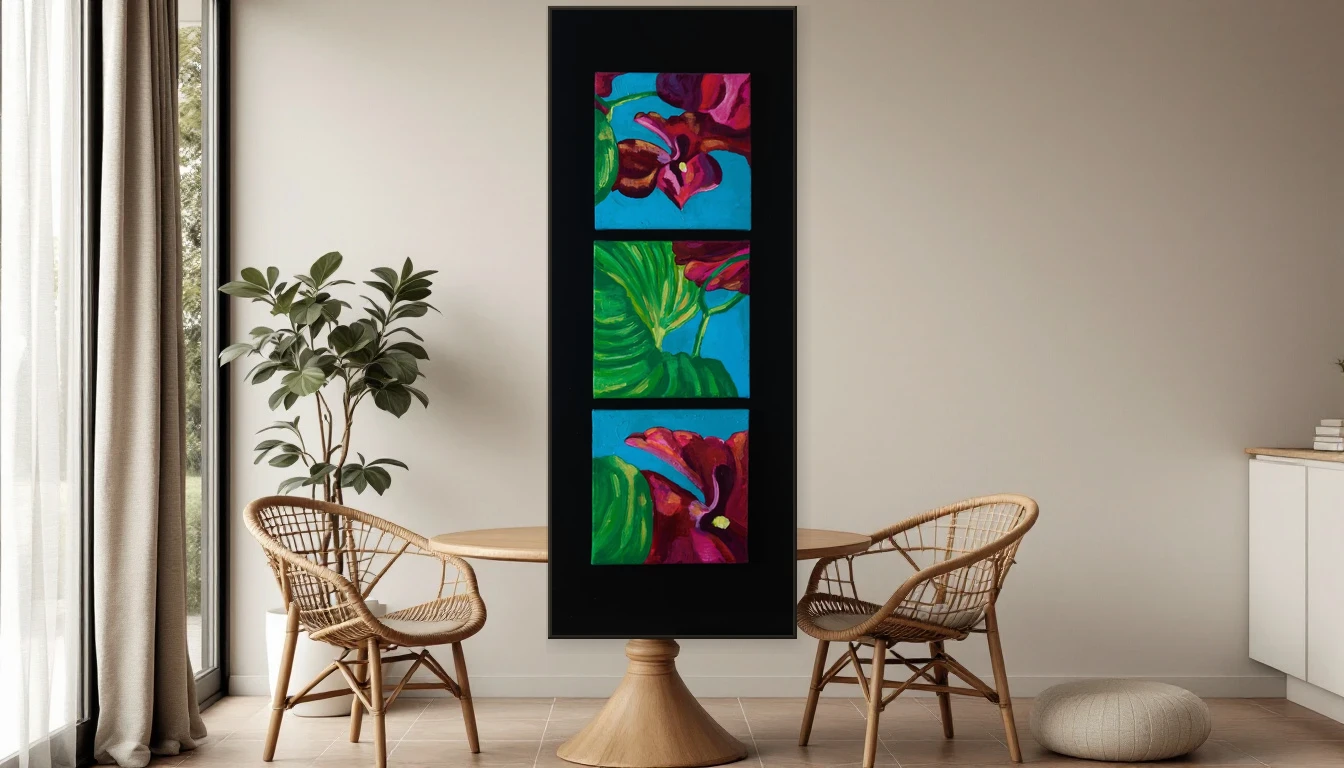
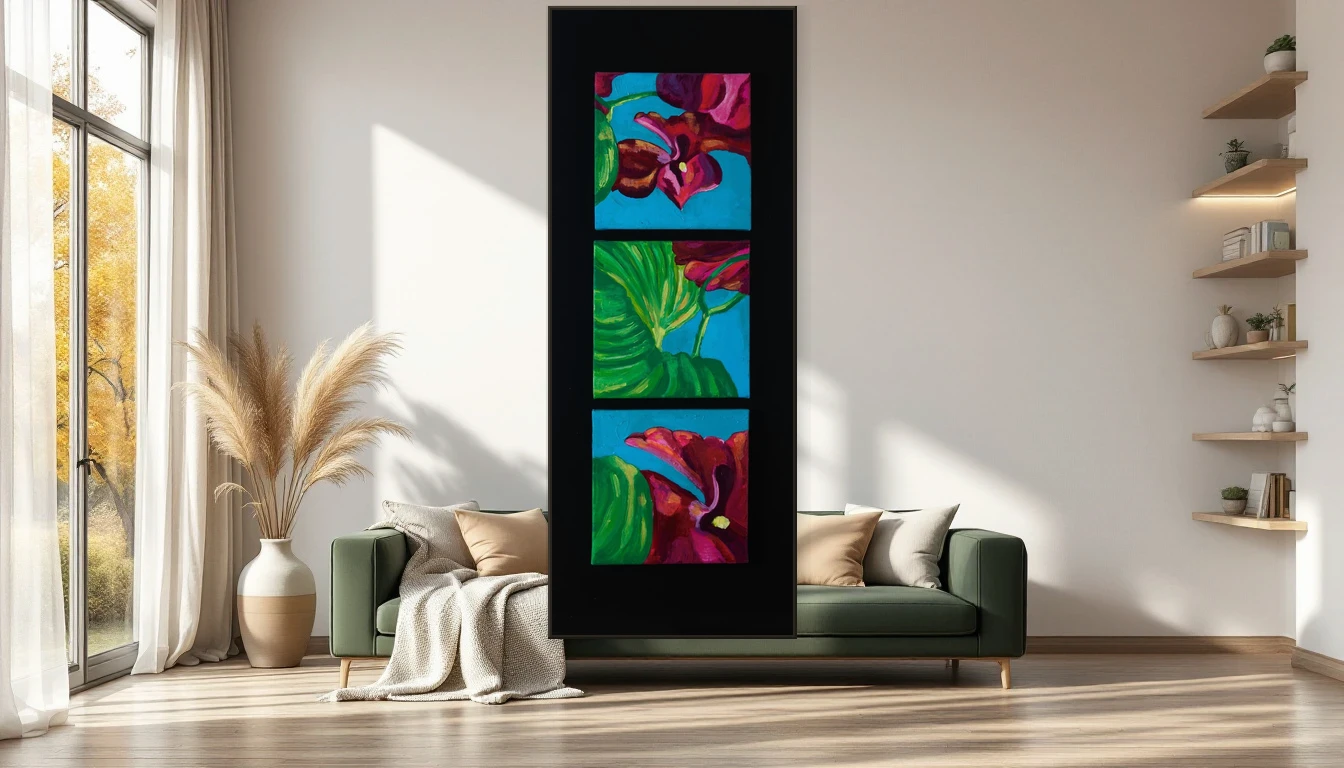
When I paint something rooted in the natural world — the fluid curves of orchids, the raw energy of wildflowers — I'm not illustrating. I'm distilling. Stripping away the literal to find the emotional core. And that's precisely what biophilic art does in a room: it creates a felt connection to nature, not just a visual one.
Your Brain Knows the Difference
Research in environmental psychology keeps confirming what artists have sensed for centuries: nature-inspired forms — organic curves, fractal patterns, warm earth tones — measurably reduce stress. Your heart rate slows, your breathing deepens, your cortisol drops. These aren't metaphors. They're measurable biological responses.
Abstract art built on these patterns triggers the same neural pathways as a walk through a forest. Your living room wall becomes, in a very real sense, a window to somewhere green and wild.
Bringing It Home
Start with intention. If your space feels sterile, look for art with organic movement — fluid lines, layered textures, colours pulled from earth and sky. A deep green abstract above a linen sofa. Warm ochres beside a wooden dining table. Soft pinks echoing a dawn you once watched from a hillside.
Placement matters too. Position nature-inspired art near a window and watch the conversation that emerges between inside and outside. The seasons shift beyond the glass; the painting holds its own season on the wall.
Art That Breathes
What I love most about this shift is that it's not really a trend at all. Nature doesn't date. Art that channels the organic world stays alive long after design cycles move on. It's not about following a moment — it's about reconnecting with something timeless.
Curious which piece could bring your walls to life? Browse my collection or get in touch — I'd love to help you find art that breathes.