
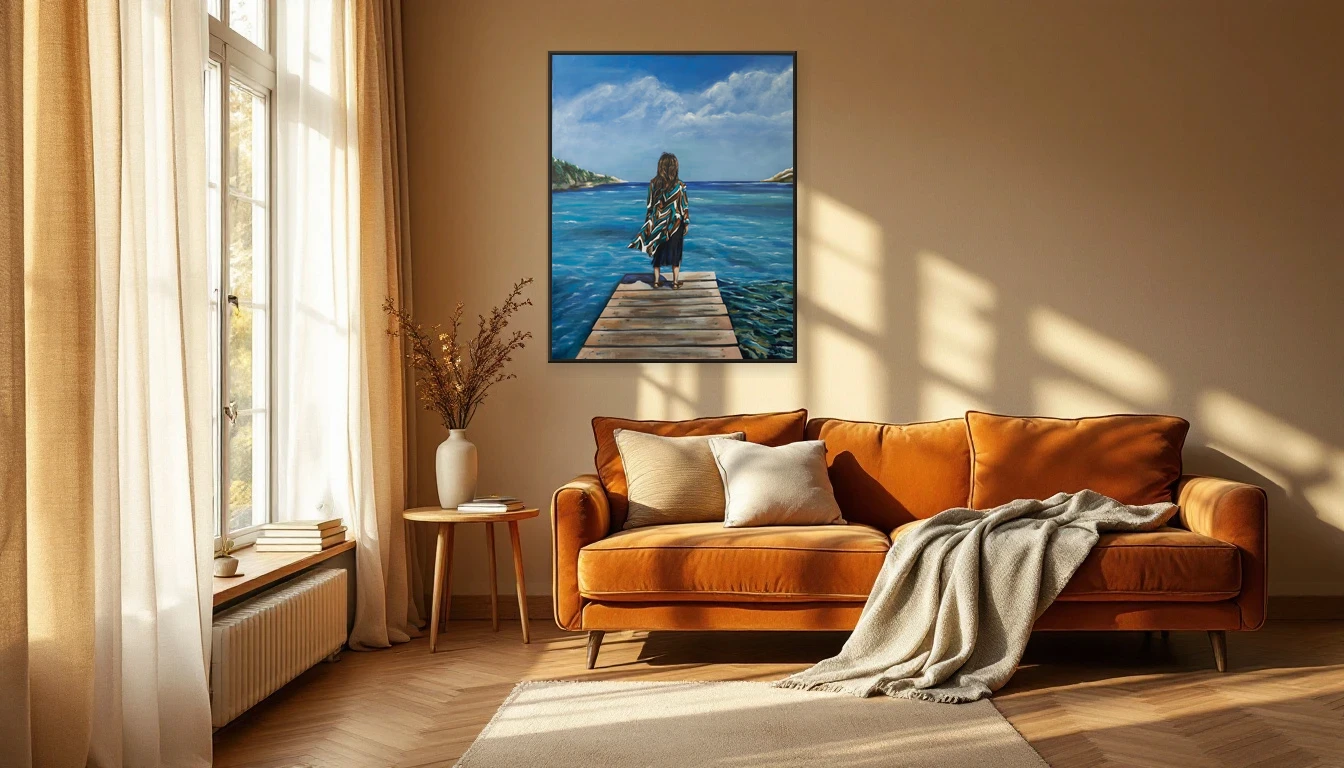
You know the feeling. You walk into a room, your eyes land on a painting, and something inside you goes quiet. Not because the work is spectacular or shocking, but because it touches something that was already there — a memory, a feeling, a place you had almost forgotten.
This is not coincidence. Researchers at Duke University published a study this year confirming what art lovers have long suspected: art triggers personal memories. The team of Anna Smith, Elizabeth Marsh, and Felipe De Brigard discovered that abstract art, in particular, has this effect. Without recognizable objects or scenes, your brain searches for its own anchor points — and finds them in your personal memory.
The secret is in the spontaneity
What the researchers found particularly striking: memories that surface on their own while viewing art, without being deliberately recalled, evoke stronger emotions than memories that are consciously retrieved. Your brain makes the connection itself, unprompted, and it is precisely this spontaneity that makes the experience so powerful.
This explains why some works move you in ways you cannot name. It is not about what you see — it is about what the work awakens in you.
A memory of stillness
Dinah's painting Ibiza is exactly this kind of work. It was born from what she describes as "a memory of stillness — not the stillness of emptiness, but of fullness, when you stand at the end of a pier and the horizon feels both infinite and intimate."
The deep turquoise, the golden undertone, the calm that radiates from the canvas — these are not decorative choices. They are translated memories. And whoever sees the work does not recognize Dinah's memory, but discovers their own.
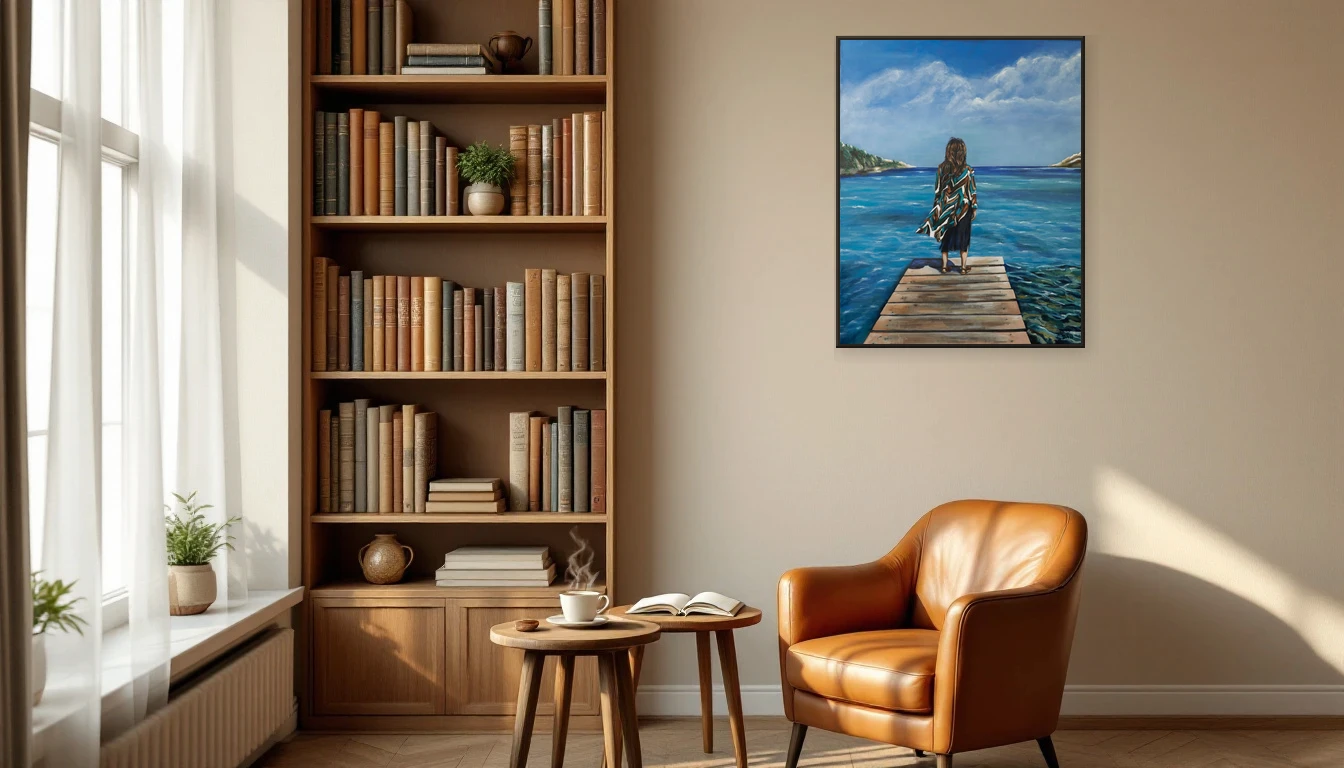
Why this matters for your interior
In a time when we are increasingly intentional about our living spaces — the warm earthy tones, the organic materials, the return to texture and tactility shaping this autumn's trends — art is more than decoration. It is a daily invitation to pause.
A work that triggers memories transforms a wall into a mirror. Not one that shows your face, but one that reflects your inner world. Each time your gaze falls upon it, something different may surface: the scent of your grandmother's kitchen, the sound of waves on holiday, the feeling of an afternoon when everything was exactly right.
Choosing art with your memory
The next time you stand before an artwork and feel something — a tingle, a softness, an inexplicable pull — listen to it. That is your memory making a connection. That is the work feeling like coming home.
Not because it matches your sofa perfectly. But because it matches who you are.