I was standing in my studio the other day, watching paint dry — literally. The late afternoon light caught the ridges of a palette knife stroke, and for a moment, the surface seemed to breathe. No render does that. No algorithm hesitates mid-stroke and then pushes through anyway. In a world saturated with pixels, handmade art has become something radical.
The Post-Digital Creative Renaissance
Art critics are calling it the post-digital renaissance. After years of scrolling through AI-generated visuals and mass-produced prints, collectors and homeowners alike are turning back to the handmade. Not out of nostalgia, but out of genuine need — the need to live among objects that carry a human story.
The 2026 art market confirms it. Galleries from London to Amsterdam report growing demand for original, hand-painted works. The Freshpaint art fair drew record crowds this year, with visitors eager to touch surfaces, lean in close, and experience art the way it was meant to be experienced: in person.
Why Imperfection Wins
There is something deeply comforting about a brushstroke that isn't quite straight. About paint that behaves unpredictably, that cracks or layers in ways no one planned. The Japanese call it wabi-sabi, but you don't need a philosophy to recognize it. A handmade painting moves with the light. It reveals new details over time. It is never truly finished — and that is precisely what keeps you looking.
In my own process, I've learned that the moments I almost give up on a piece are often the ones that give it its depth. That layer I nearly sanded away? It became the heart of the work.
Art as Antidote
We live in an era of relentless optimization. Our feeds are curated, our photos filtered, our interiors styled for the camera. Original art disrupts all of that. It is raw where everything else is polished. It is slow in a world that demands speed.
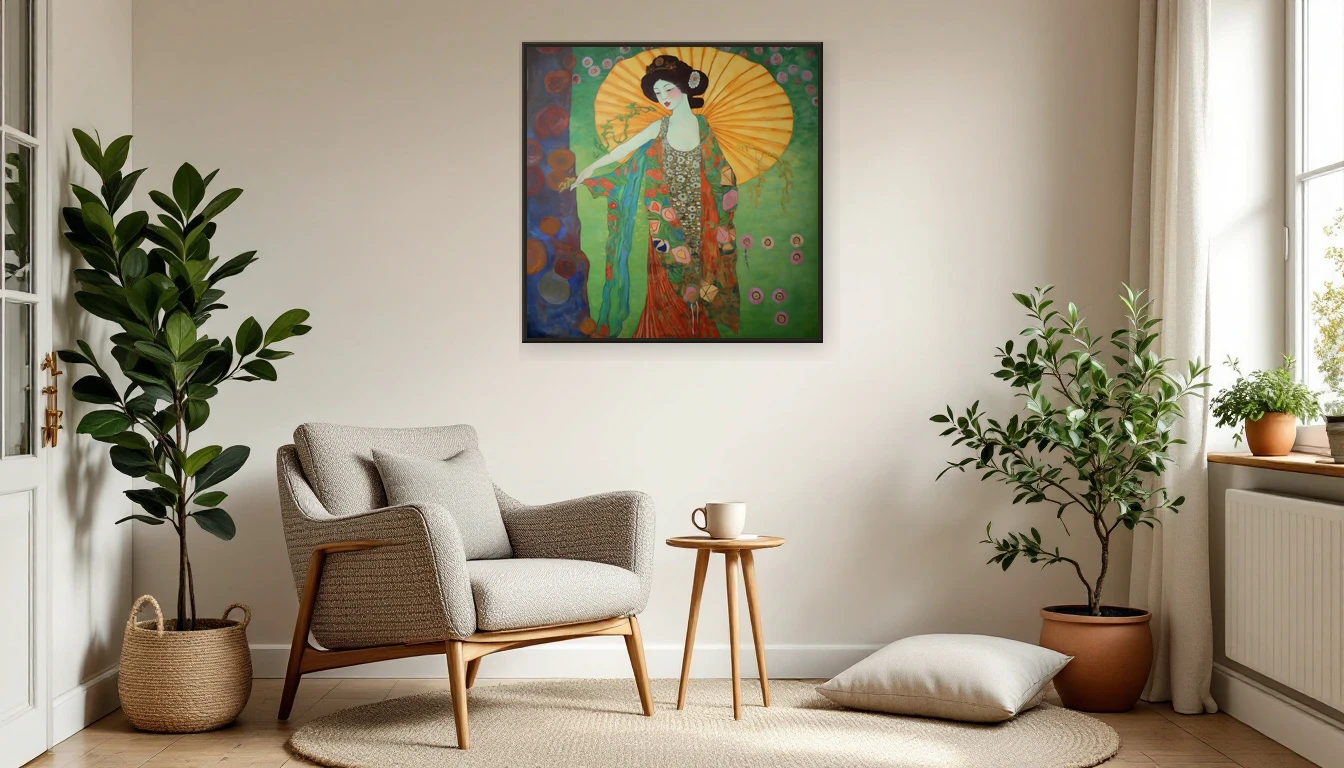
Interior designers across Europe increasingly recommend having at least one original work in every living space — not as a status symbol, but as a grounding element. A visual anchor where the eye can rest and the mind can pause.
Texture You Can Feel
The difference between a print and an original becomes obvious the moment the light shifts. An original painting has relief: thick impasto catches shadow, thin washes reveal the canvas weave beneath. Mixed media works — collage, metallic leaf, textile — add another dimension entirely.
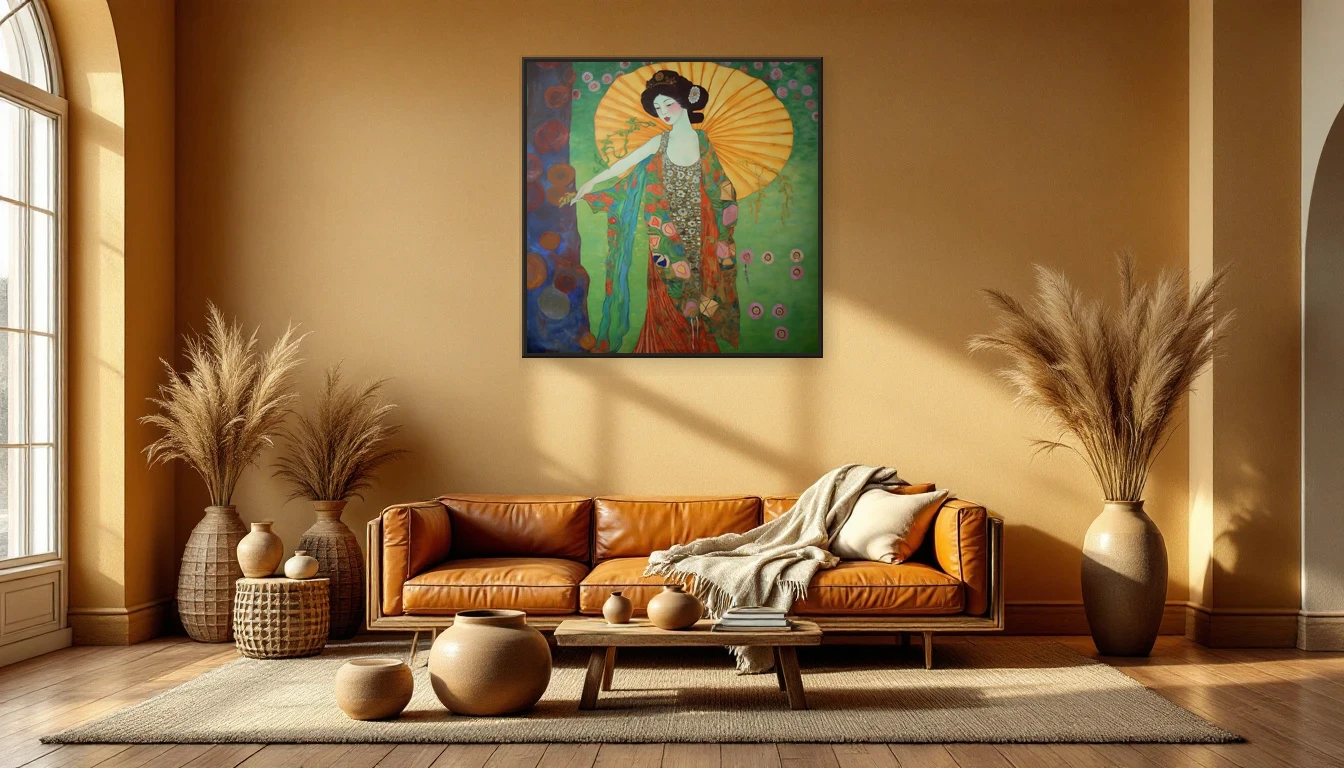
My Klimt-inspired pieces are a case in point. Layer upon layer of acrylic, metallic pigment, and sometimes paper, built up to create surfaces that only tell their full story in person. A photograph captures the image; standing before it, you feel the presence.
Investing in Meaning
Buying an original artwork isn't an impulse purchase — it's a choice to bring something real into your life. Something that makes your home not just more beautiful, but more yours. It means choosing a maker's story over a machine's output. A singular piece over infinite copies.
And it's an investment that holds. The market for contemporary original art has never been stronger, with more collectors than ever choosing handmade over mass-produced.
Bring the Real Home
Next time you walk through your living room, ask yourself: what here is truly mine? Not selected by an algorithm, not replicated from a mood board. But chosen because it stopped you in your tracks.
Explore the originals and mixed media collection at DNH Artful Living, and discover which piece gives your home its soul. Or reach out for a personal consultation — I'd love to help you find your artwork.