There’s a branch of dogwood sitting on my studio table right now. Not in a vase — just lying there, drying slowly, its bark curling in on itself. I keep it because it reminds me of something I can never quite paint literally, but always try to capture: the way nature moves without trying.
The Pull Toward the Organic
We spend our days inside rectangles — screens, rooms, schedules. It makes sense that when we finally look up, we crave something that doesn’t follow a grid. In 2026, biophilic design isn’t a niche anymore; it’s a deep, collective exhale. And abstract art is one of the most unexpected ways people are bringing nature back indoors.
Beyond the Botanical Print
Botanical abstraction isn’t about painting flowers. It’s about painting the feeling of flowers — the curve of a petal translated into a sweep of pigment, the weight of a root system expressed through layered texture. This new wave of nature-inspired art is symbolic rather than literal, and that’s exactly what makes it powerful.
Why Your Brain Prefers Curves
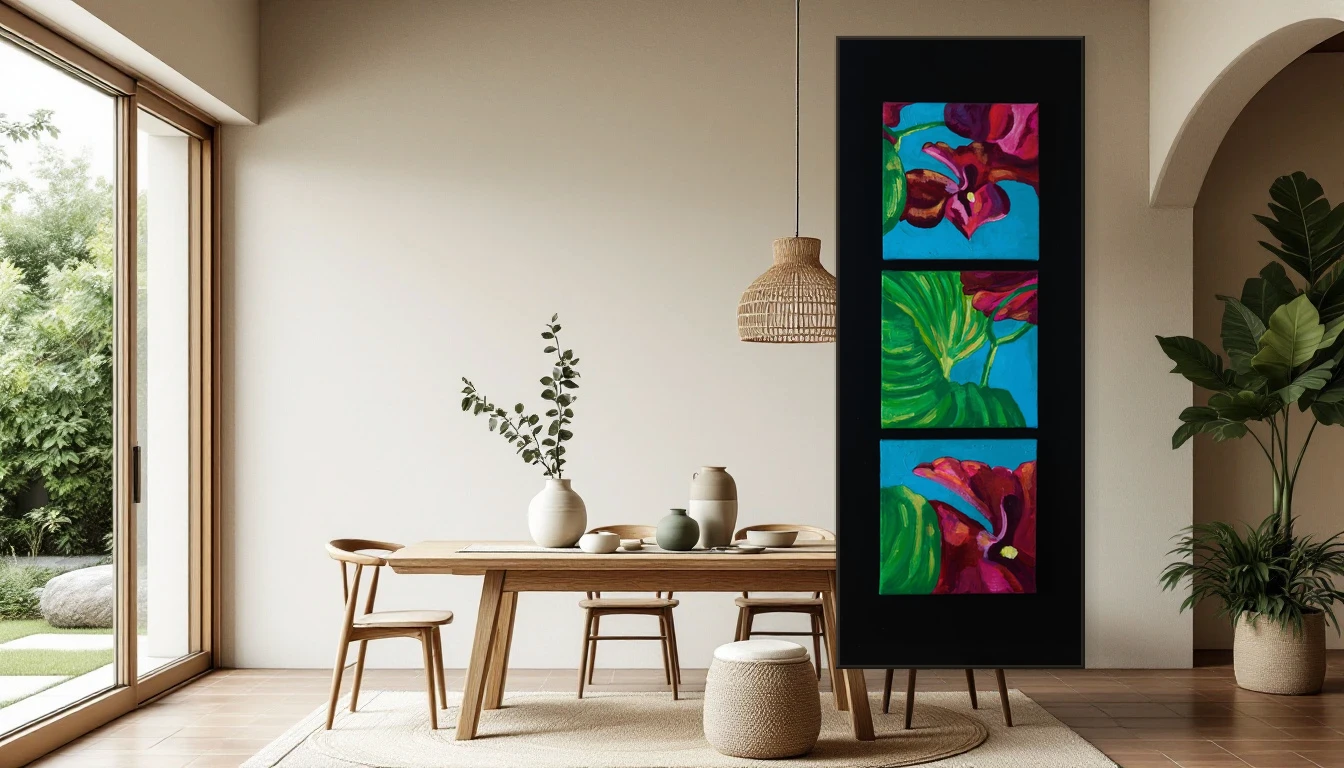
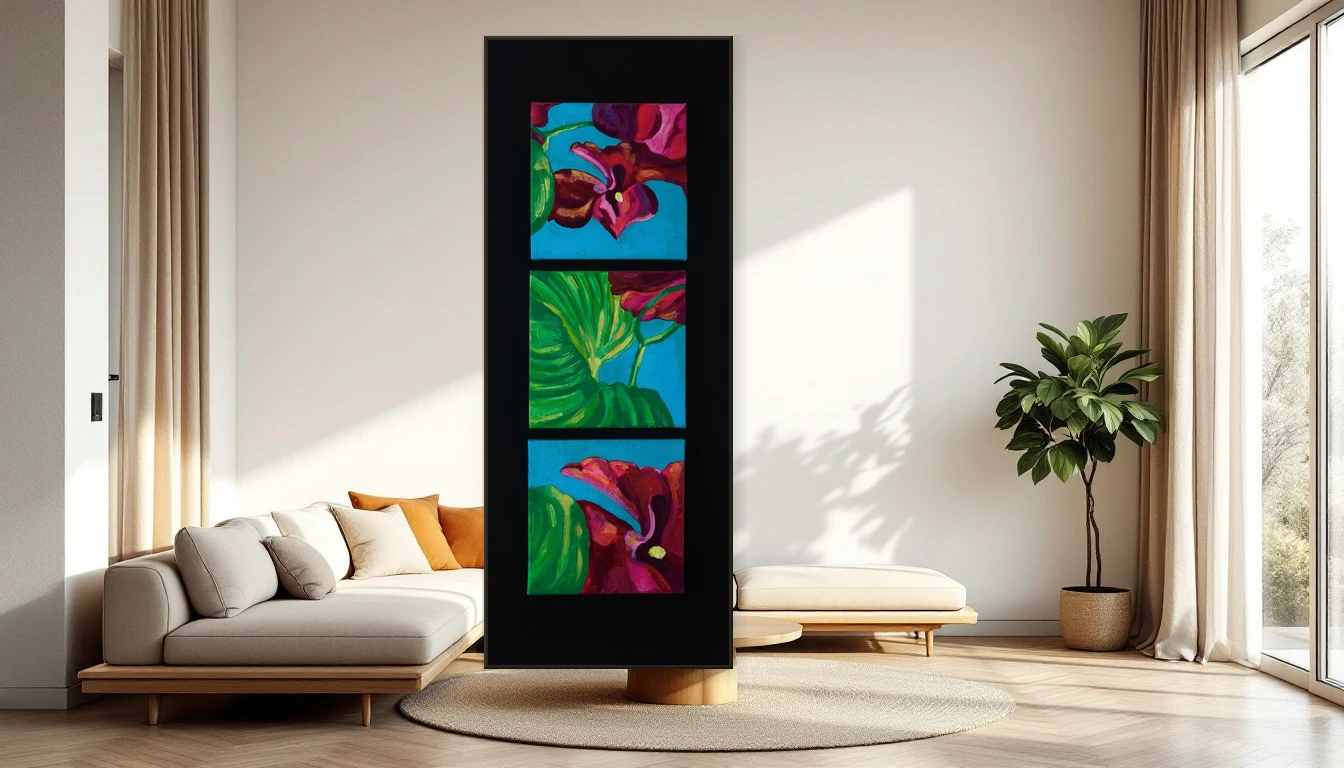
Neuroscience backs this up: our brains process organic shapes differently from angular ones. Soft curves and flowing forms activate a sense of calm, while sharp angles trigger alertness. A painting with organic movement on your living room wall isn’t just beautiful — it’s quietly regulating your nervous system.
Earth Tones Are Earning Their Place
The colour story of 2026 reads like a walk through a forest after rain. Terracotta, ochre green, warm sand, mossy brown — these aren’t colours that shout; they ground. In my own practice, I find myself reaching for pigments that feel ancient: raw sienna, burnt umber, oxide green. Colours that have been here far longer than any of us.
Touch Matters More Than Ever
The rise of textural art — thickly applied paint, mixed media, layered surfaces you want to run your fingers across — amplifies the connection to nature. A painting with relief catches light the way stone does. It changes throughout the day. No print can do that.
Nature as Feeling, Not Subject
The beauty of abstract nature art is that it communicates without depicting. A wash of green doesn’t need to be a leaf to remind you of a forest walk. A warm ochre stroke doesn’t need to represent a sunset to make you feel held. Your brain fills in the rest — and that makes the experience deeply personal.
From Trend to Timeless
Organic abstraction has a long lineage — think Georgia O’Keeffe’s flowing forms, Antoni Tàpies’ earthen canvases. What’s new is the widespread recognition that this kind of art doesn’t just look good; it does good. In an era of overstimulation, we’re choosing calm — and nature in abstraction offers exactly that.
Finding Your Echo
Look around you. What piece of nature moves you? A coastline, a piece of bark, the sky before a storm? Look for art that evokes that same feeling — not as a copy, but as an echo. And if you’re unsure, trust your gut. The nature in you recognises the nature on the canvas.
Curious which piece speaks to you? Browse the collection or get in touch — I’d love to help you find the right one.